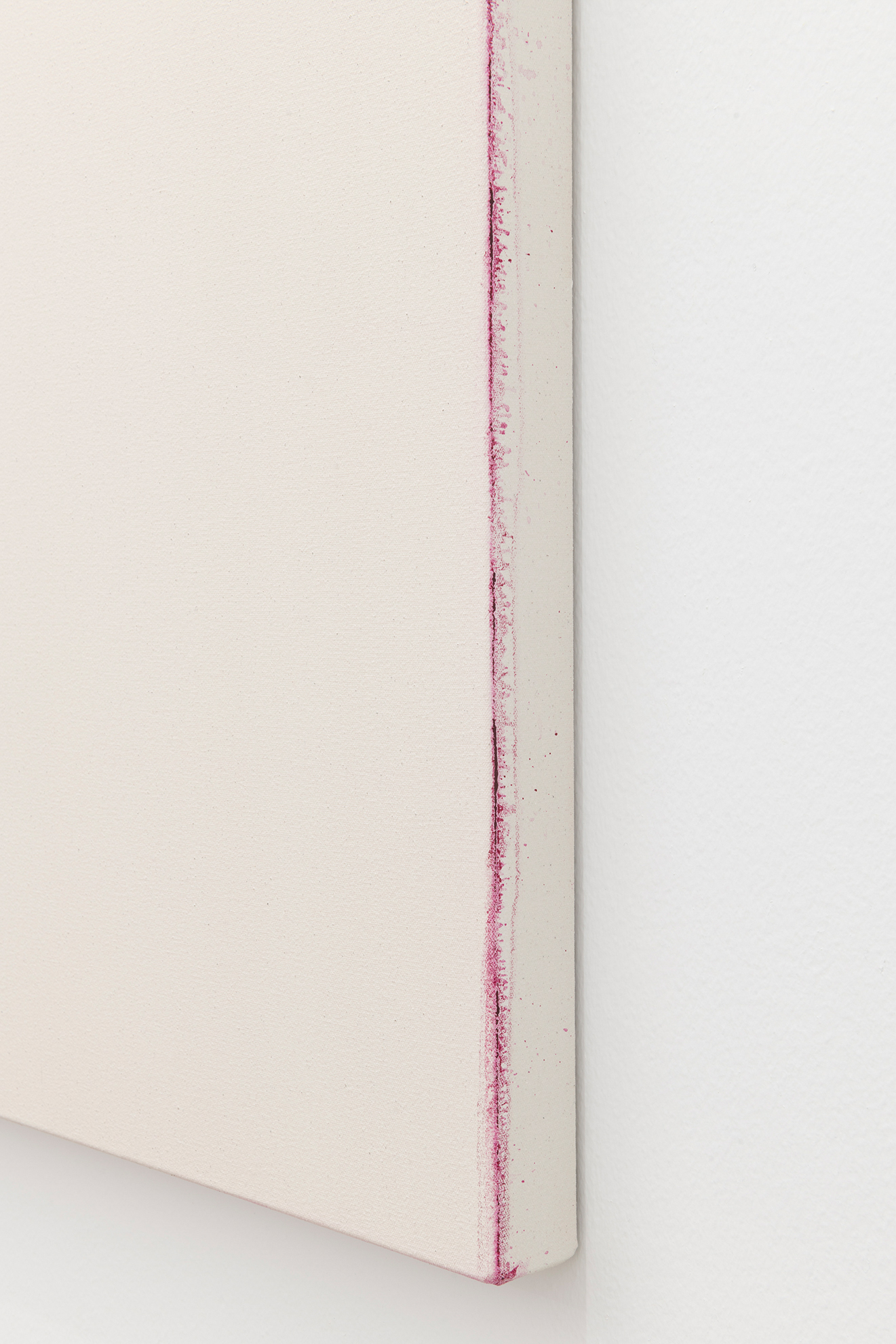
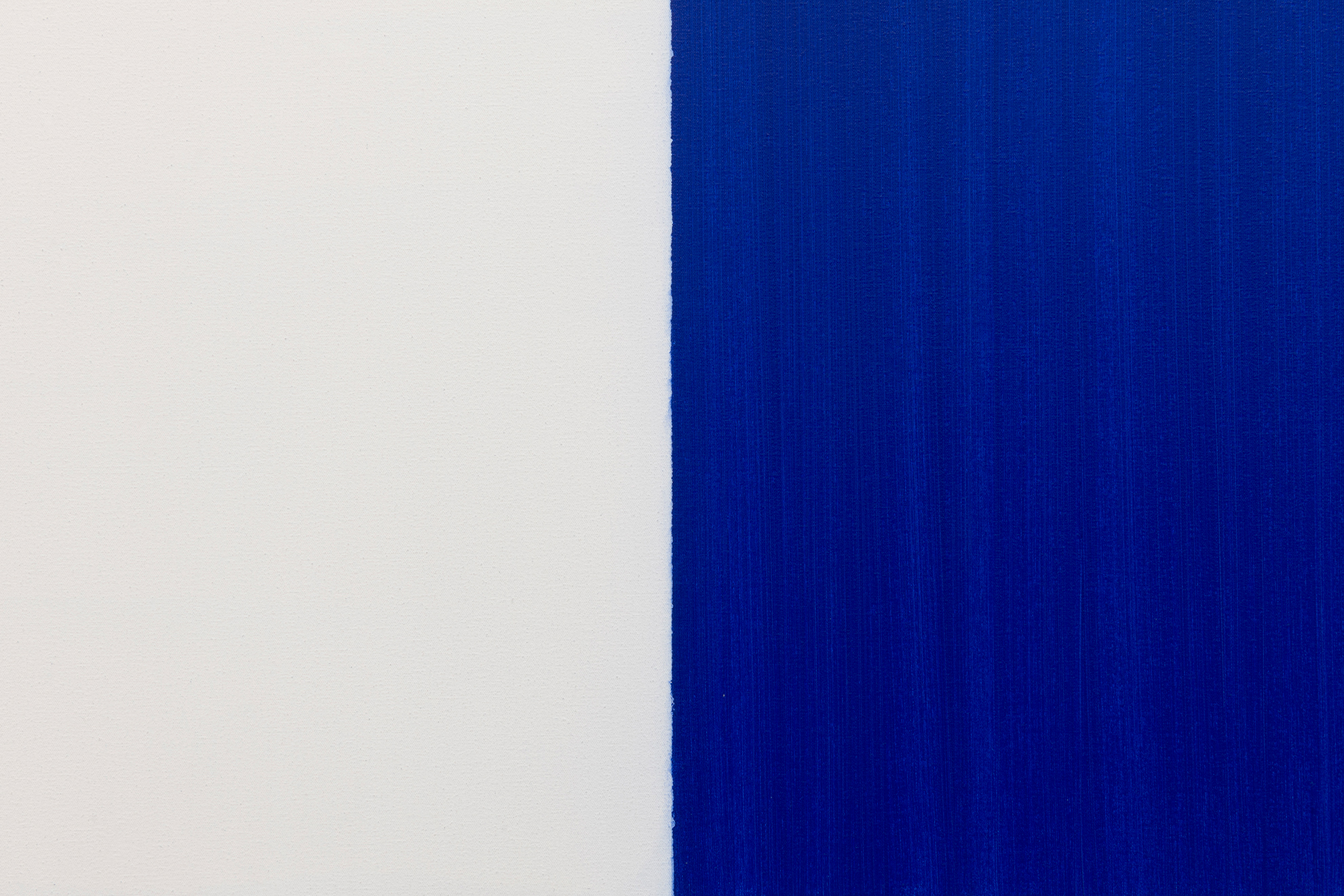
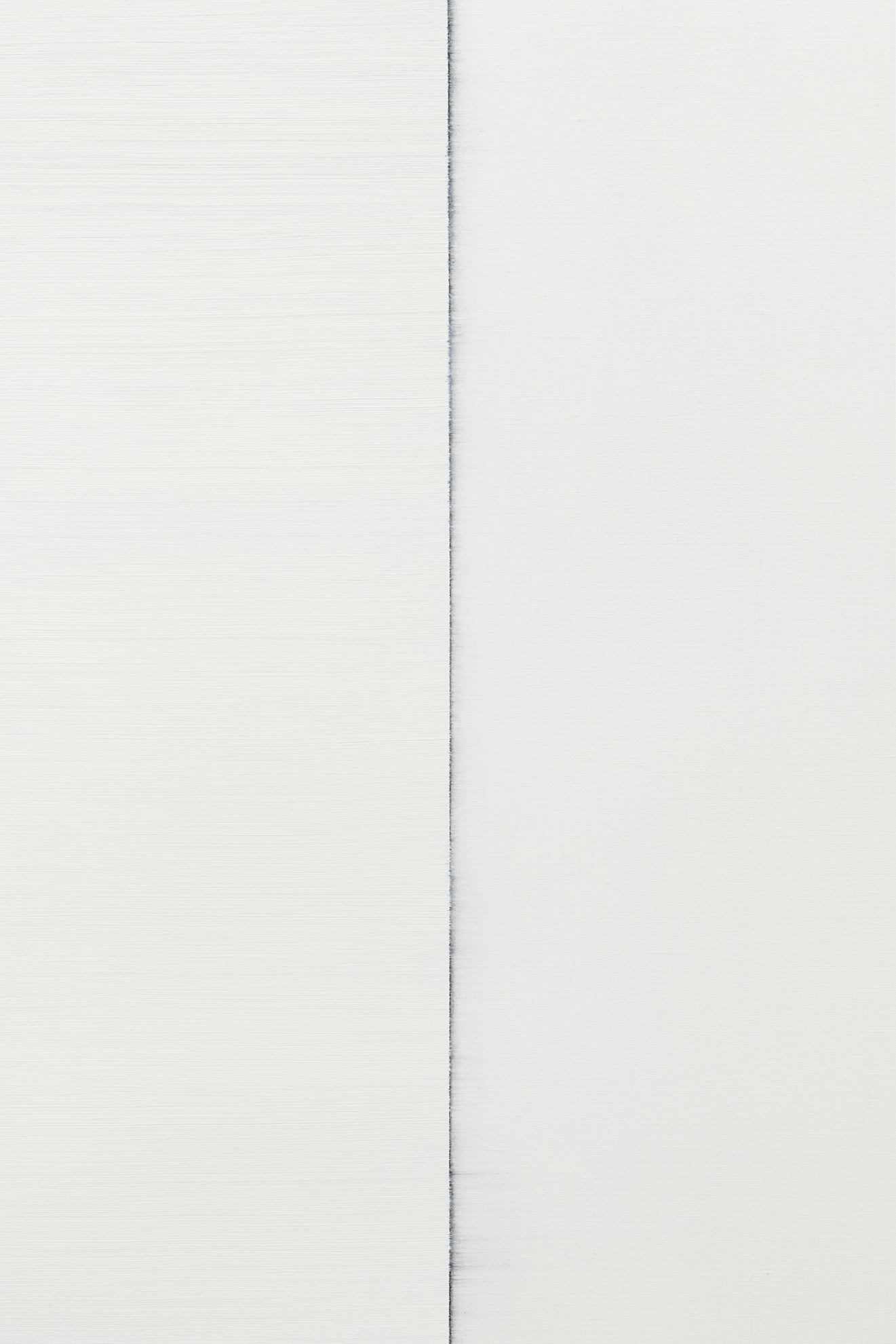
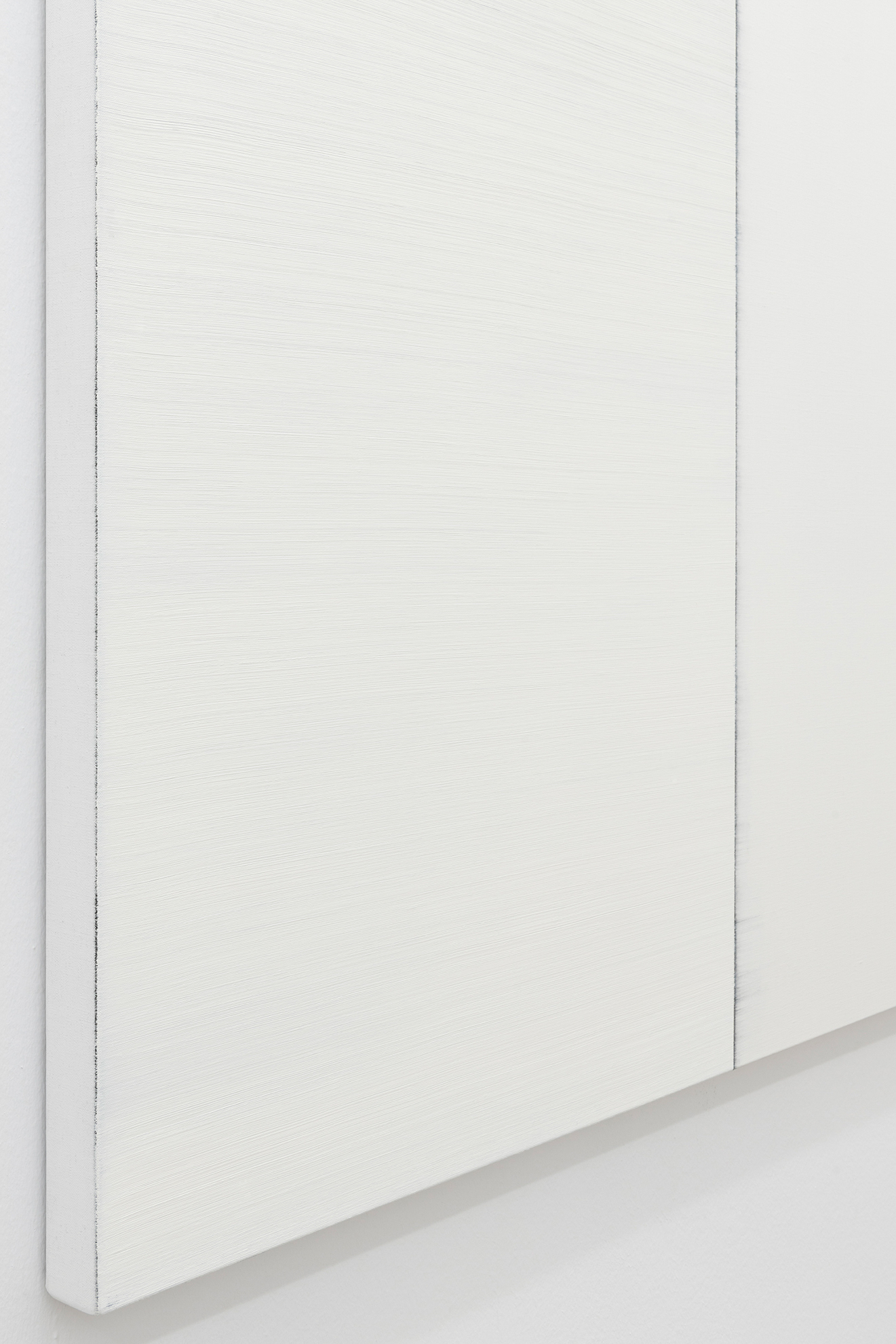
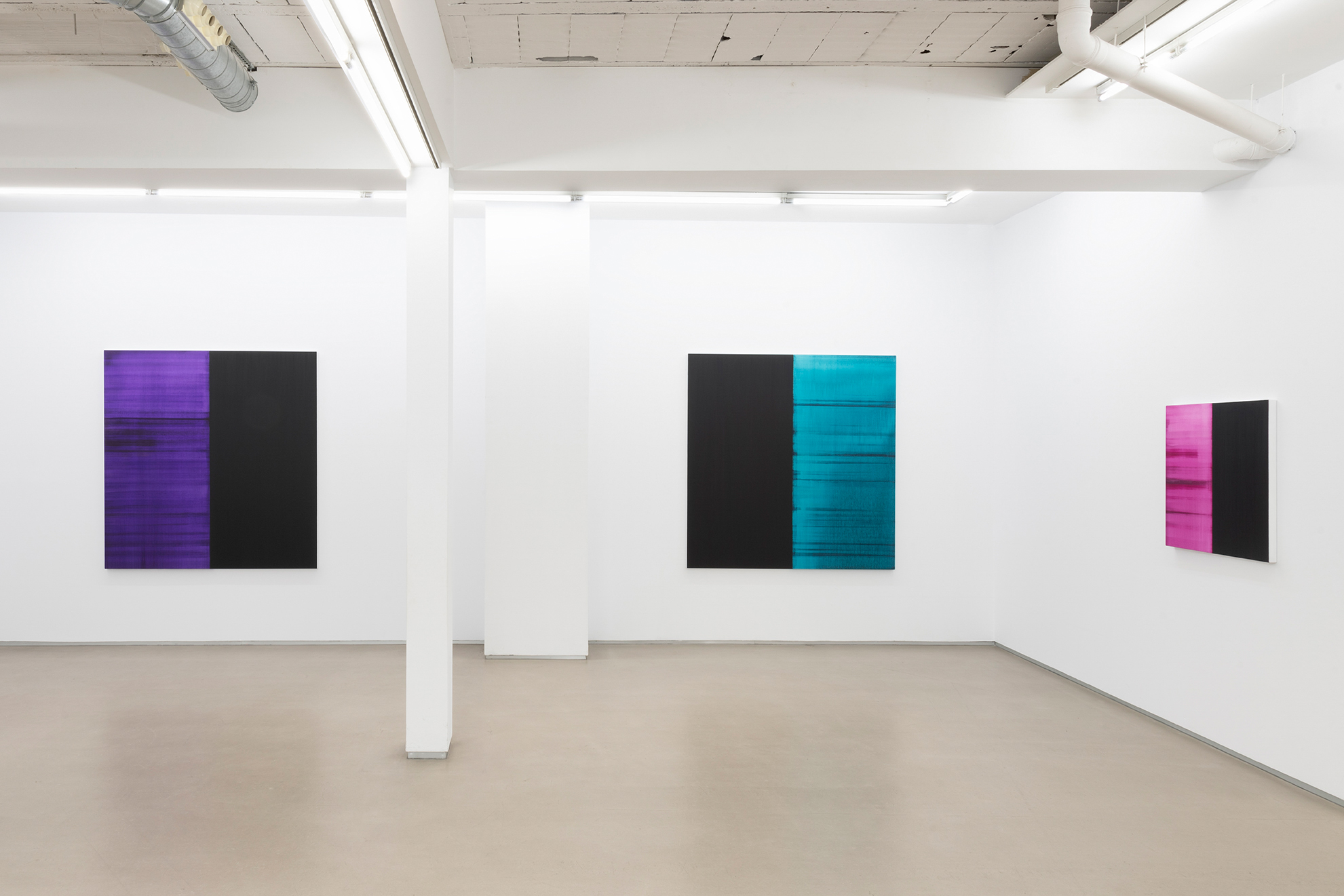
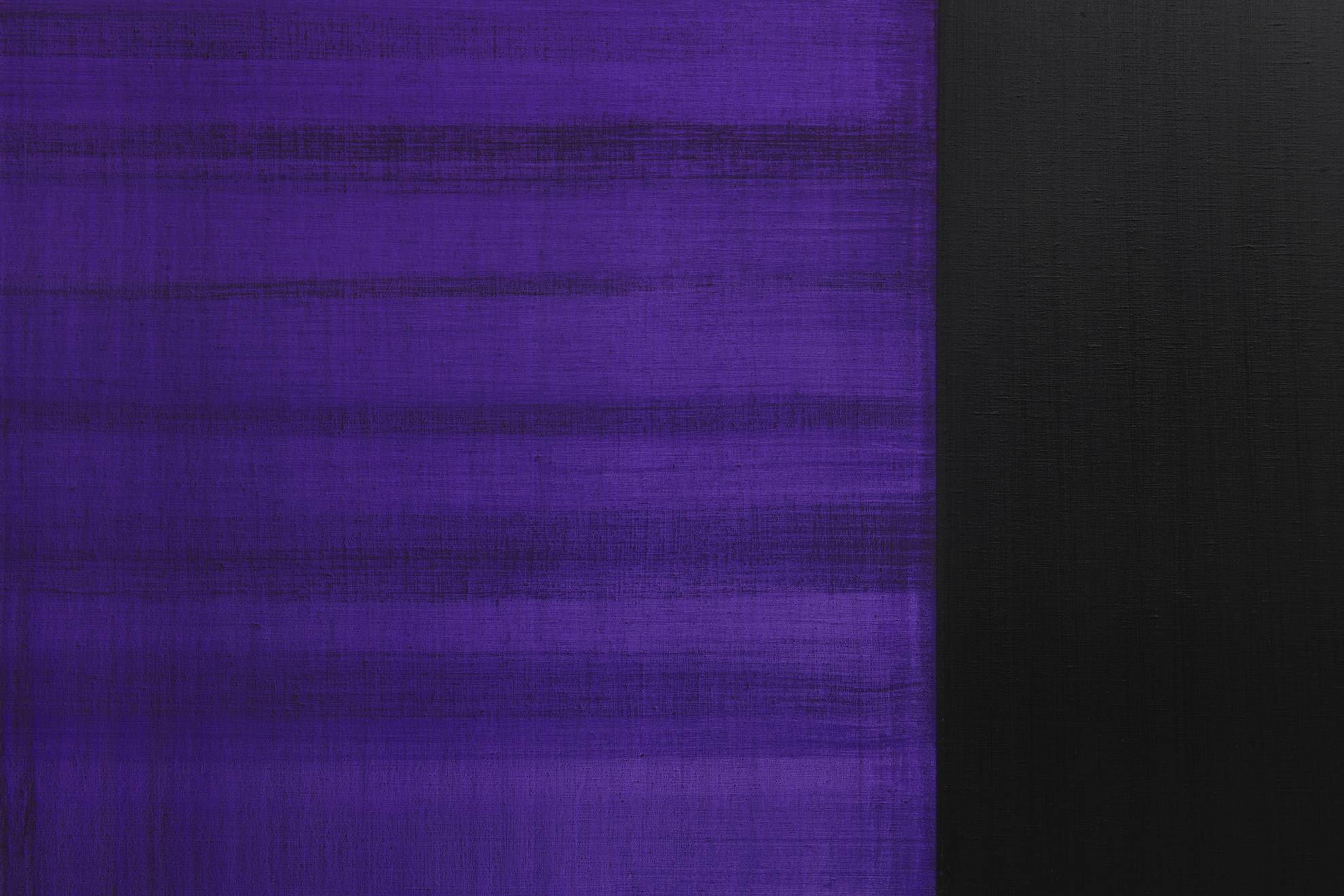
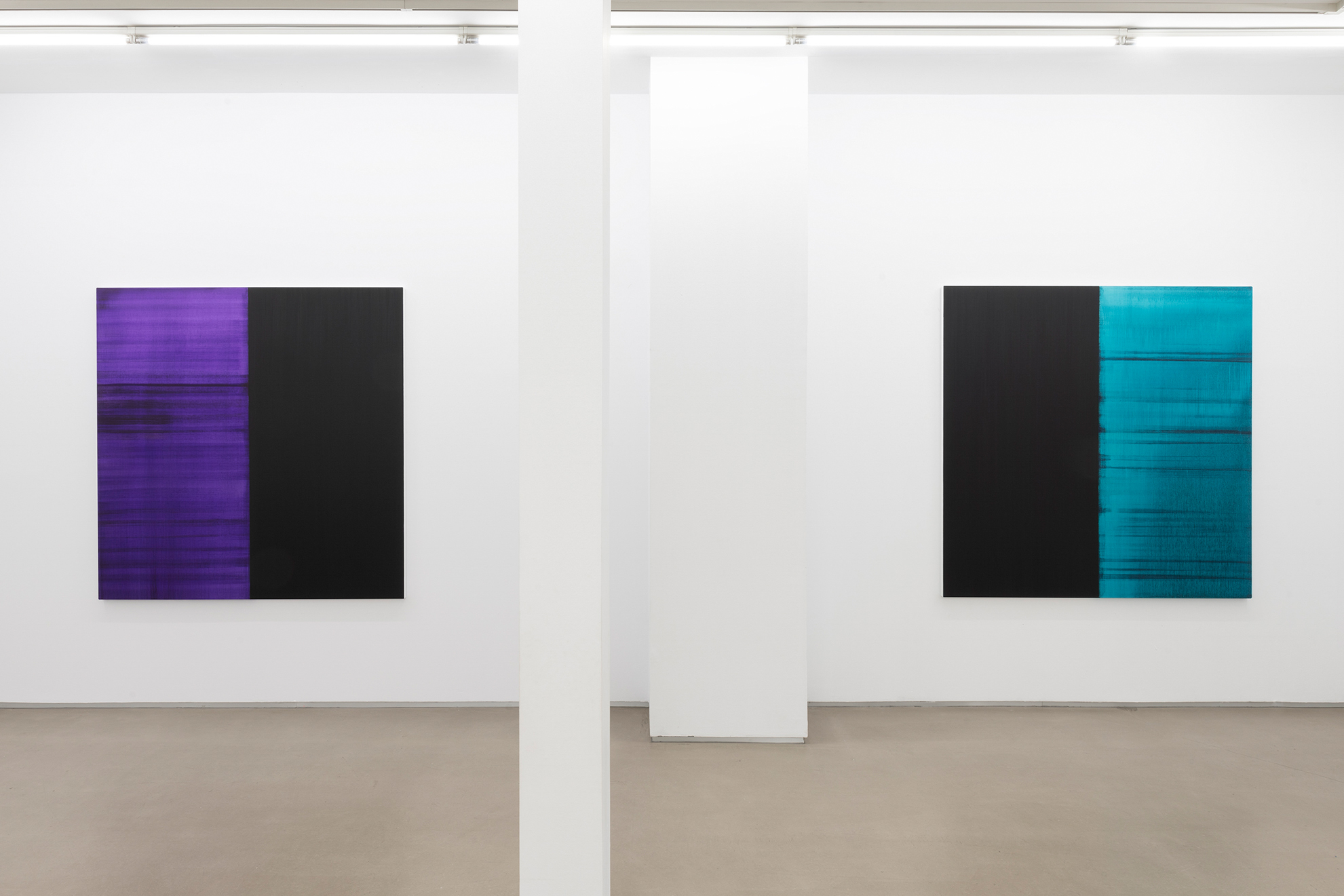
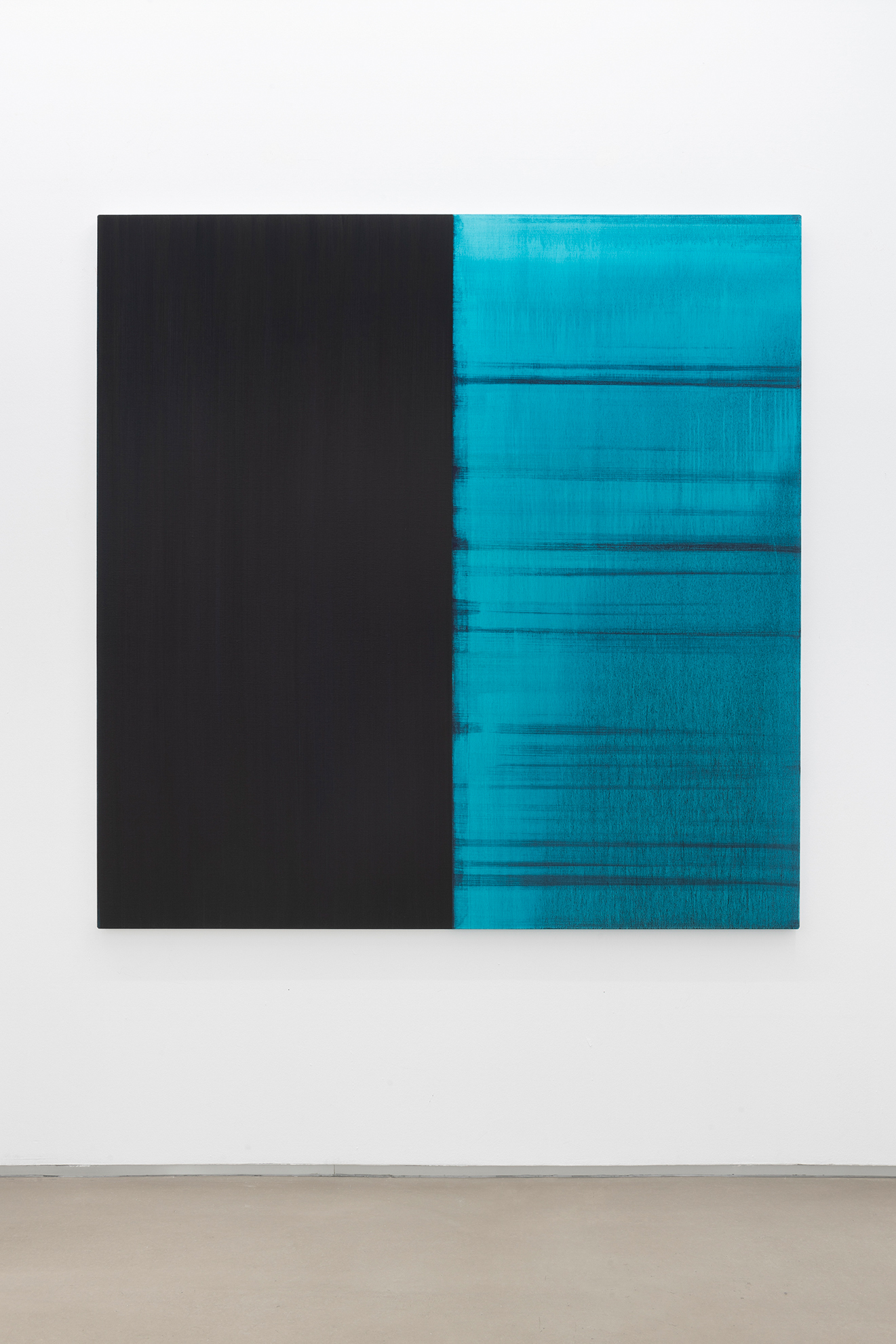
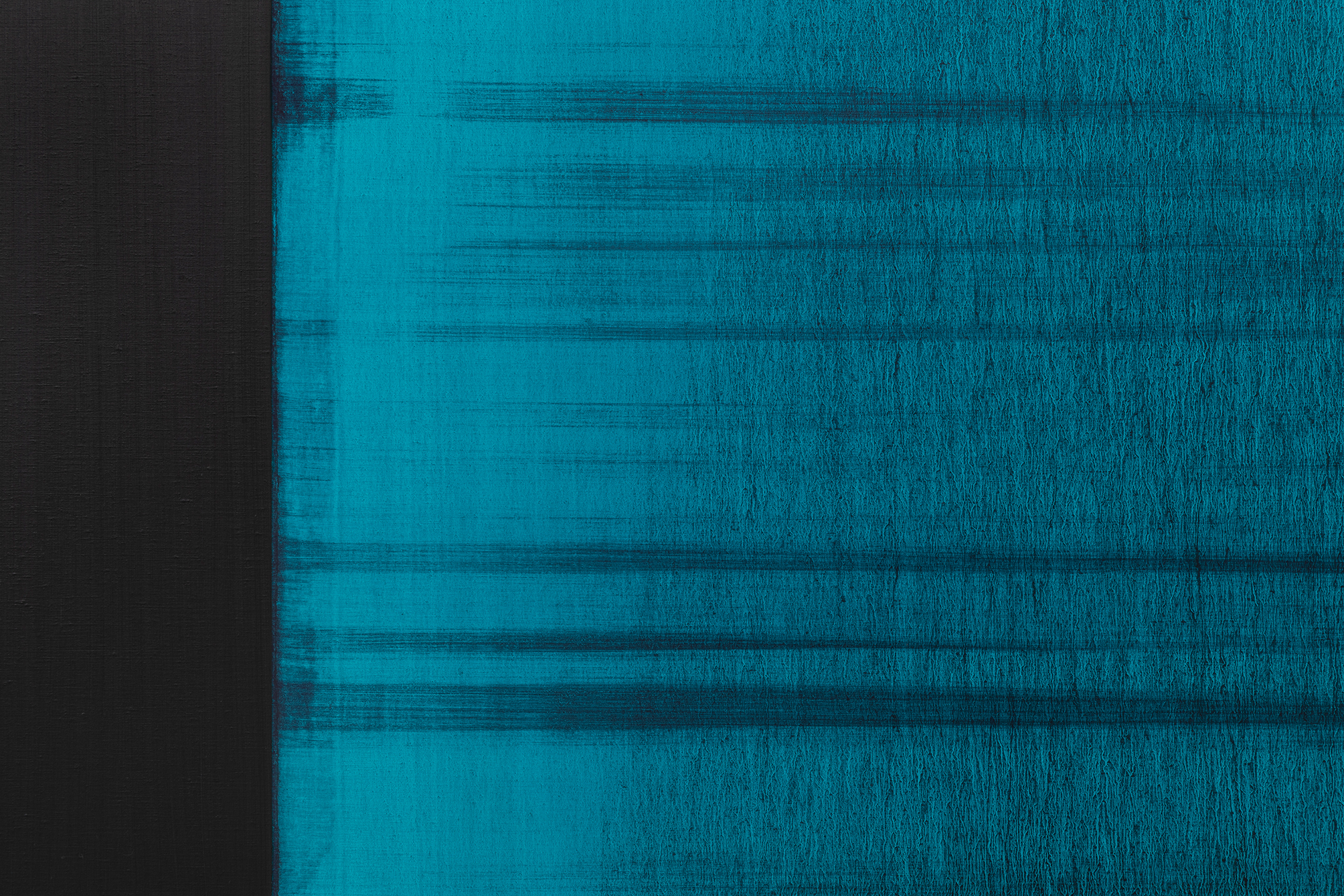
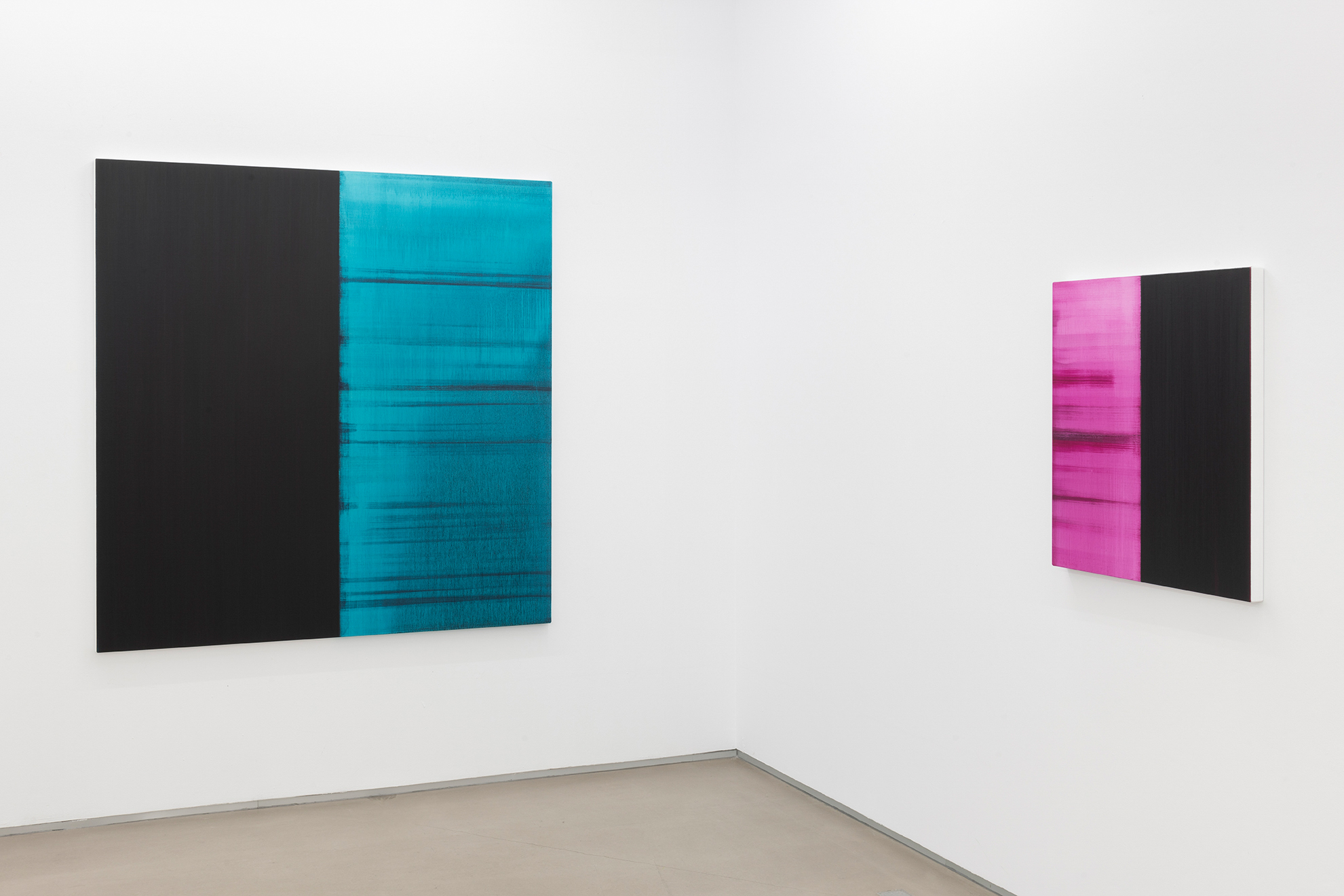
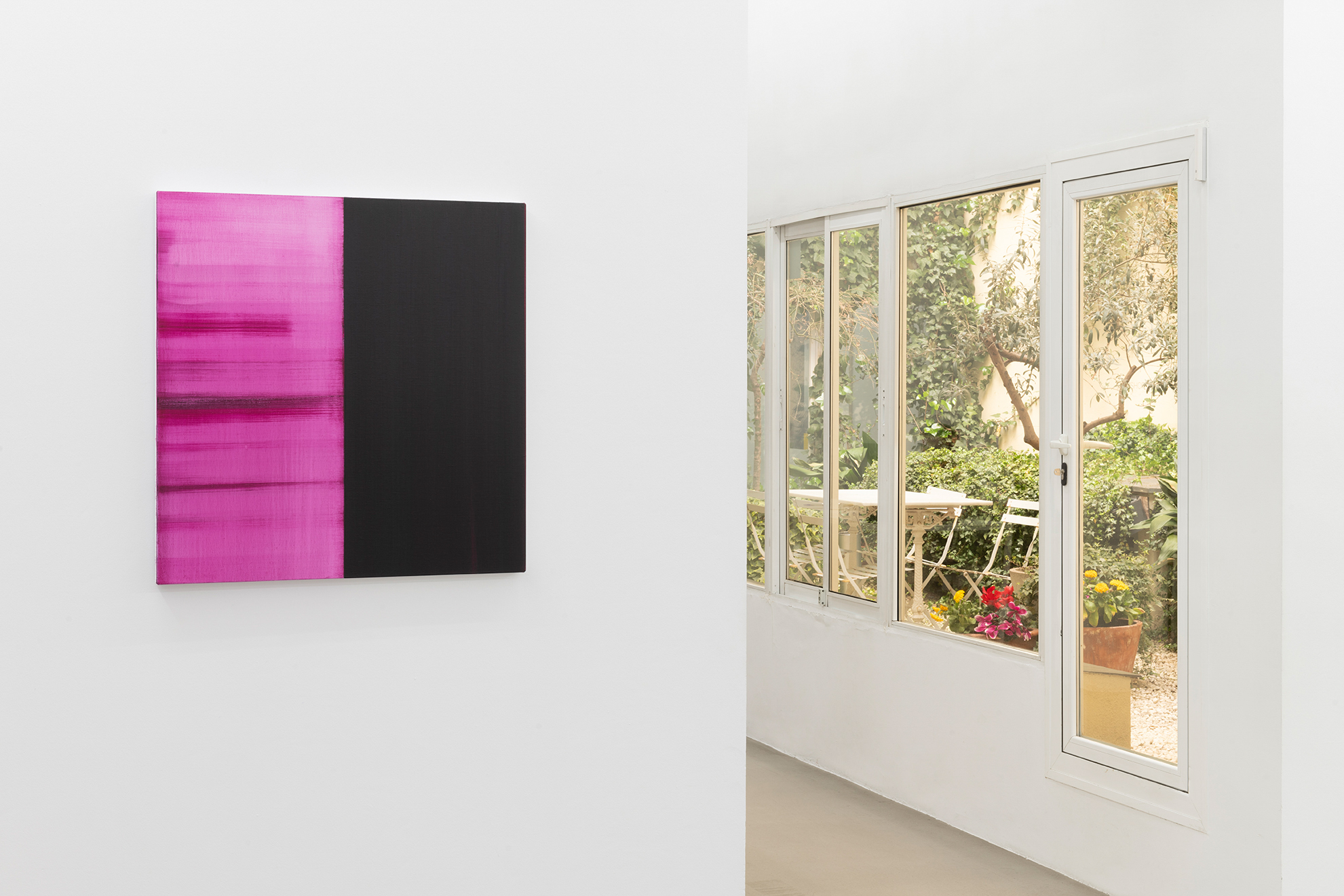
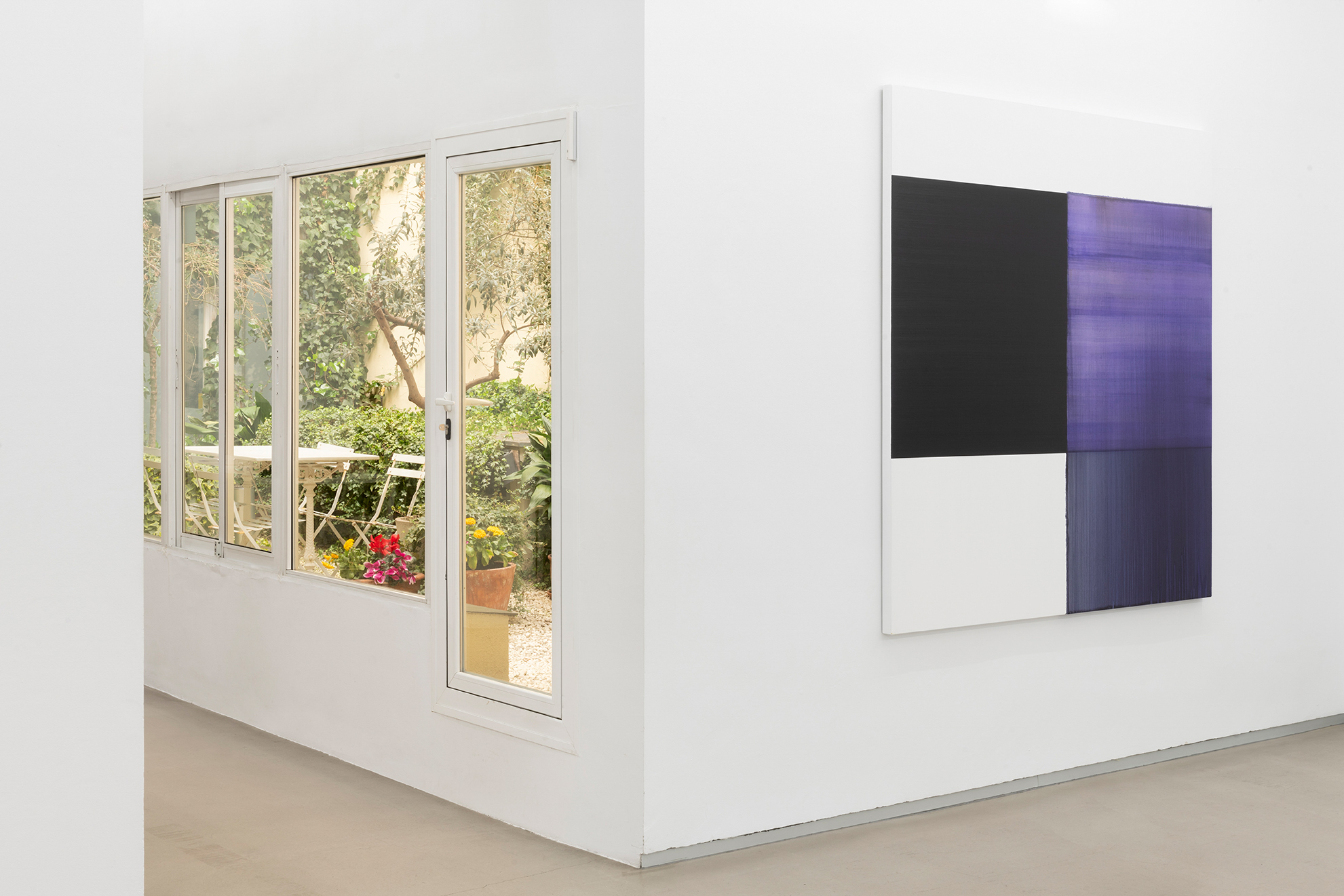
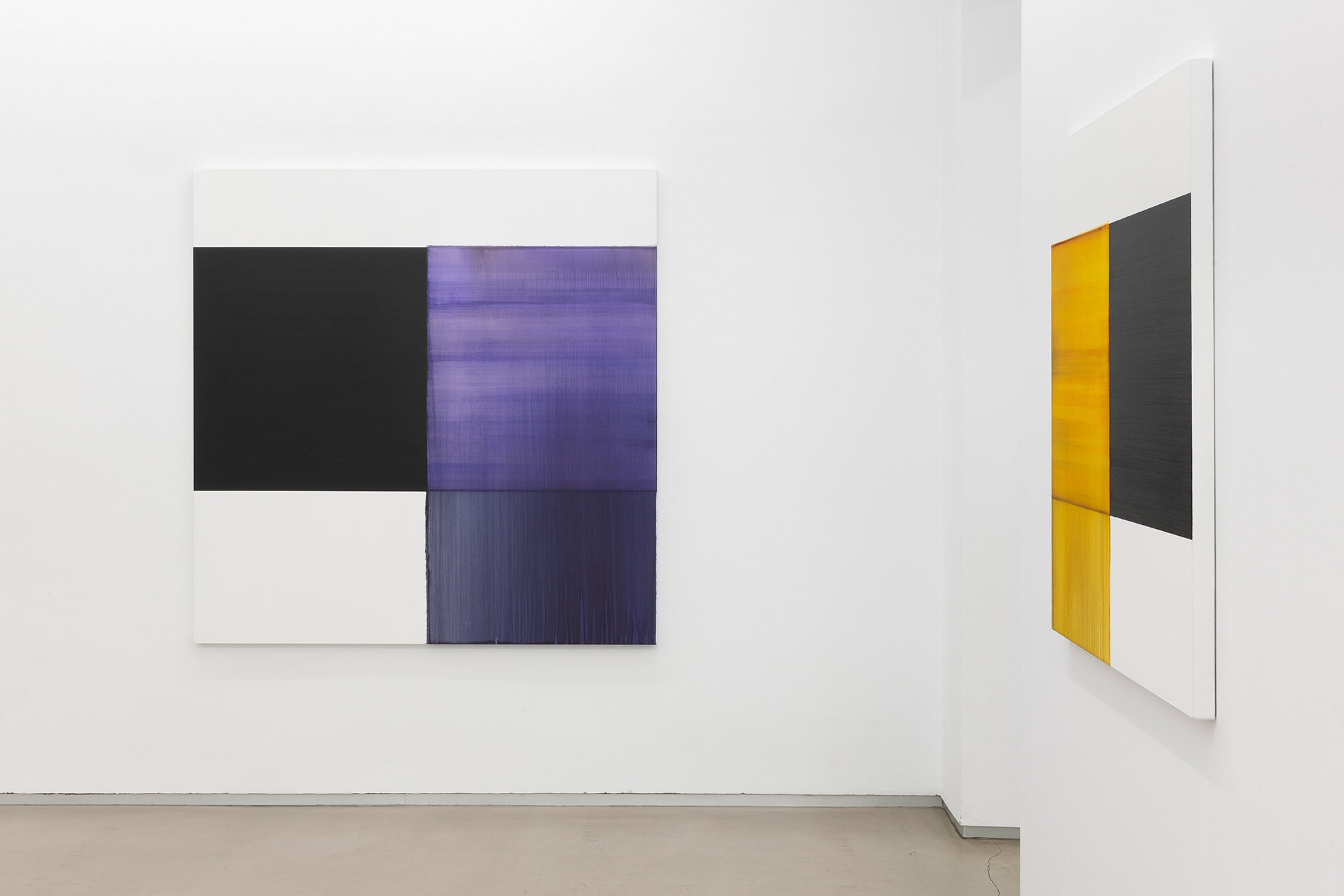
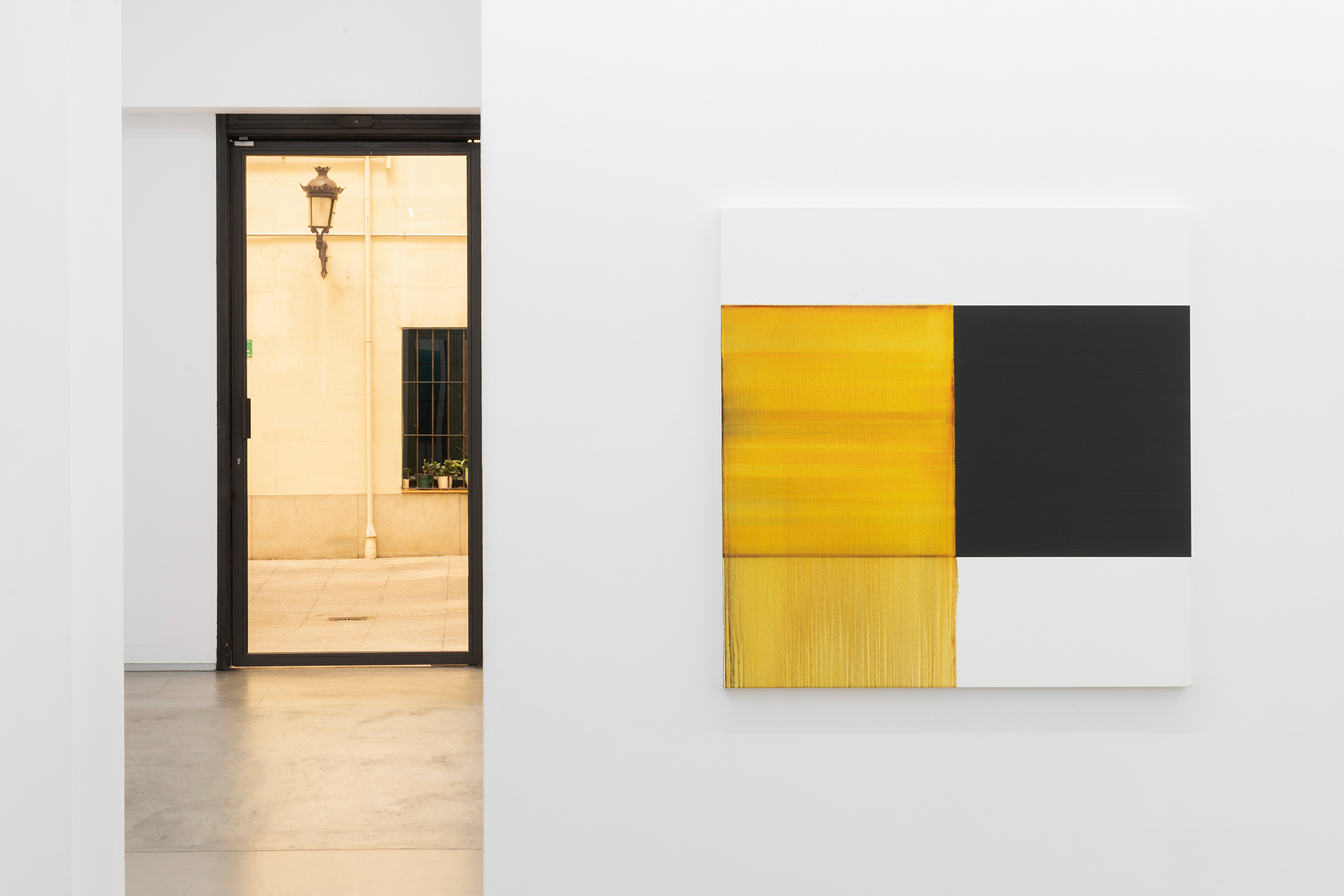
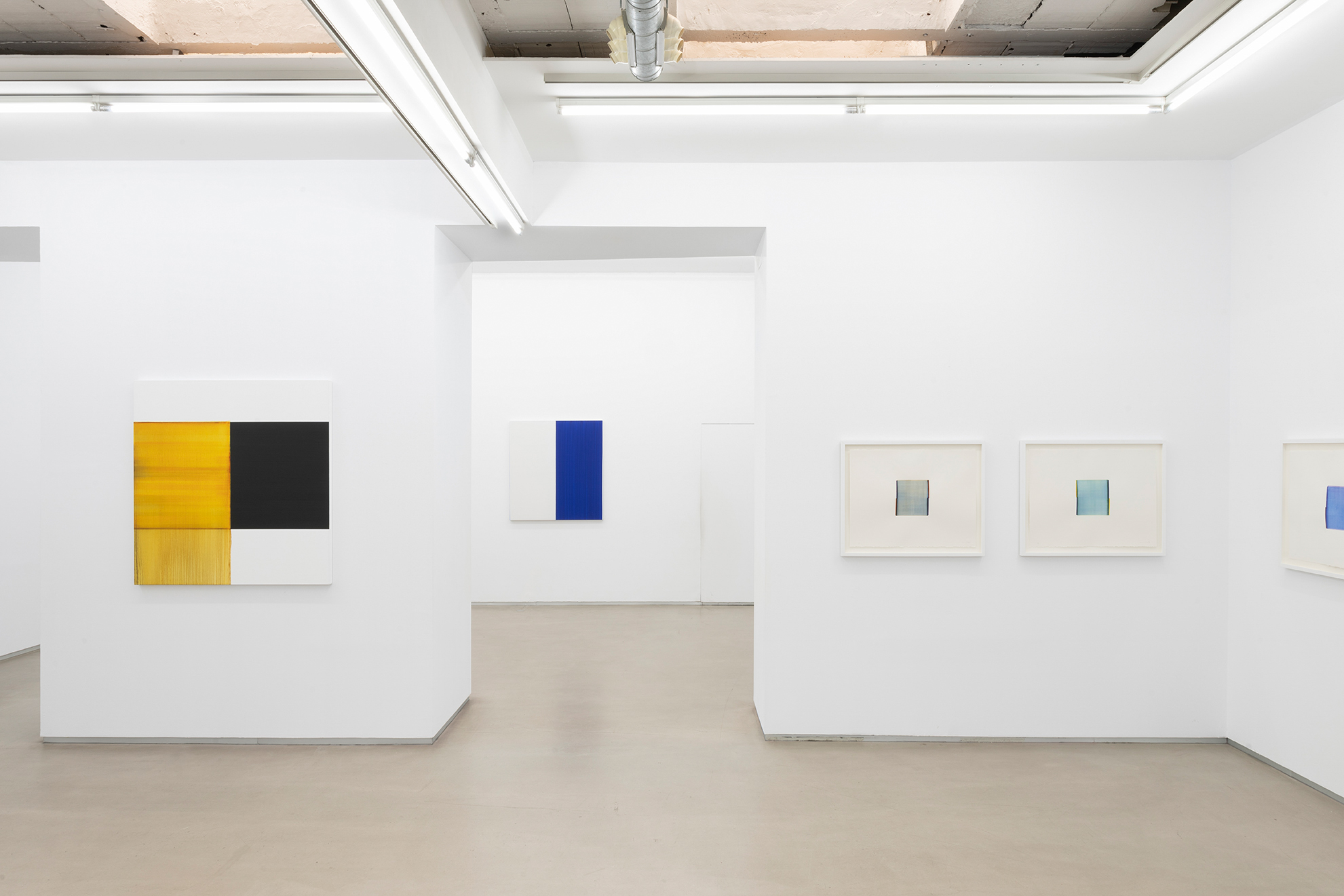
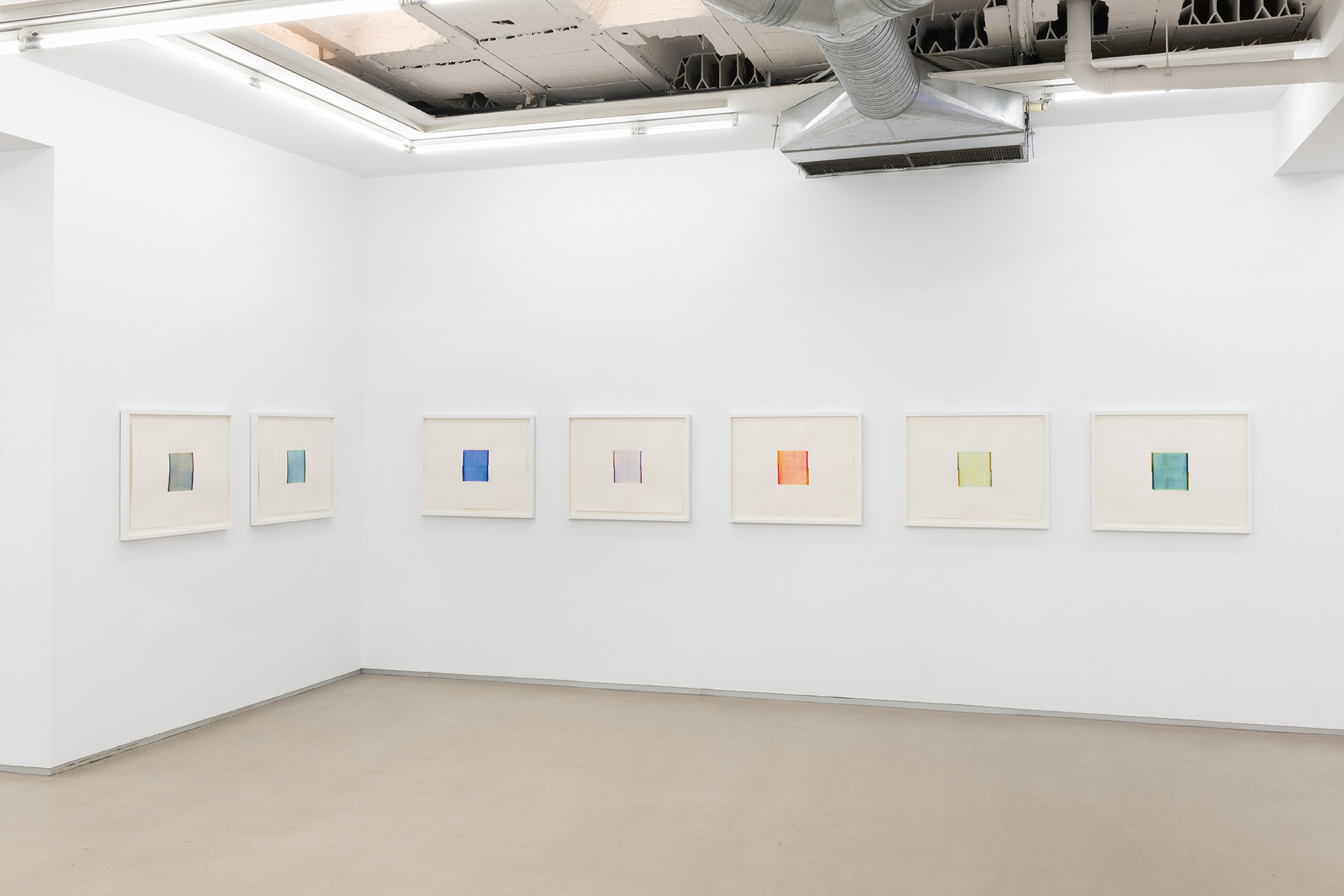
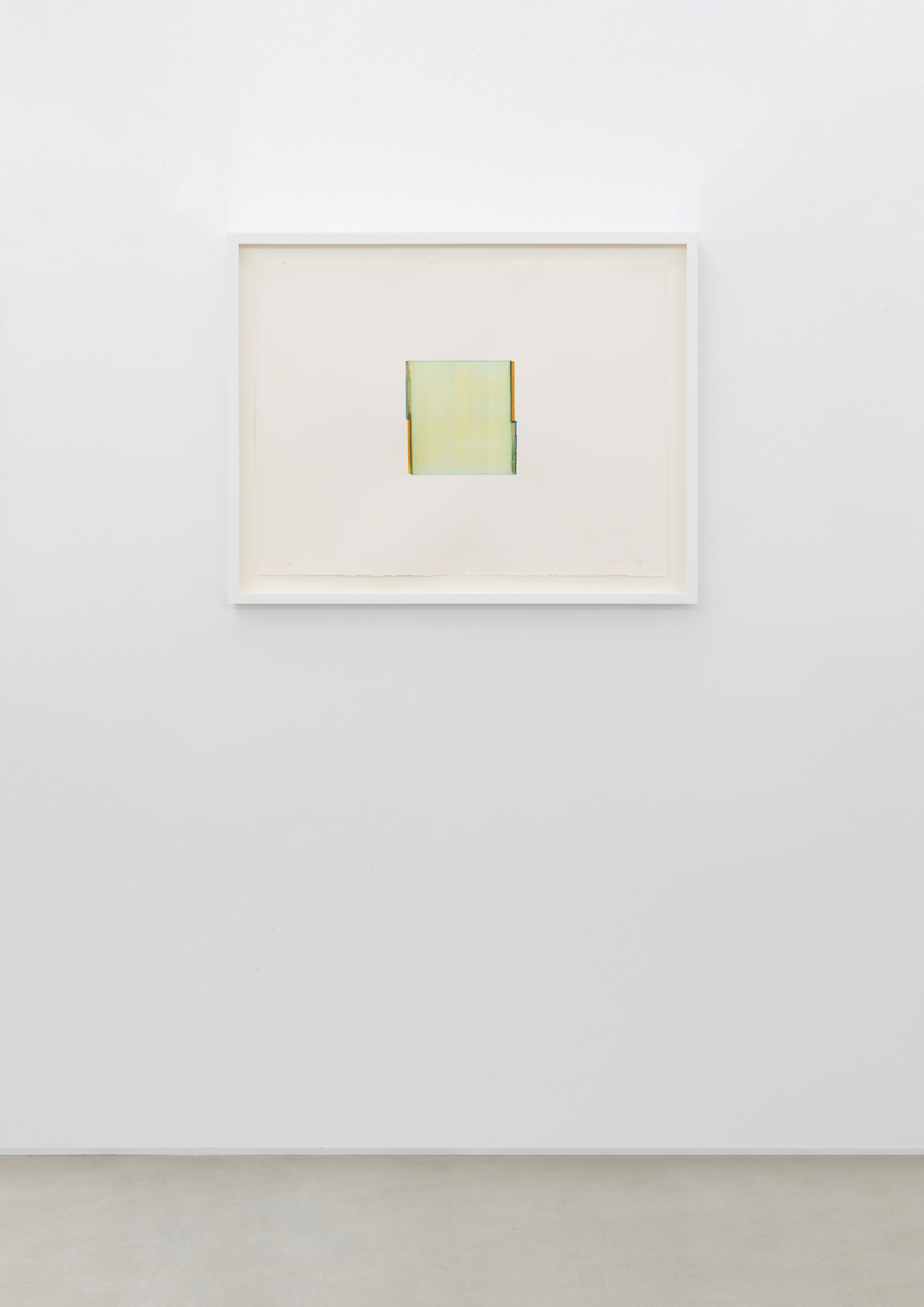
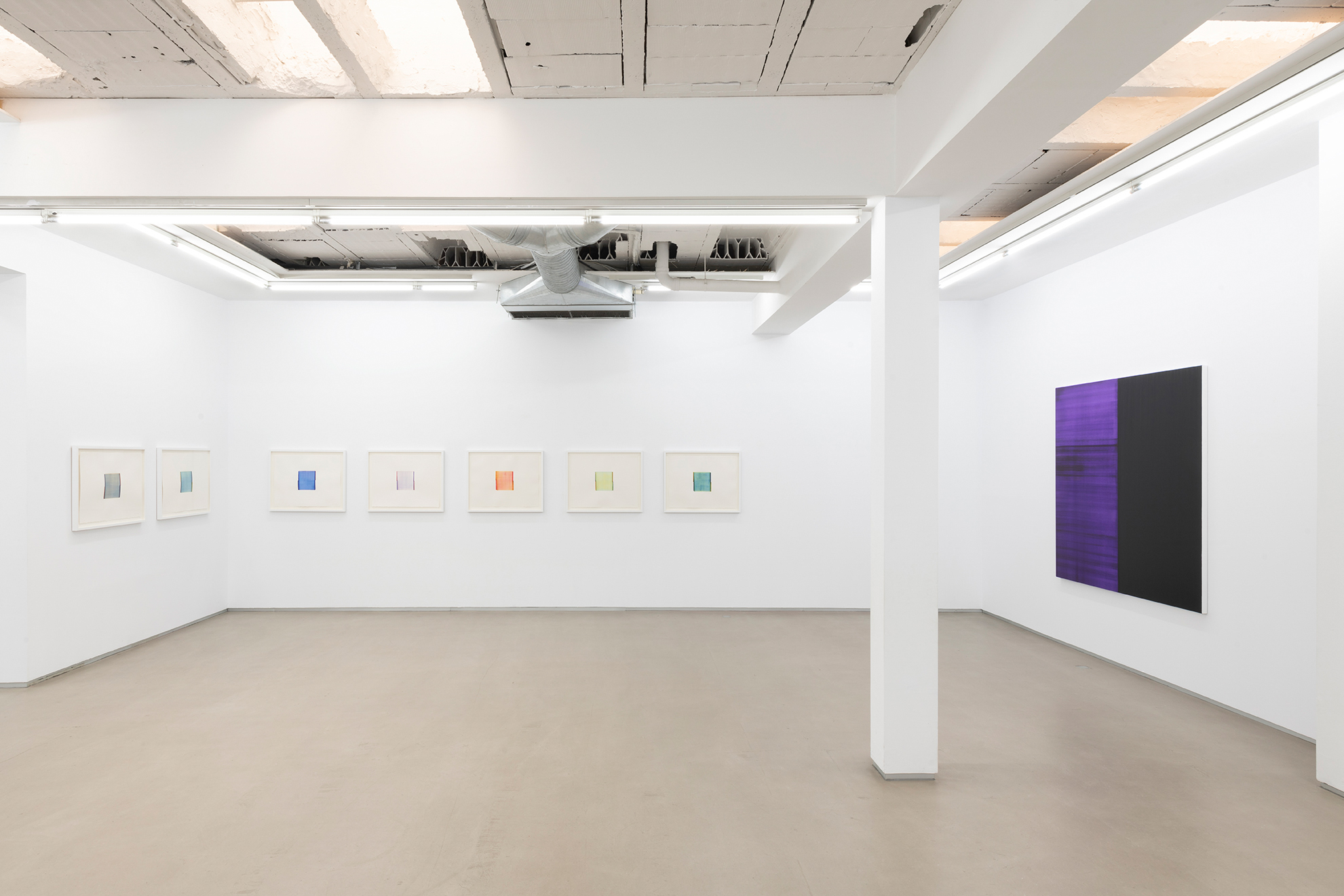
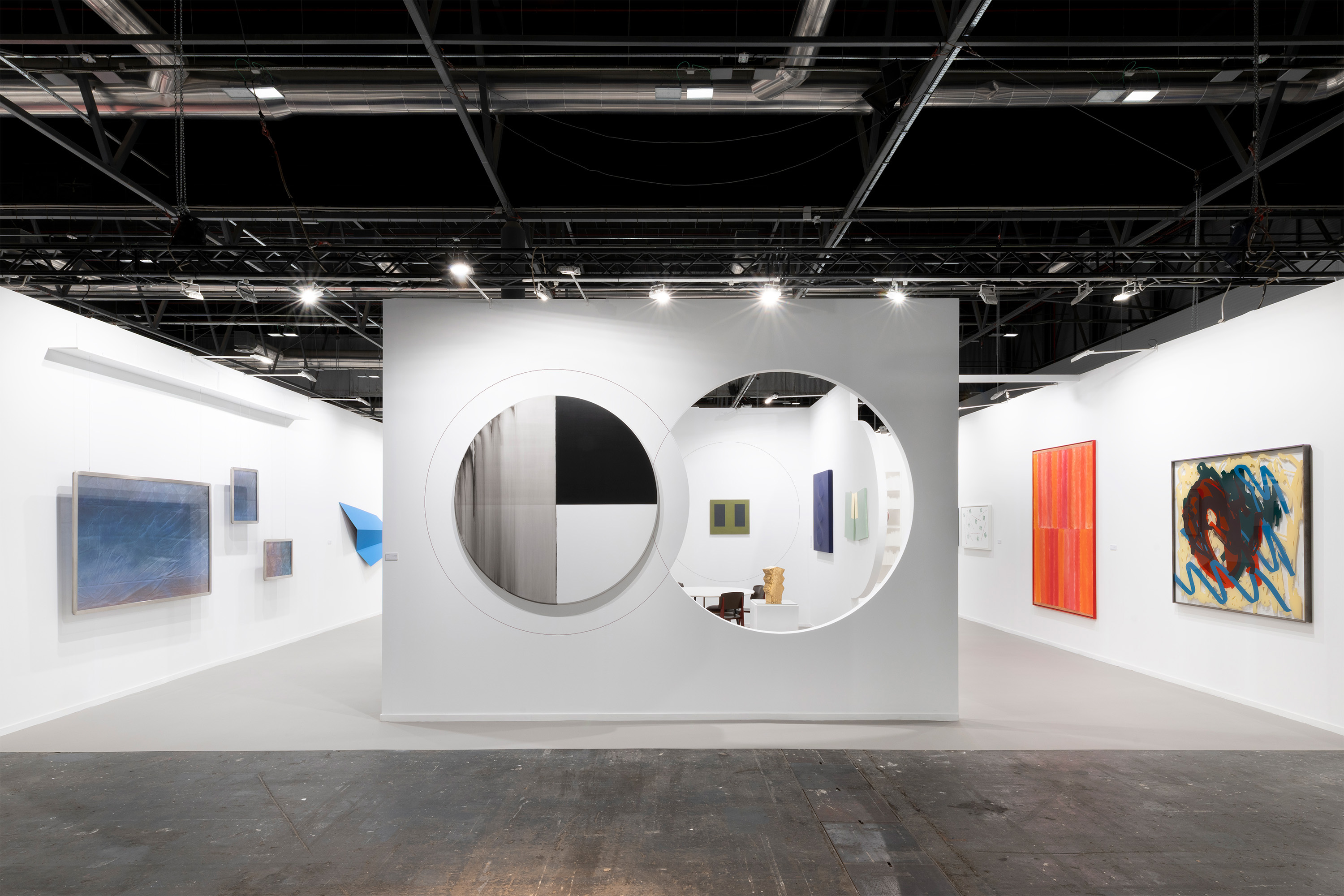
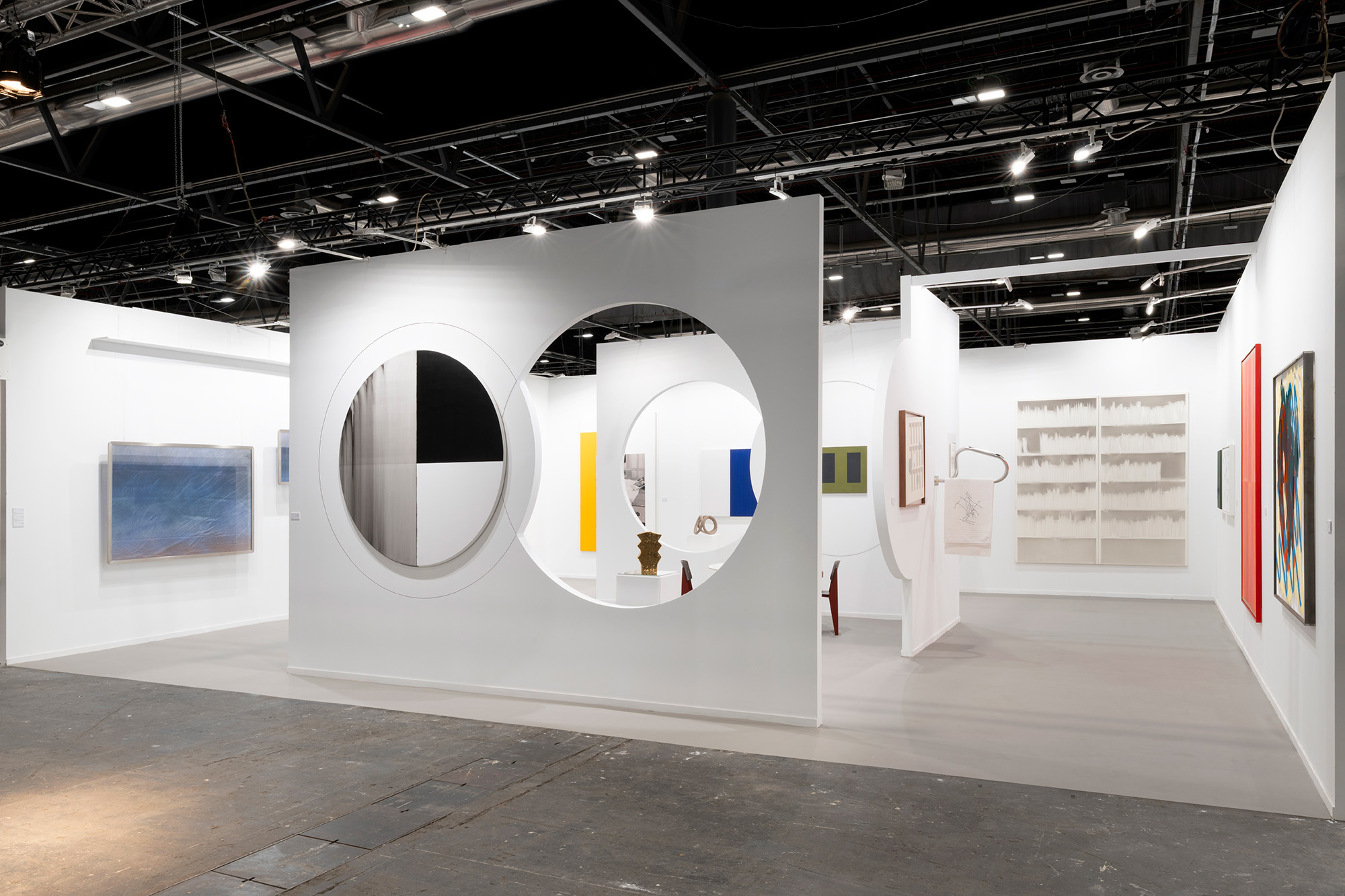
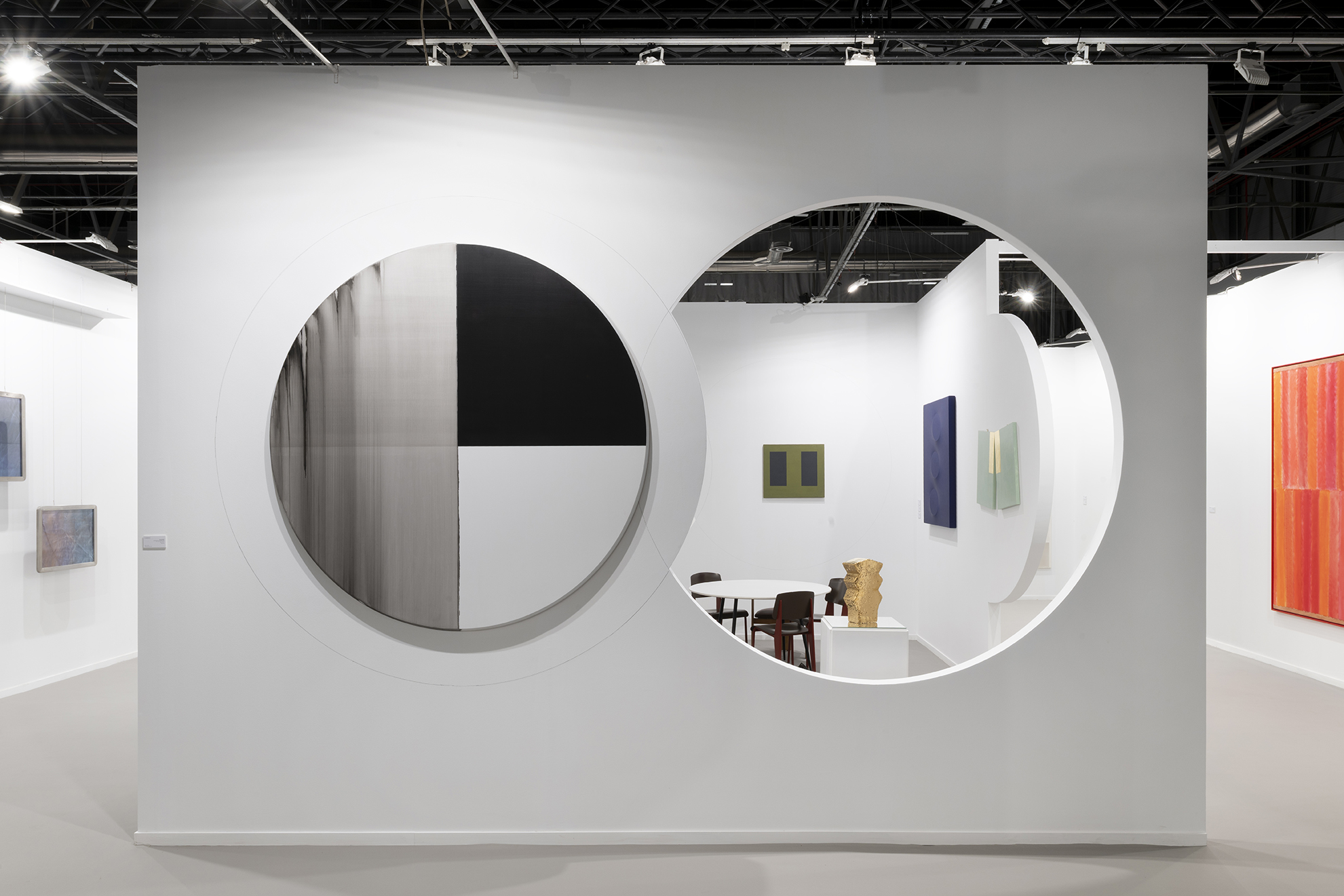
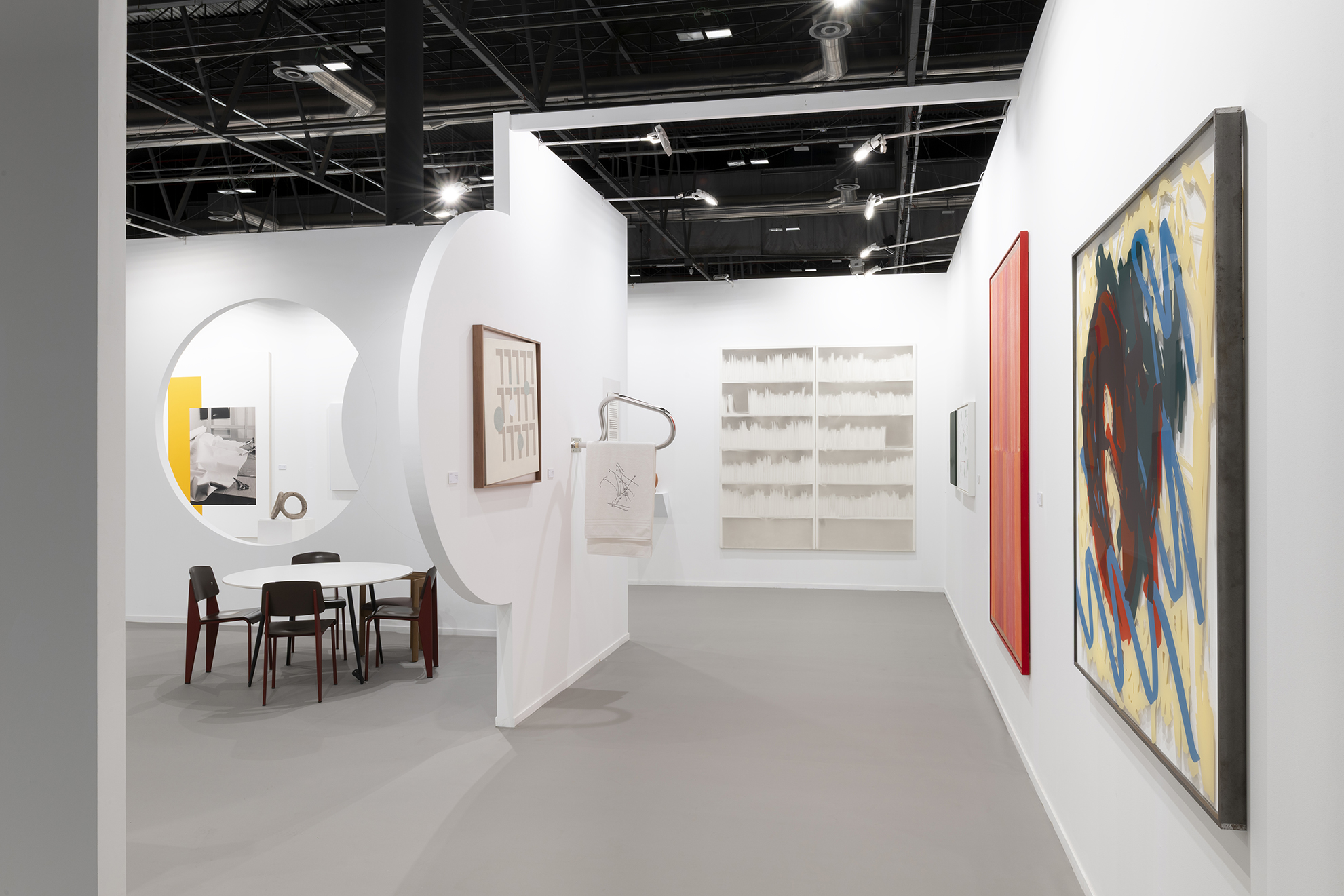
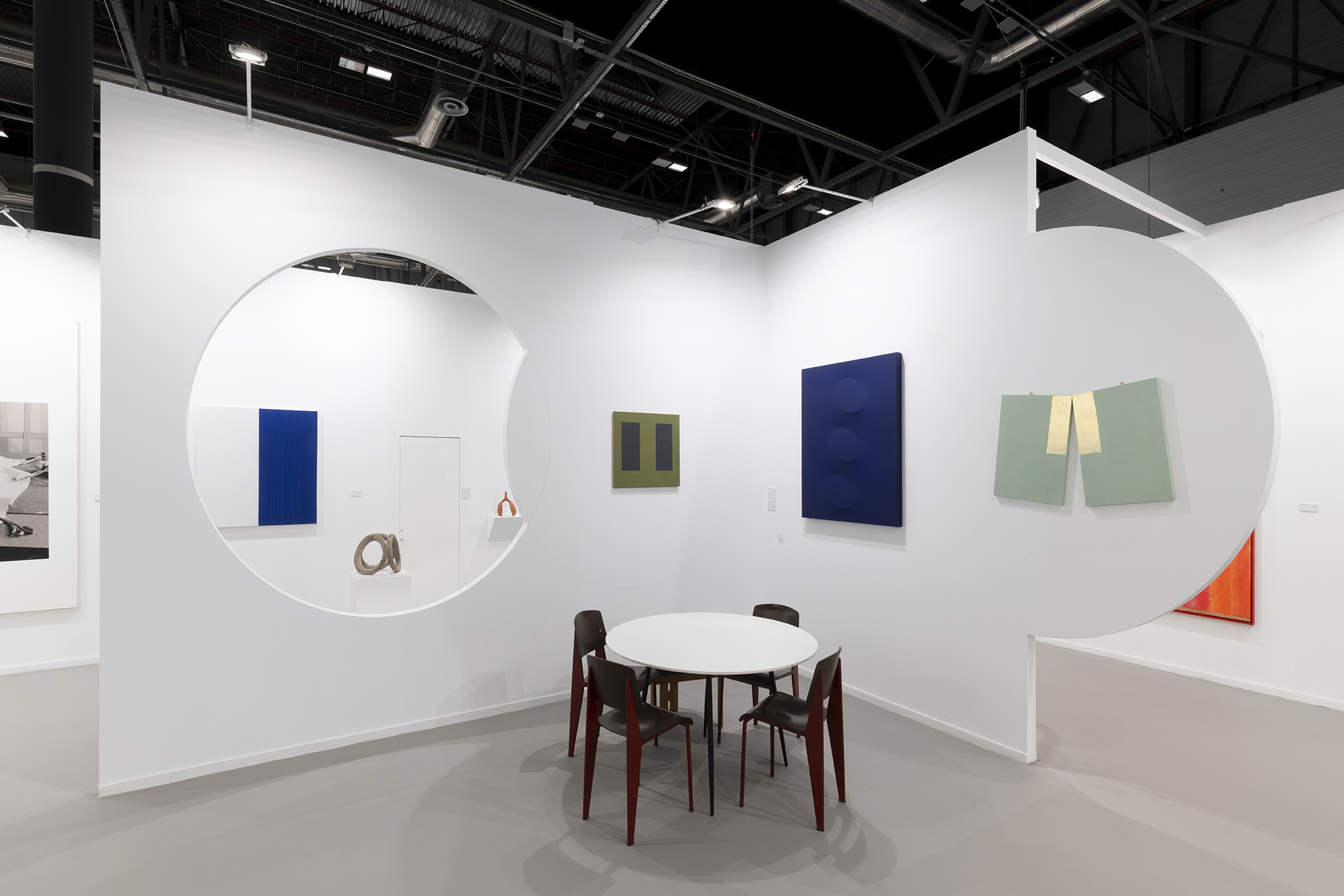
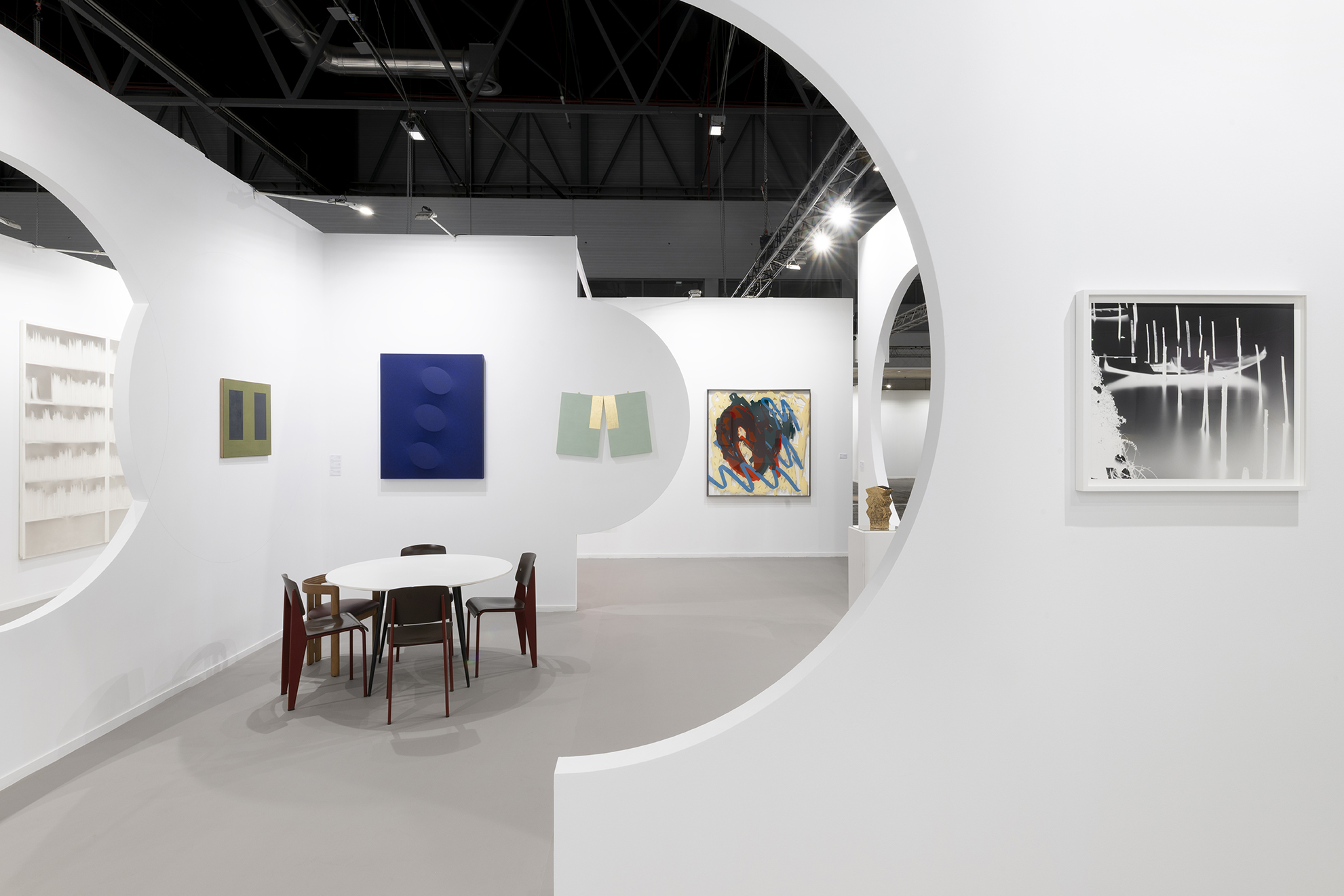
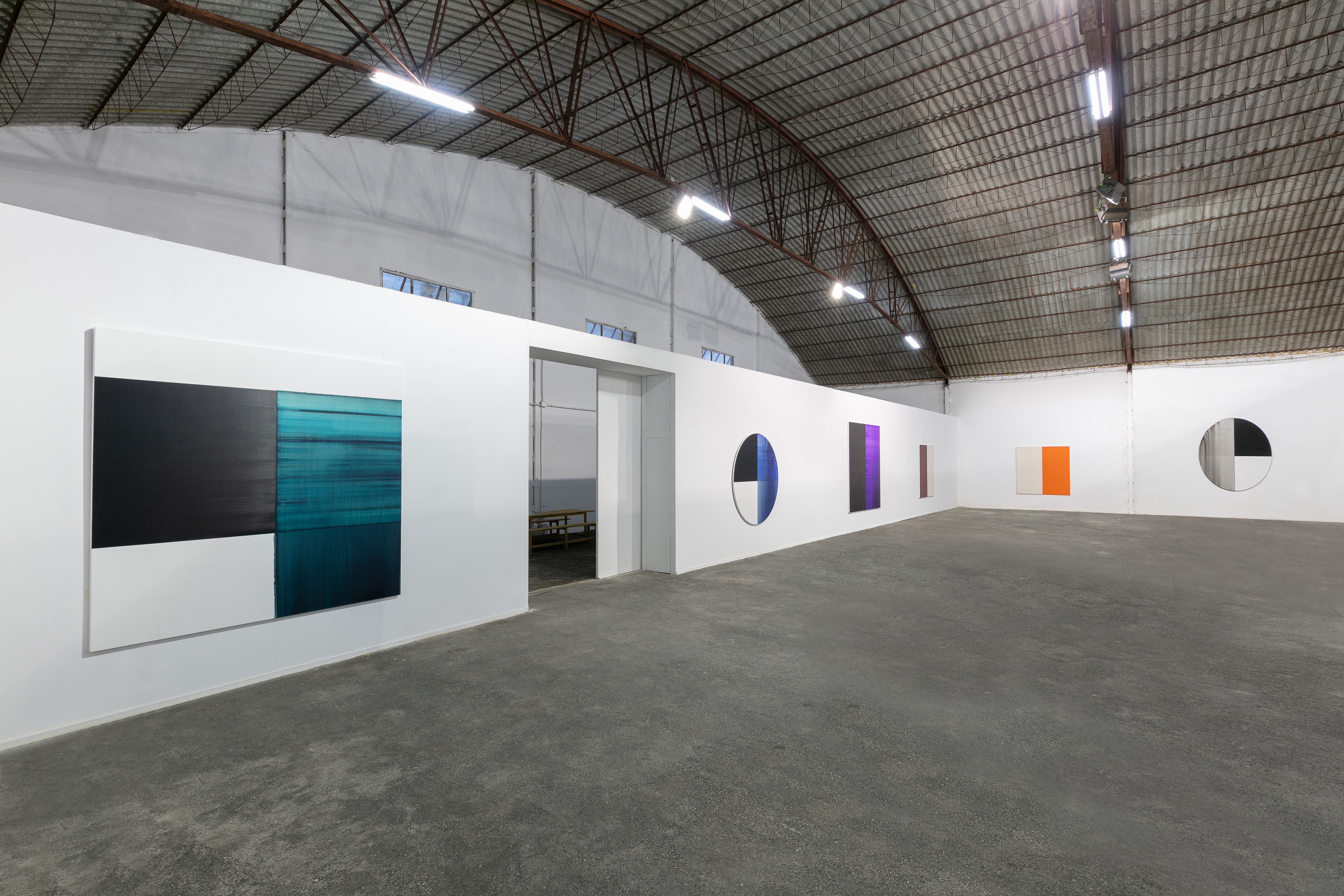
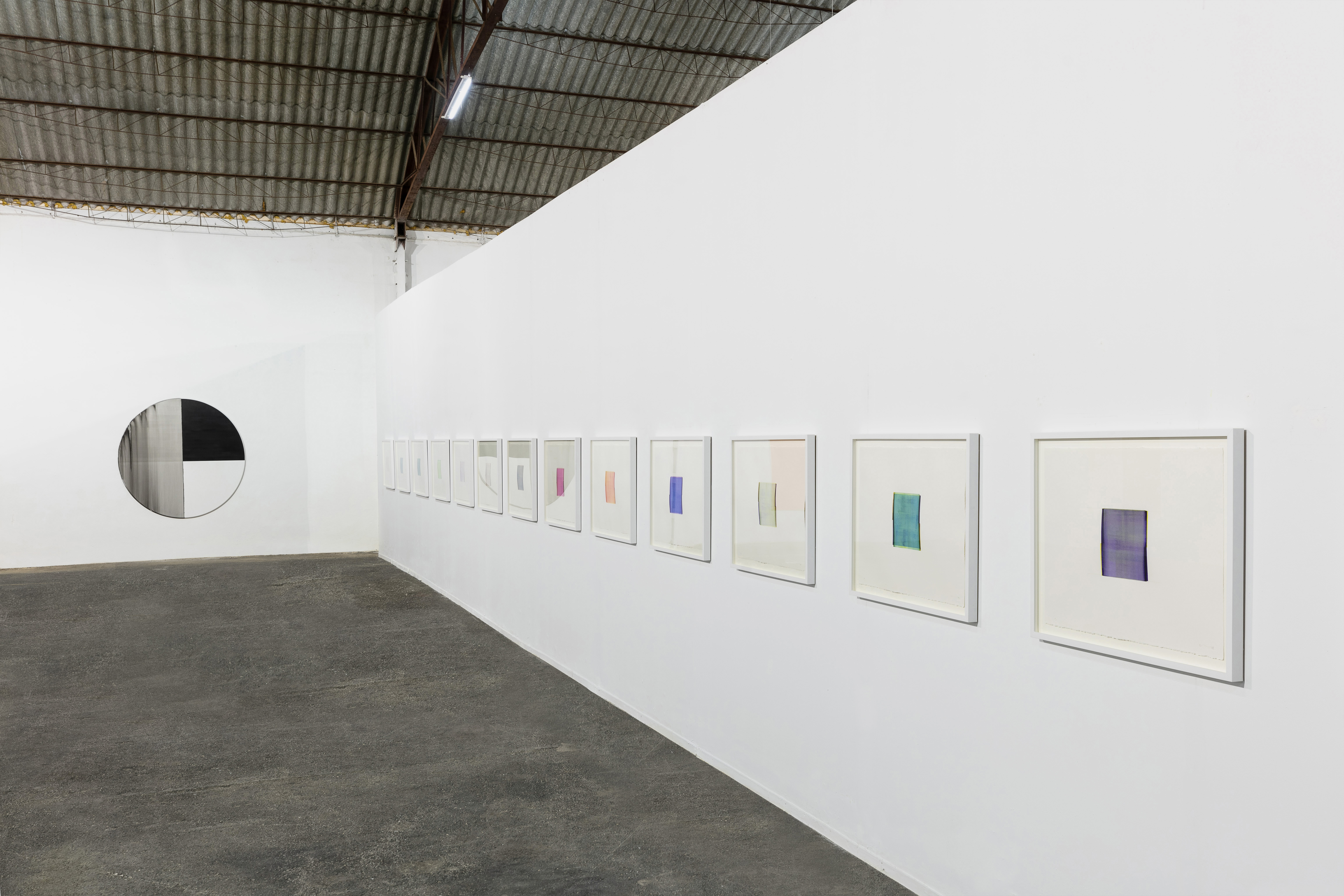
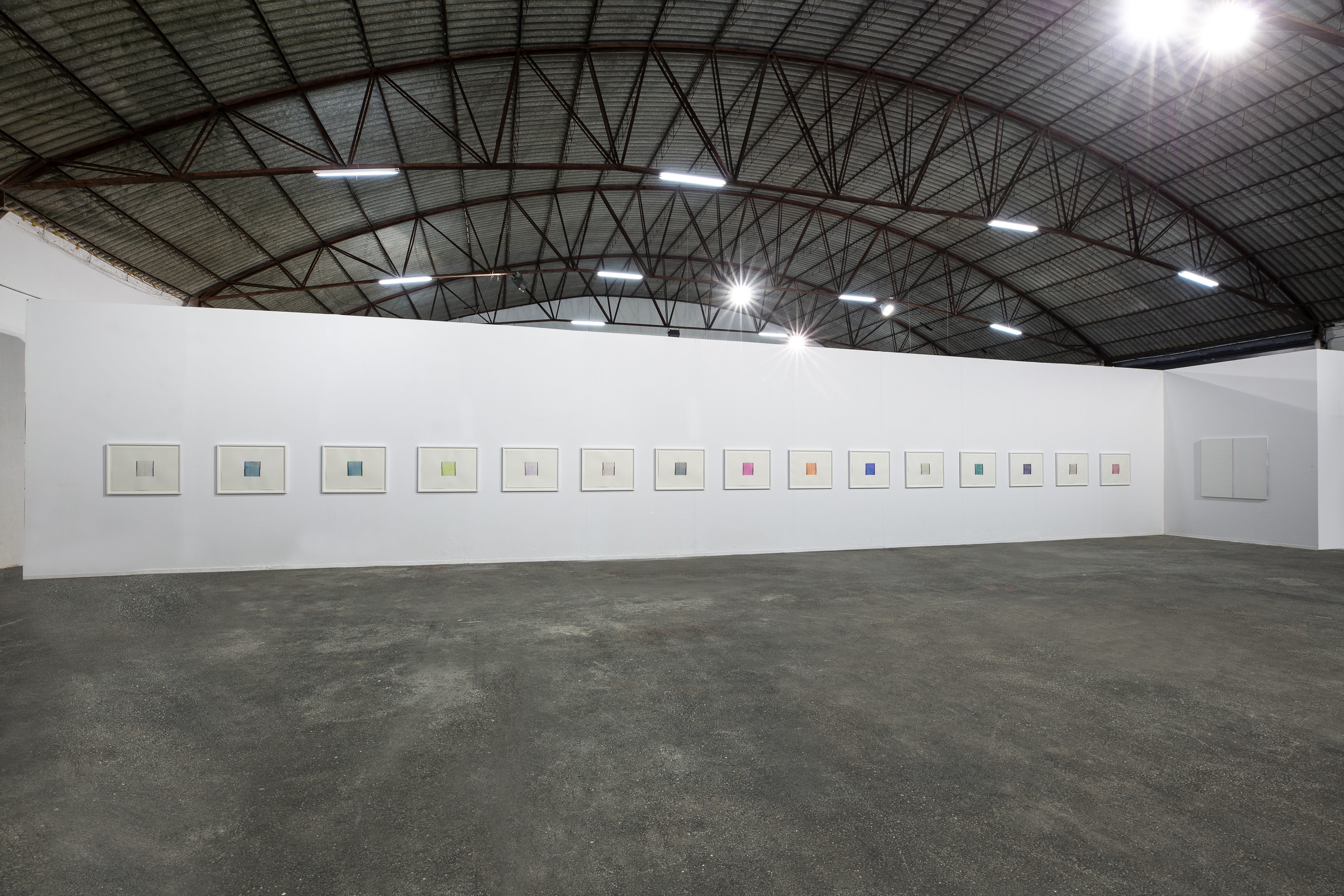
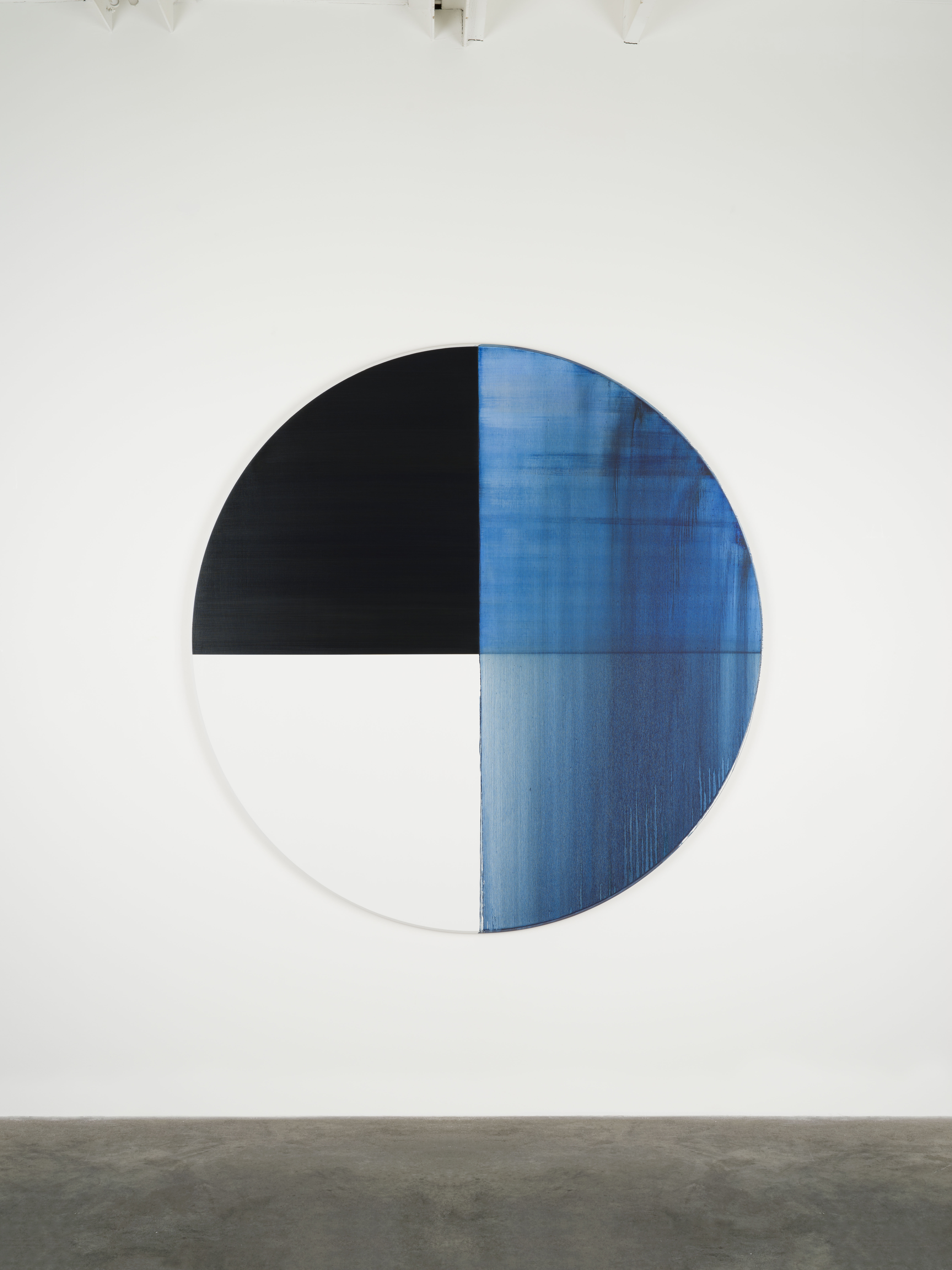
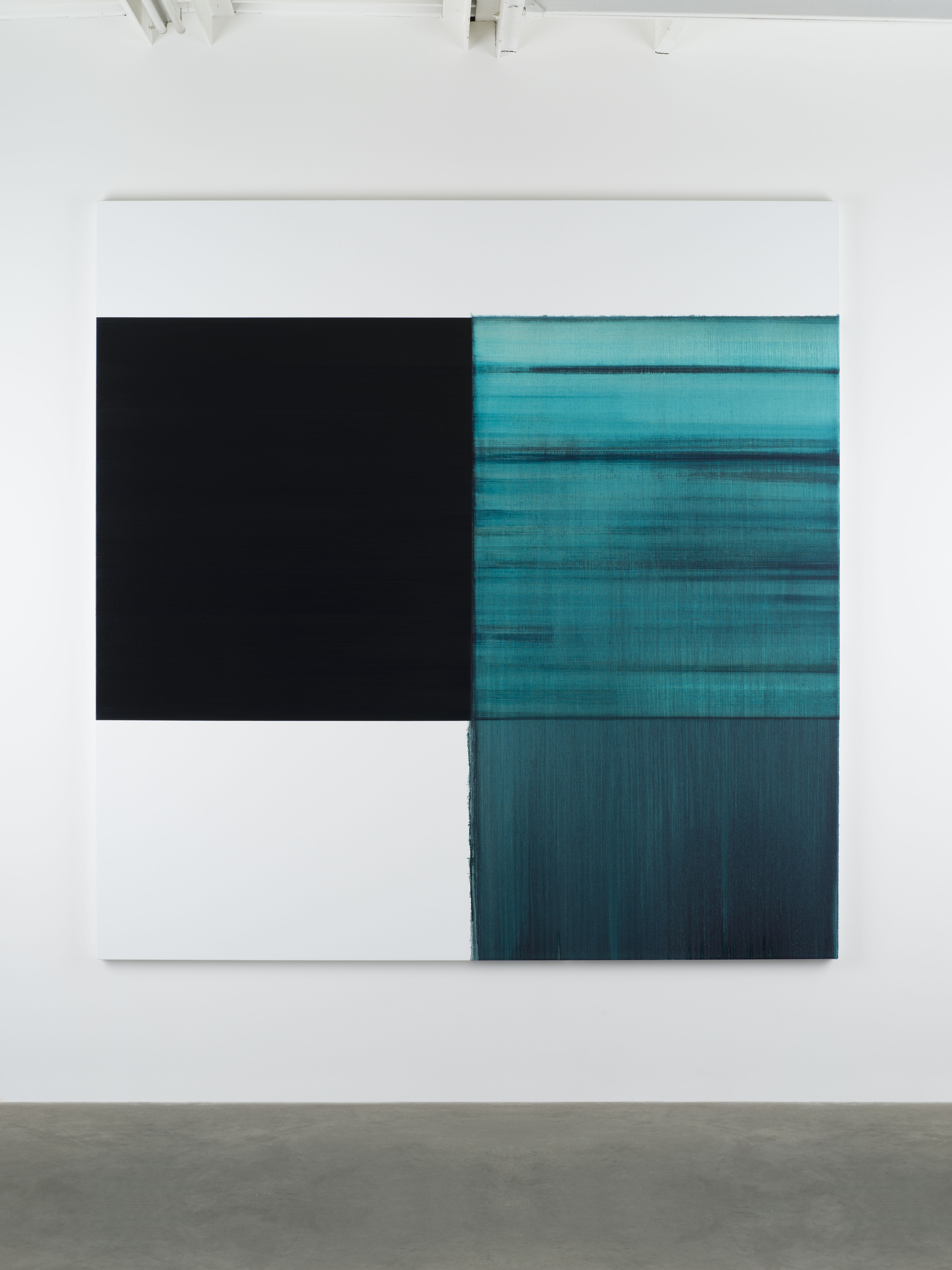
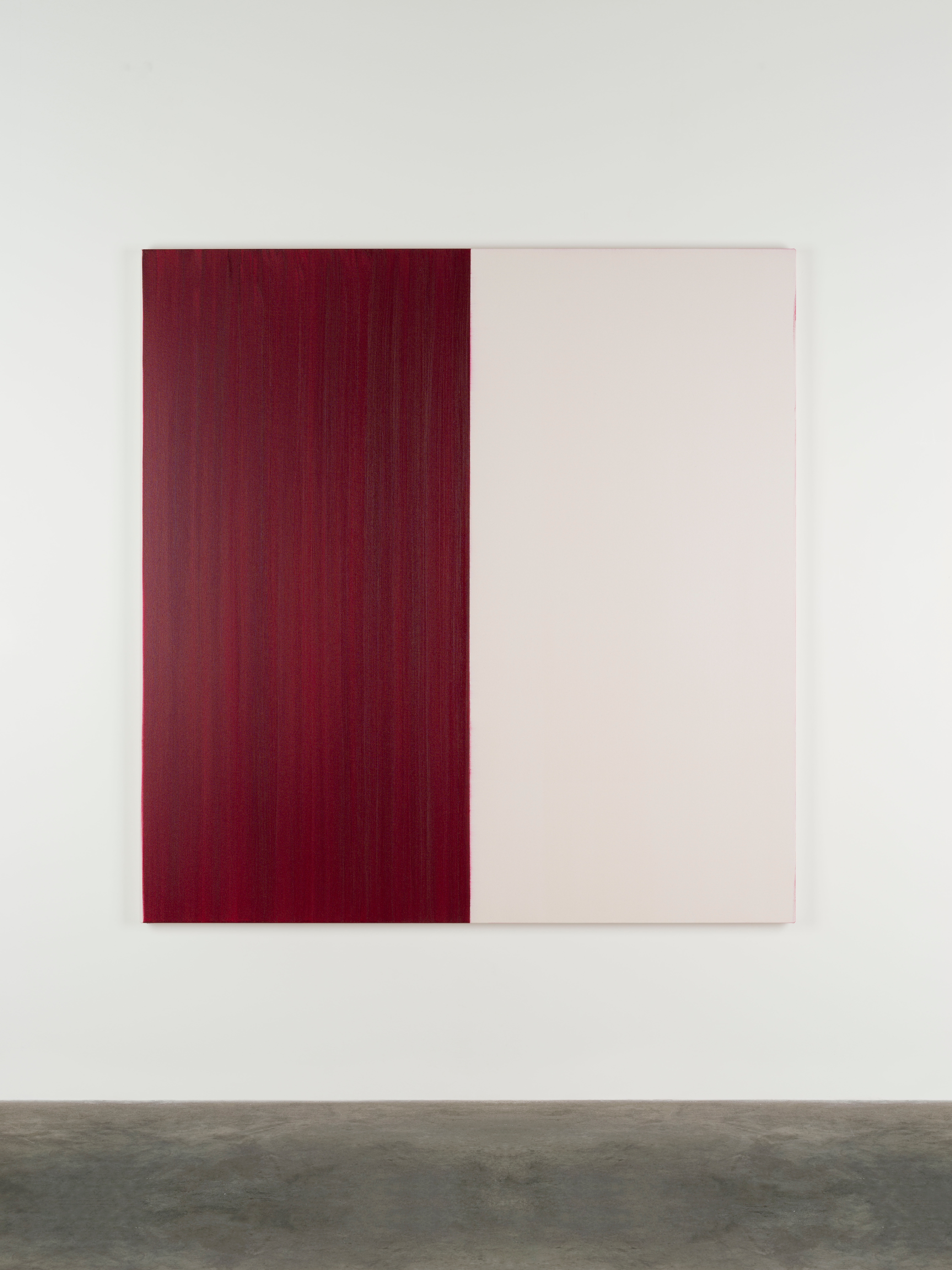
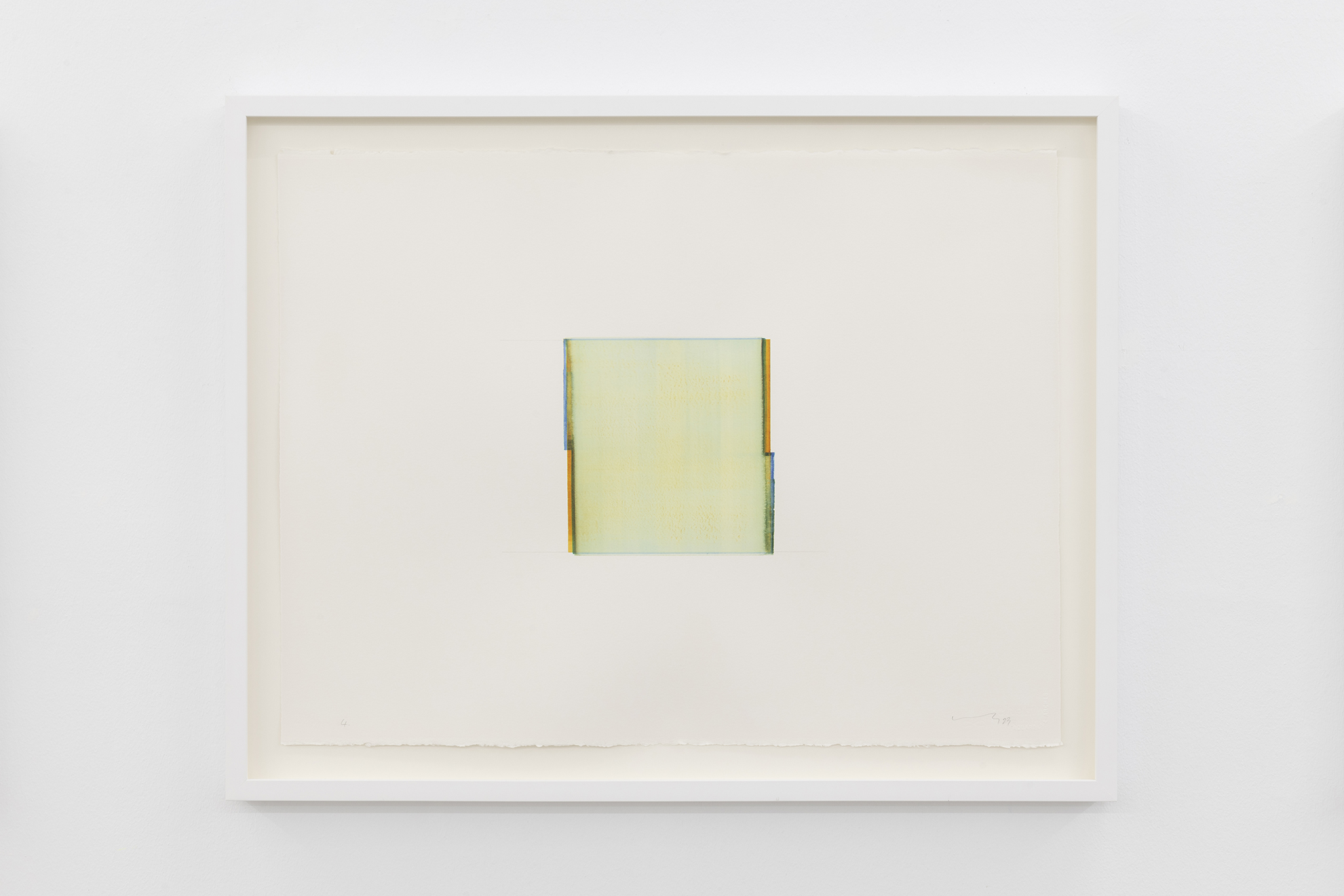
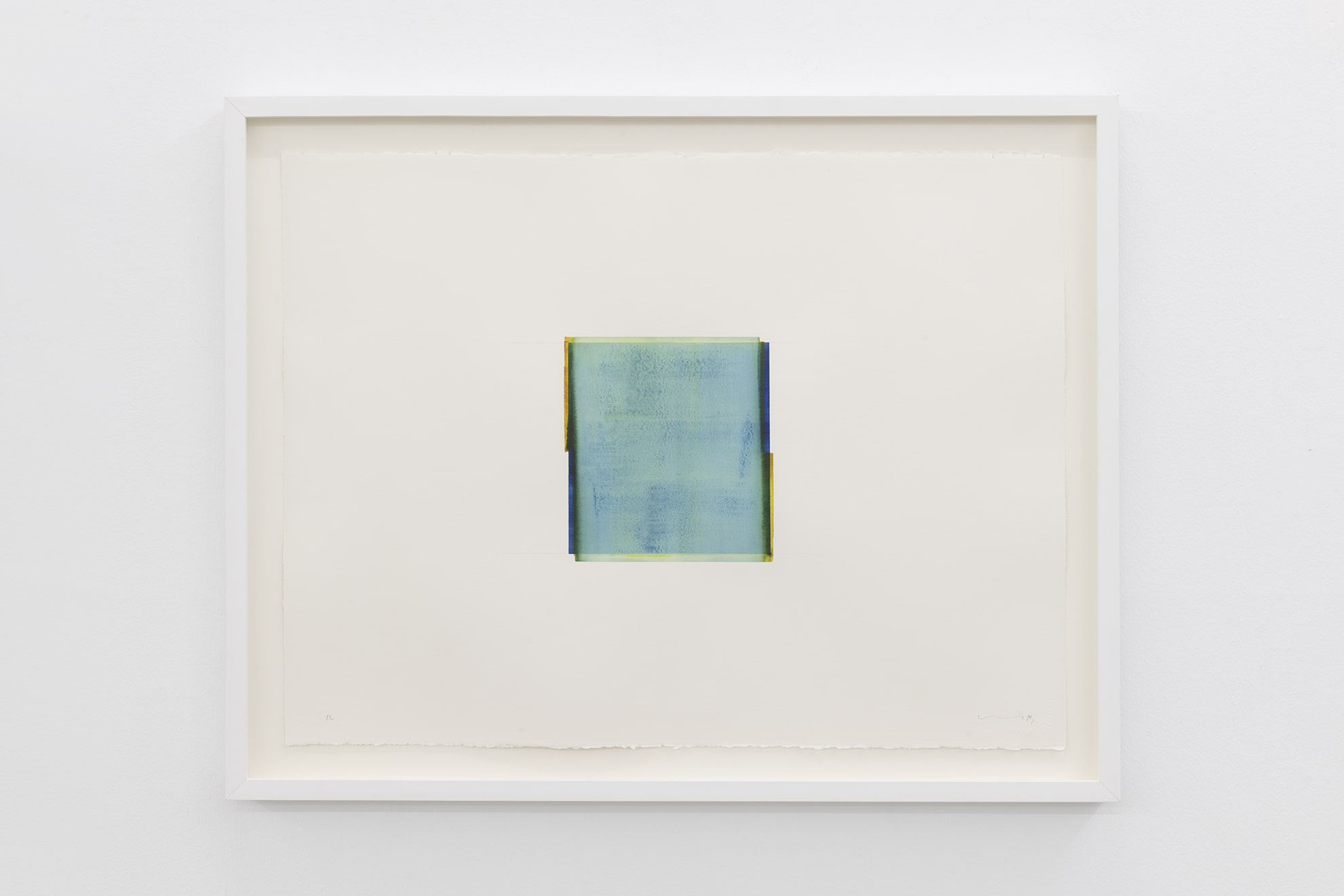
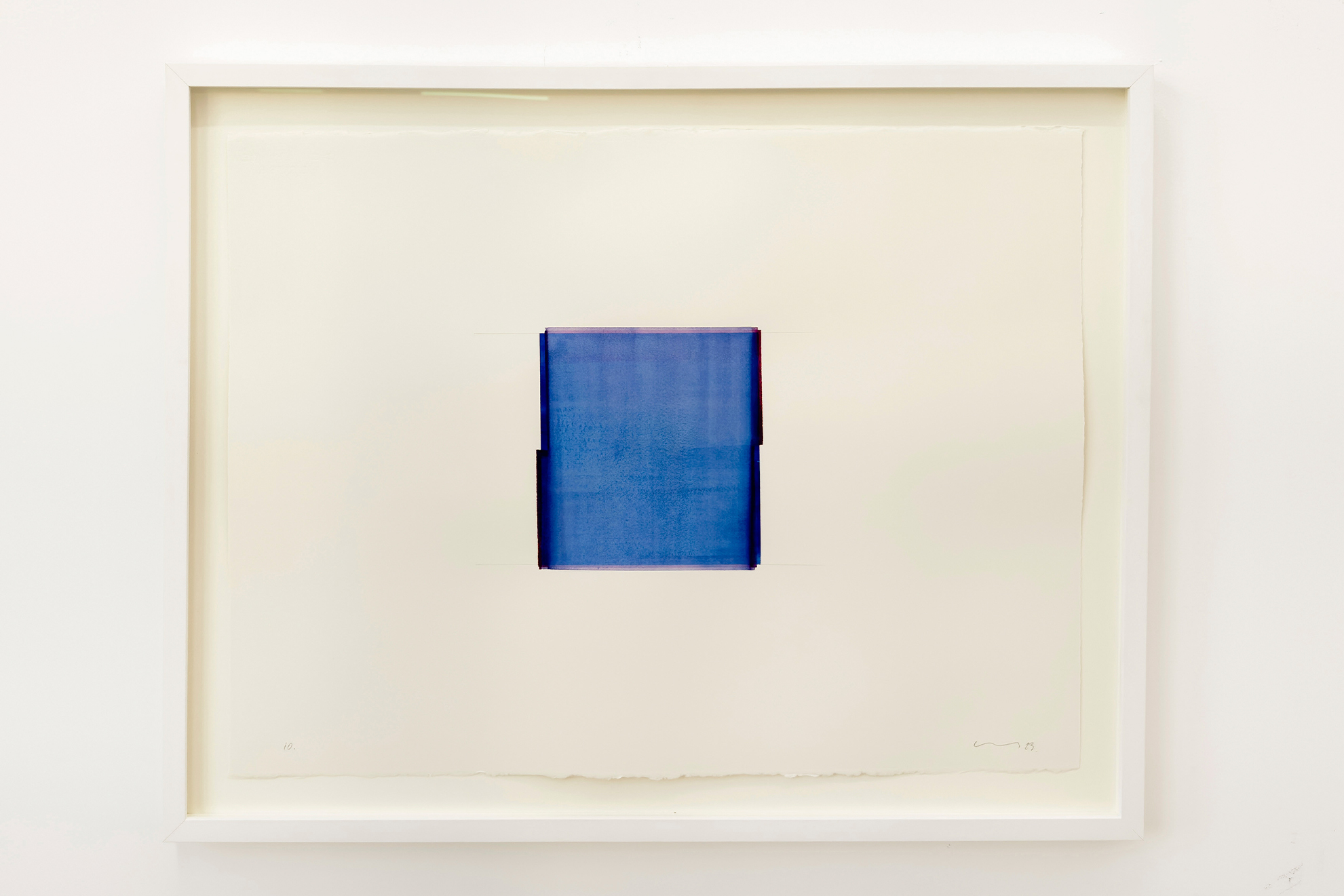
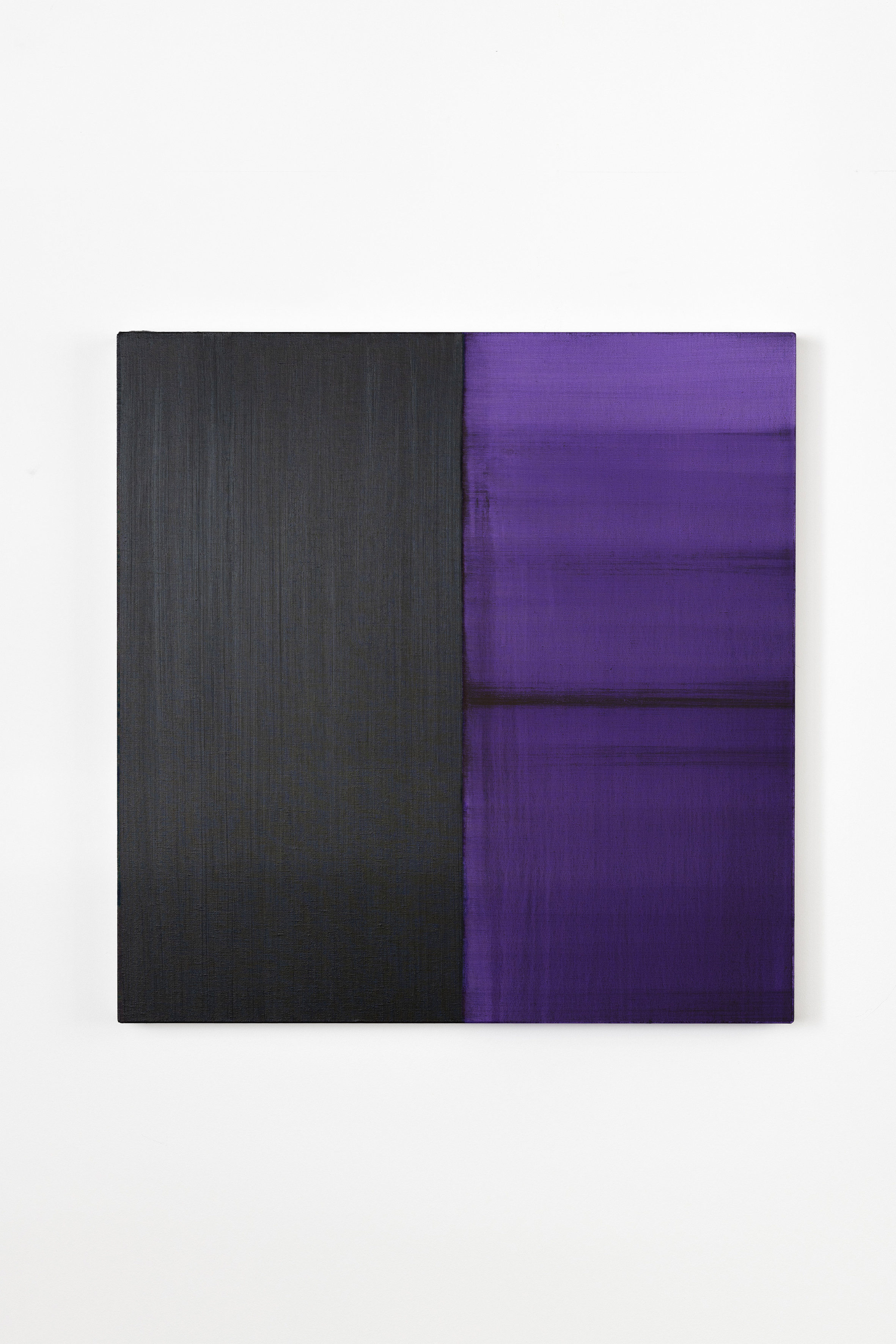
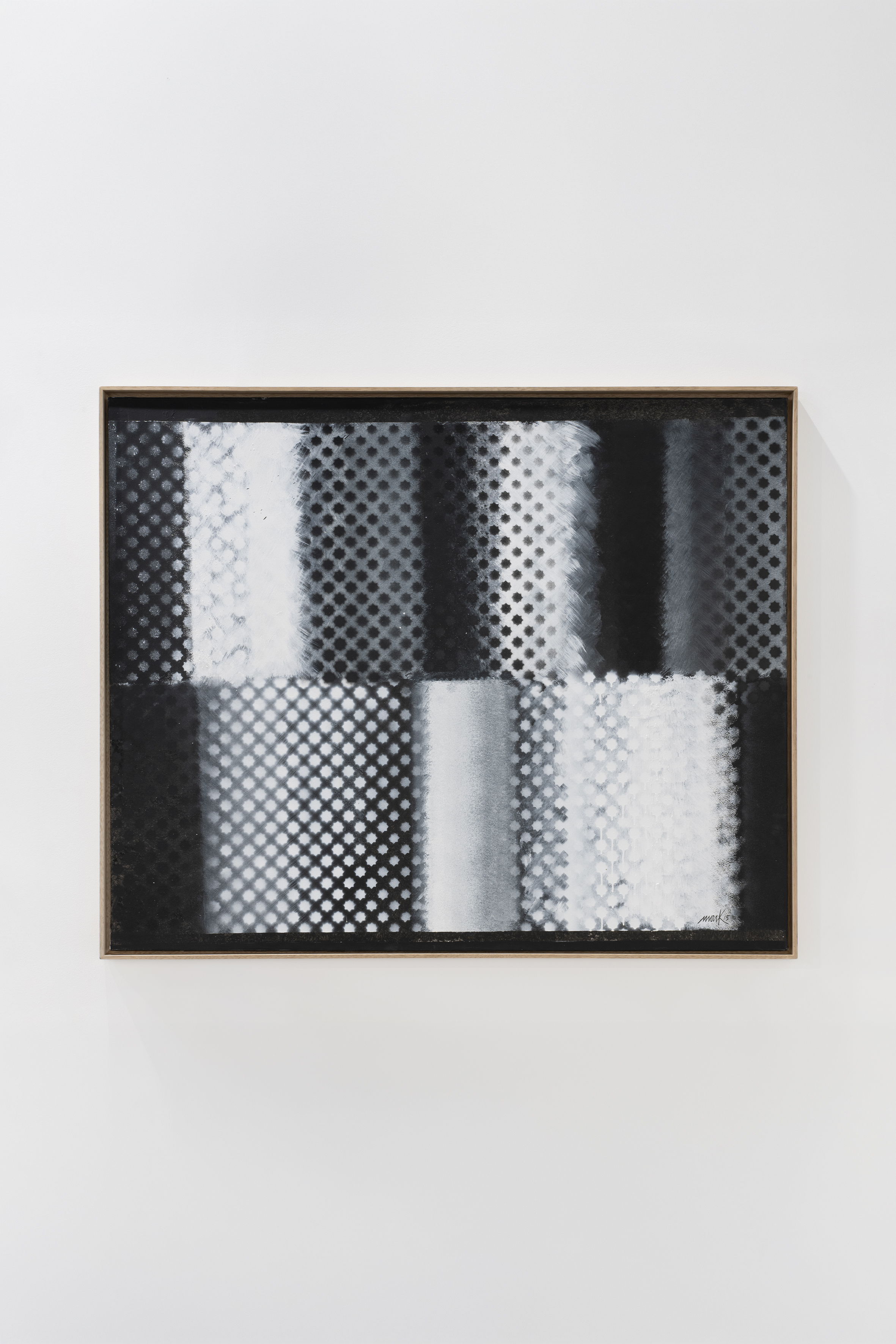
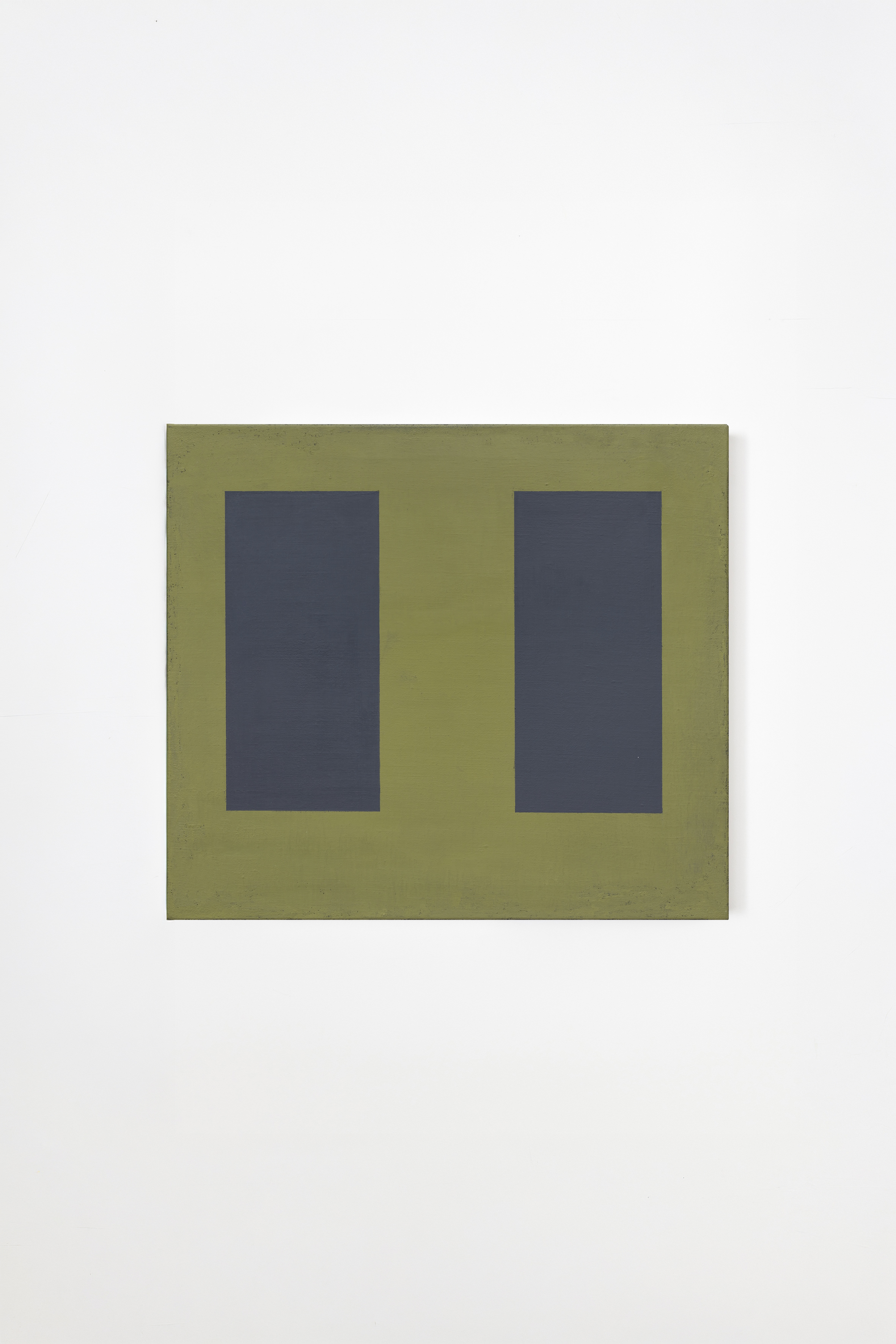
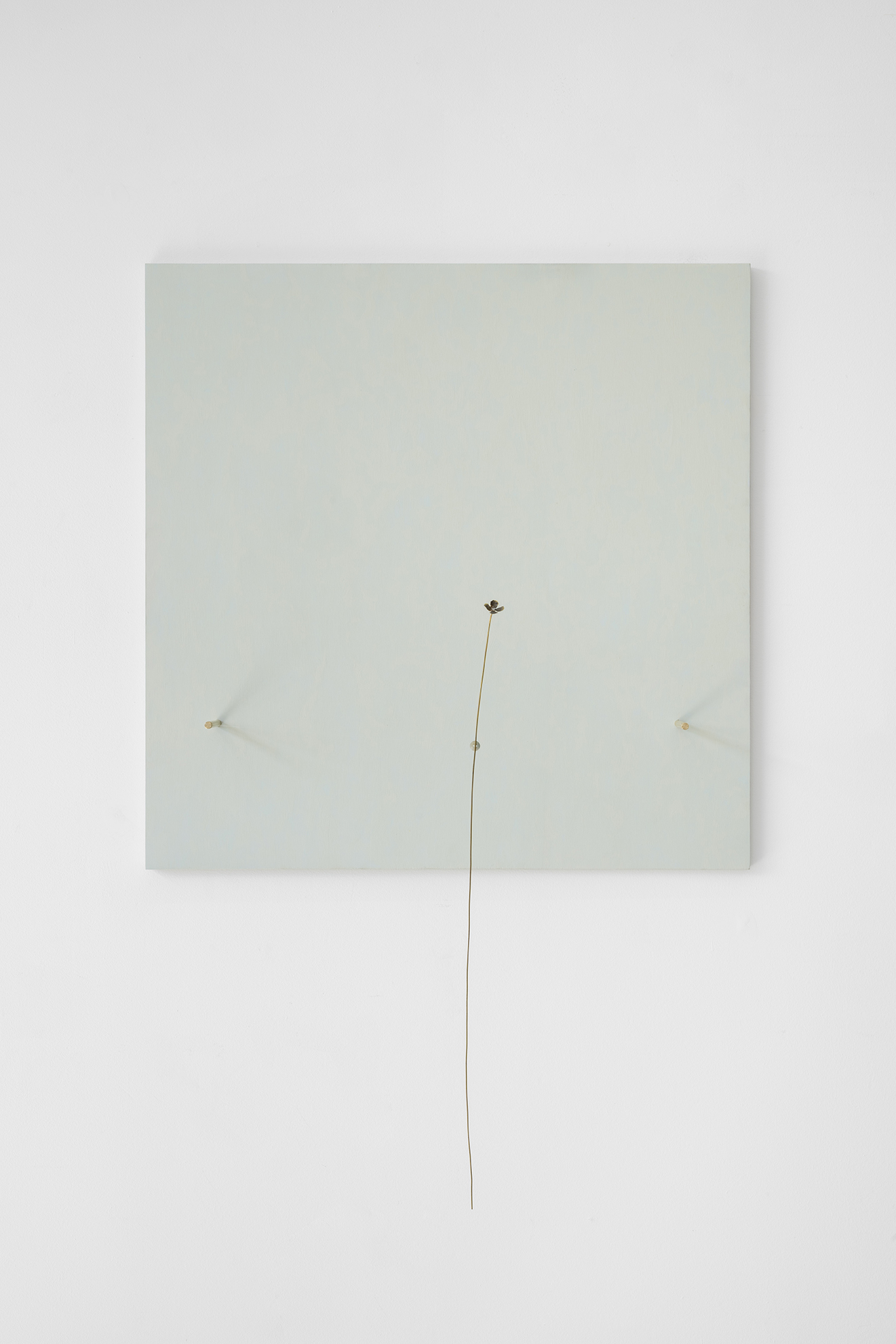
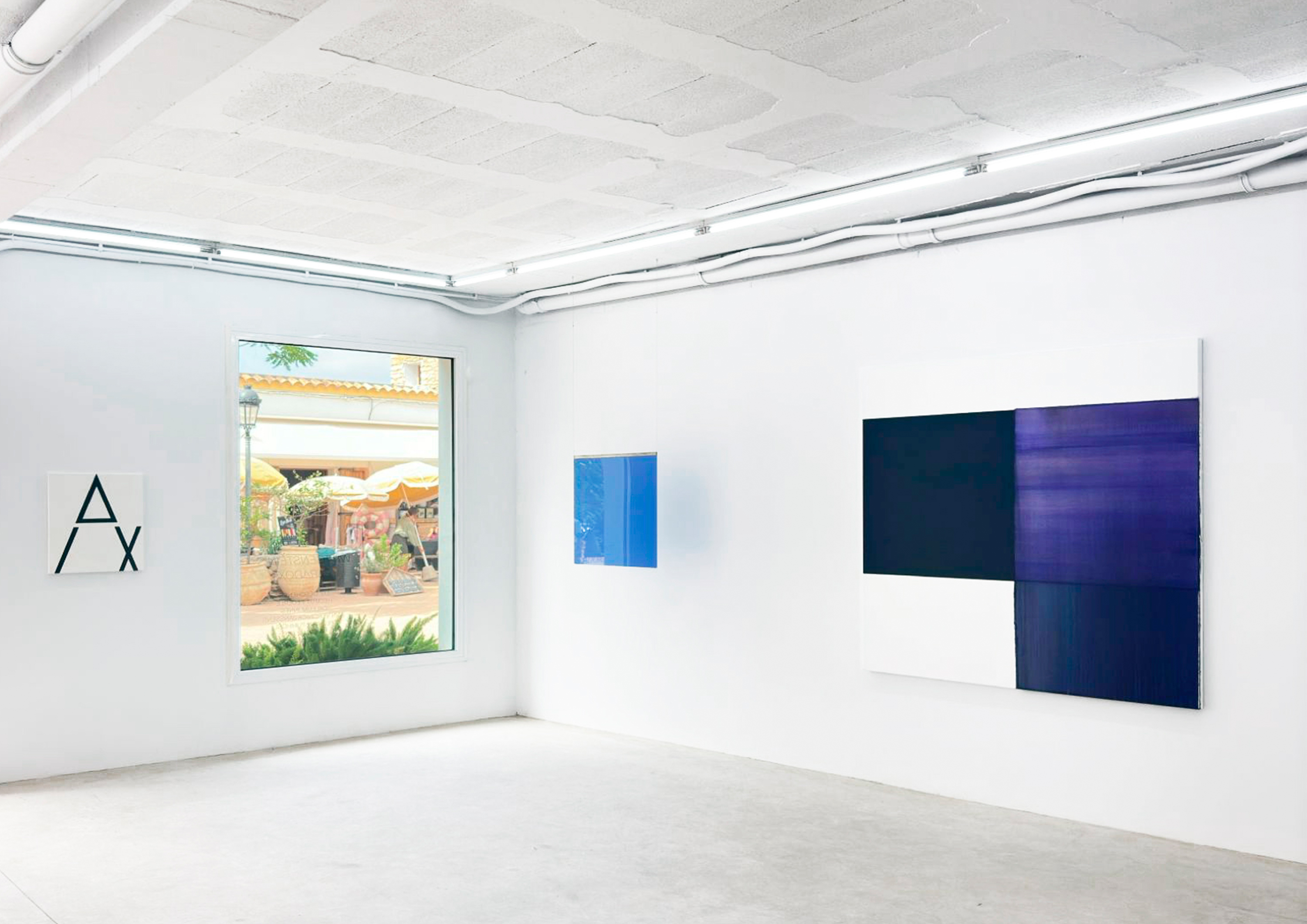
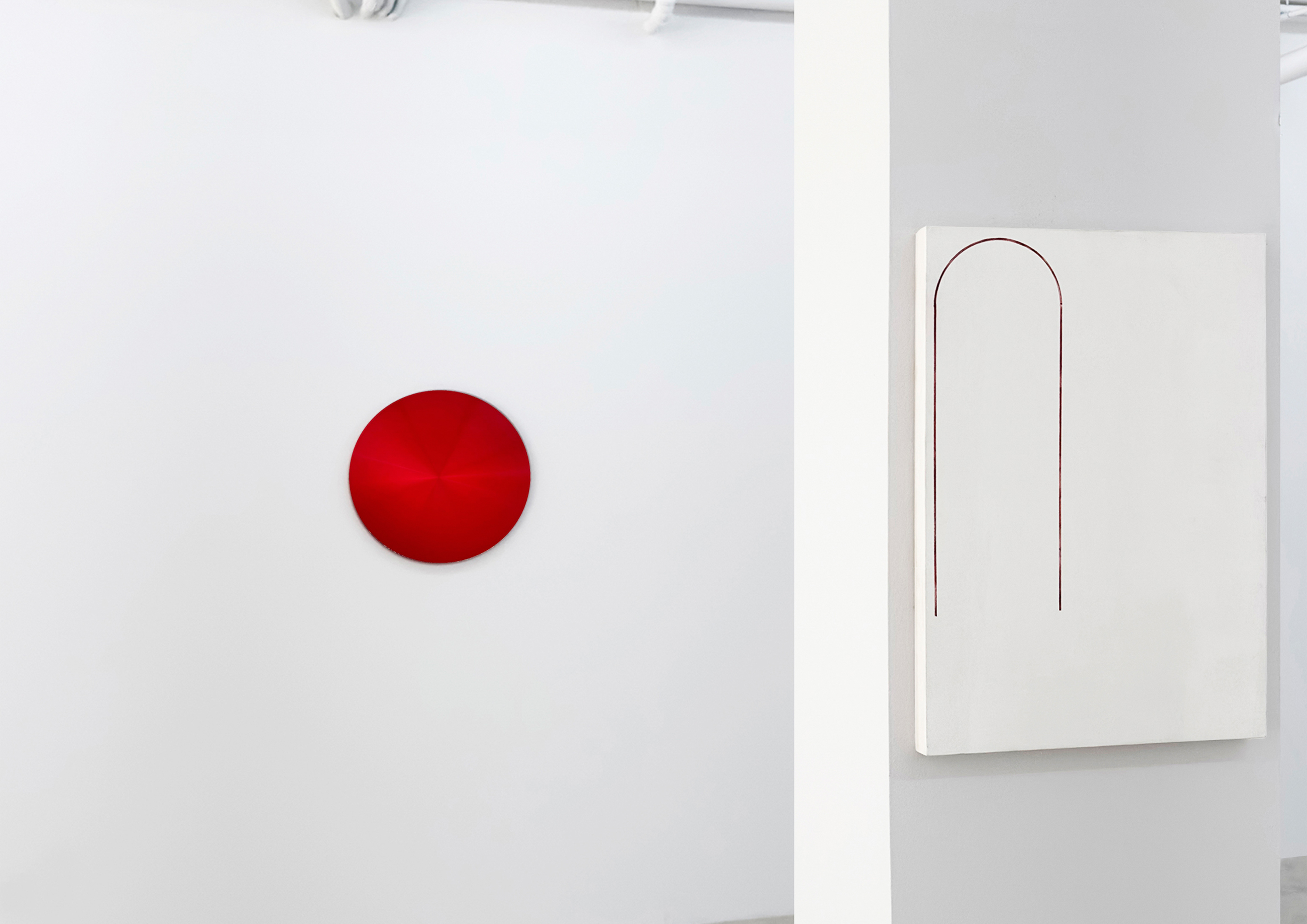
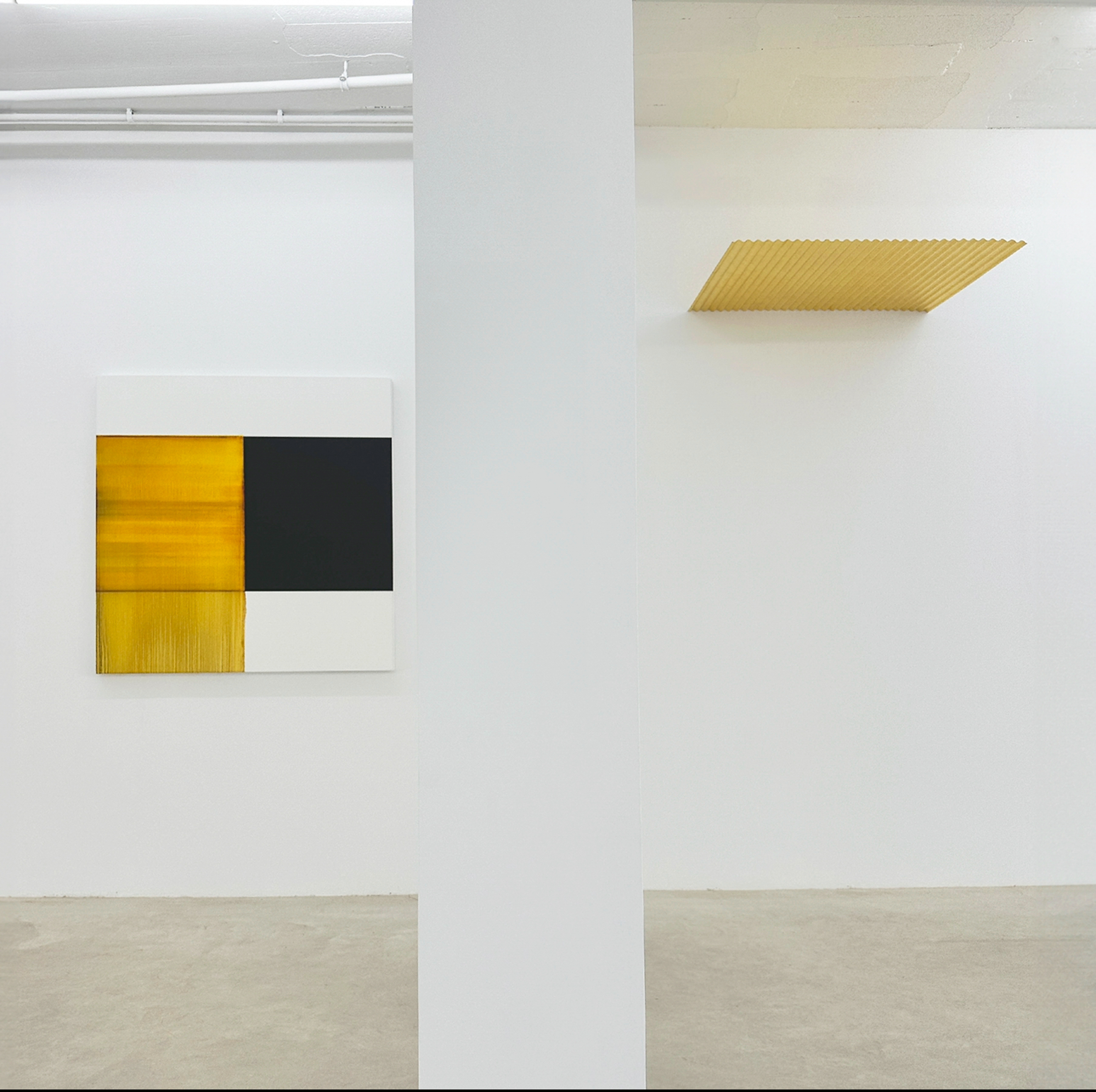
Parra & Romero is pleased to announce its second solo exhibition with Callum Innes (Edimburg, 1962), one of the leading exponents of contemporary abstract painting: a recent selection of his famous Exposed Paintings. In them, the result is revealed through the “unpainting” of overlapping layers of pigment: the painting is not constructed, but rather uncovered through subtraction. Thus, through a precise balance between control and fluidity, Innes offers an oeuvre where powerful and enigmatic pieces converge.
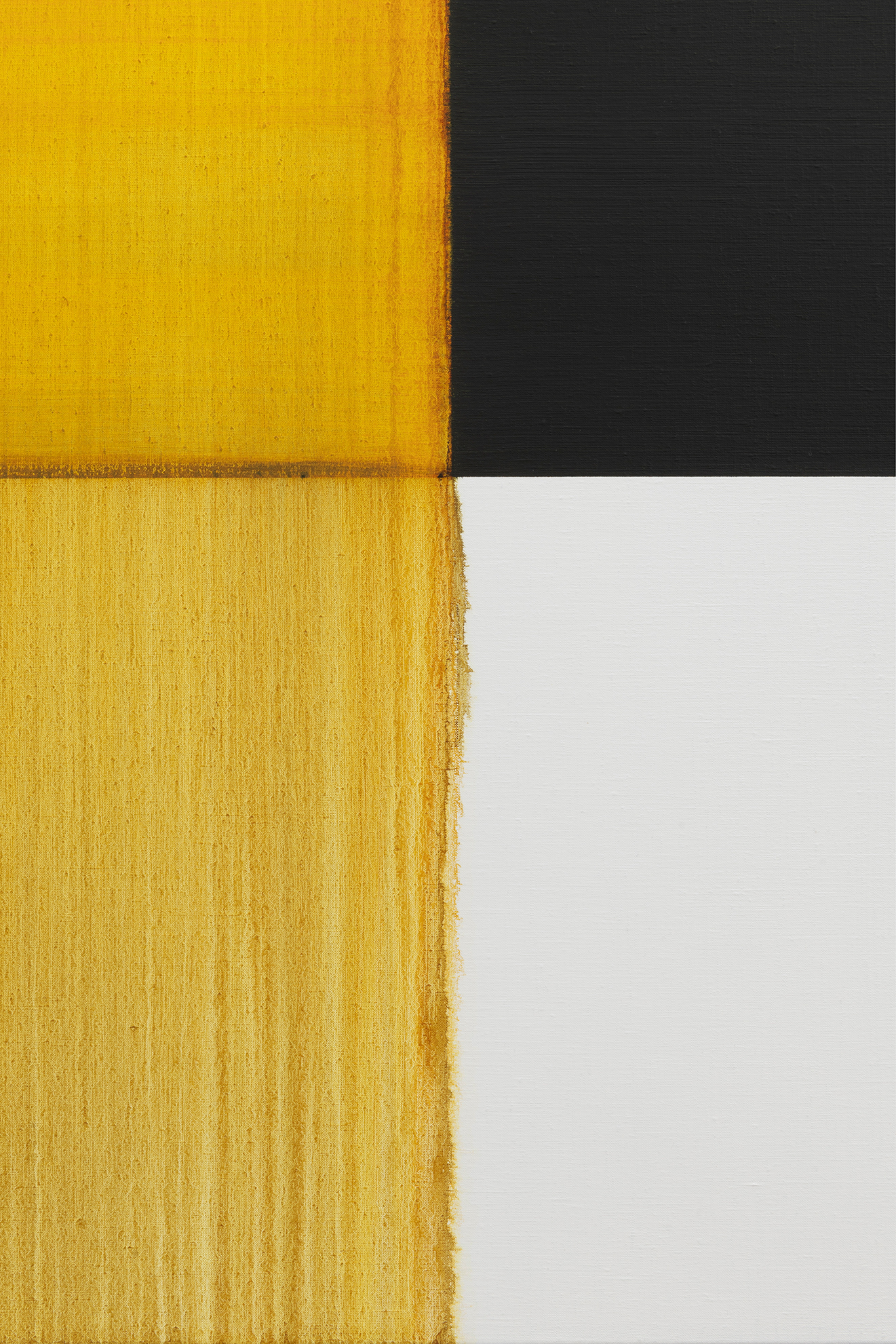
As historian Éric de Chassey accurately points out -recalling the discussion on the “death of painting” that took the artistic society of the 1960s by storm after the profusion of monochromes- Callum Innes is the painter who succeeded in overcoming that death, because his works, precisely, are completed by going beyond those apparently unsurpassable color blocks. For Innes, a saturated canvas is not the finishing point but the starting one, from where the artist begins to subtract layers of pigment with turpentine, generating depths and textures that would otherwise be unattainable.
Formally and beyond the final composition of the pieces, the artist considers that his works exceed the purely geometric, as they reflect the depth of the creative process, giving them a unique quality. “If they were just simple geometric figures,” he warns, “they would not have the fragility” that is perceived when looking at them. It is curious that, just as he emphasizes the intrinsic fragility that underlies his works, he also does so in relation to the control required for their execution. That liminal space that lies between precision and the minimum -though fundamental- space for the fortuitous is perceived when facing his paintings. An indomitable gesture within a meticulous plan. In this regard, the application and subtraction of layers is precise, with decisive brushstrokes and straight lines; carried out at a certain moment, halfway between the application of the wet paint and its total drying, so that the effect when applying the turpentine is the desired one. A technique that Innes has mastered through years of practice and today executes in paintings of complex processes, some of them with almost a dozen layers of paint in total.
As an artist indebted to movements such as minimalism and concrete art, the form his works take also becomes fundamental. In this regard, in this exhibition the artist presents again only square works, after a research process of tondos that he exhibited last year. It is useful at this point to recall curator Fiona Bradley and her analysis of the objectual character of Innes’ work. For her, his work is not about figuration vs. abstraction, but about image vs. object. In this sense, it is only natural that an artist who is committed to in-depth processes and remains invested in materiality in the face of the digital advance, should explore both the forms that inhabit his works as well as the mediums that support them. For Innes, square works are not a default format, but a meditated decision.
Callum Innes studied drawing and painting at Gray’s School of Art in the 1980s and completed a postgraduate degree at Edinburgh College of Art in 1985. His career exceeds one hundred solo exhibitions over nearly four decades of continuous work; and his works are part of more than 50 world-renowned collections, including the Tate Gallery in London, the Kunstmuseum Bern, the National Galleries of Scotland, the Solomon R. Guggenheim Museum in New York, the Centre George Pompidou in Paris, the Irish Museum of Modern Art, the Museum of Fine Arts, Houston, the Modern Art Museum of Fort Worth, the San Francisco Museum of Modern Art, the National Gallery of Australia, the Albright-Knox Art Gallery in Buffalo, the Art Gallery of Ontario and Deutsche Bank. He lives and works between Oslo and Edinburgh.