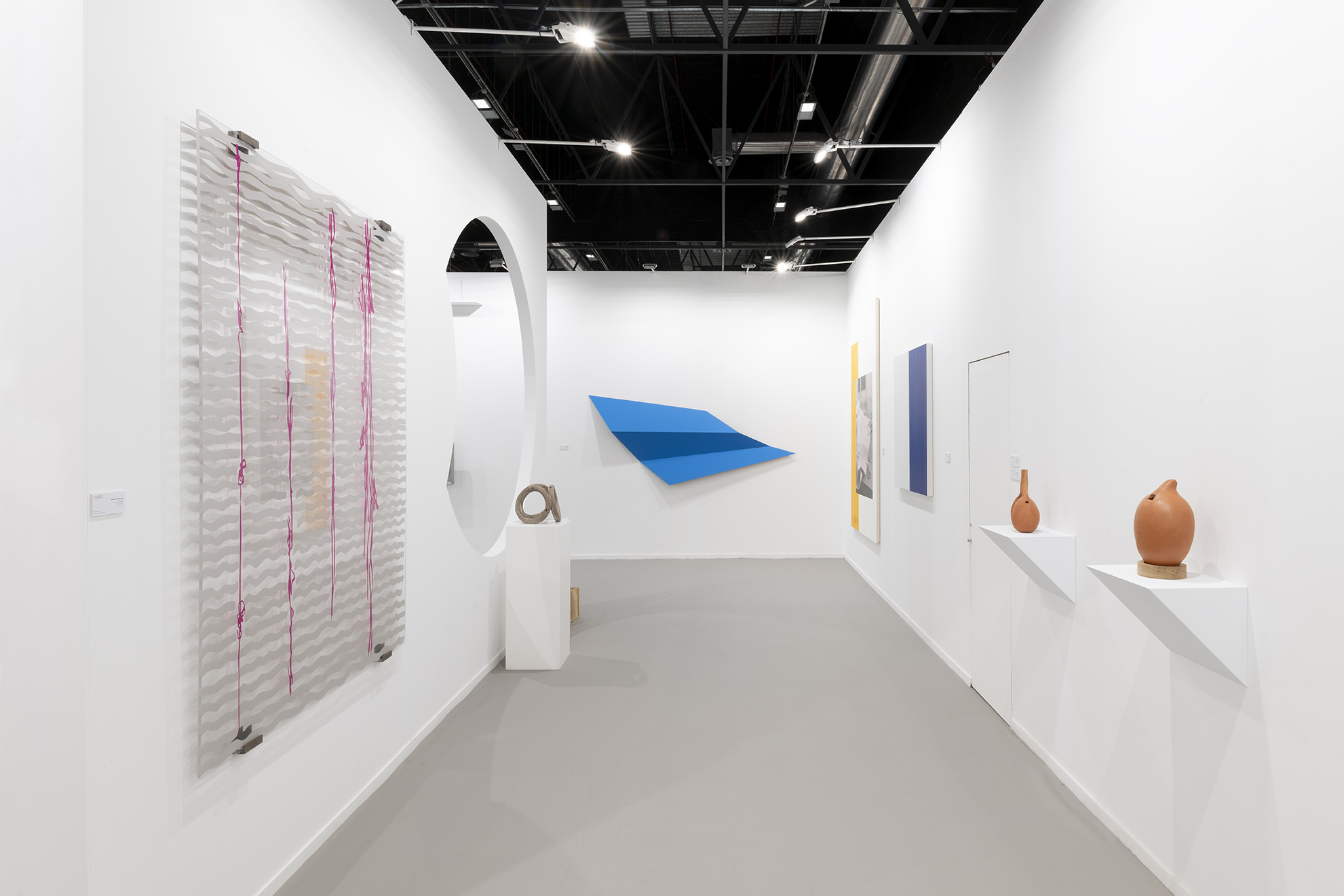
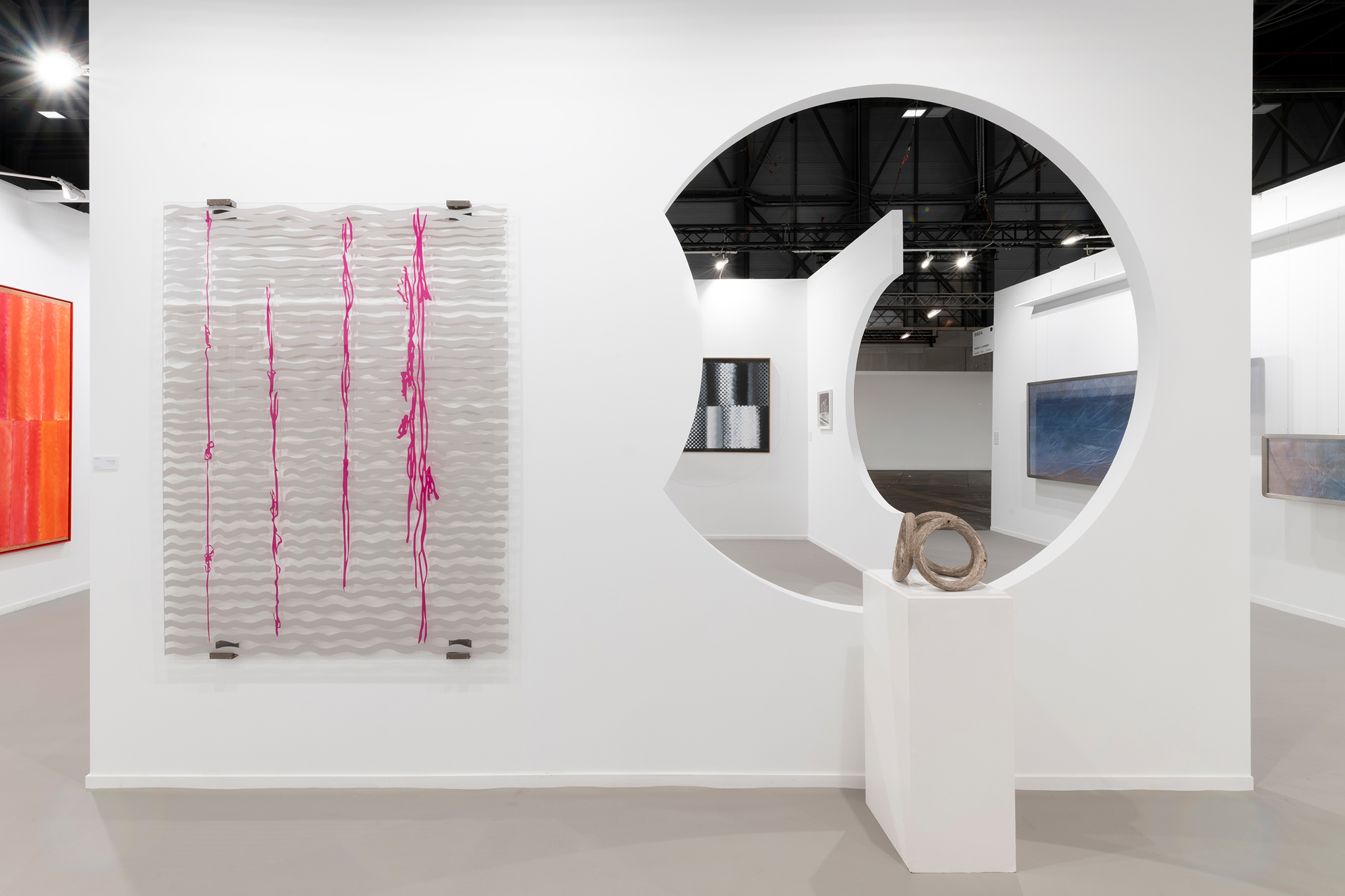
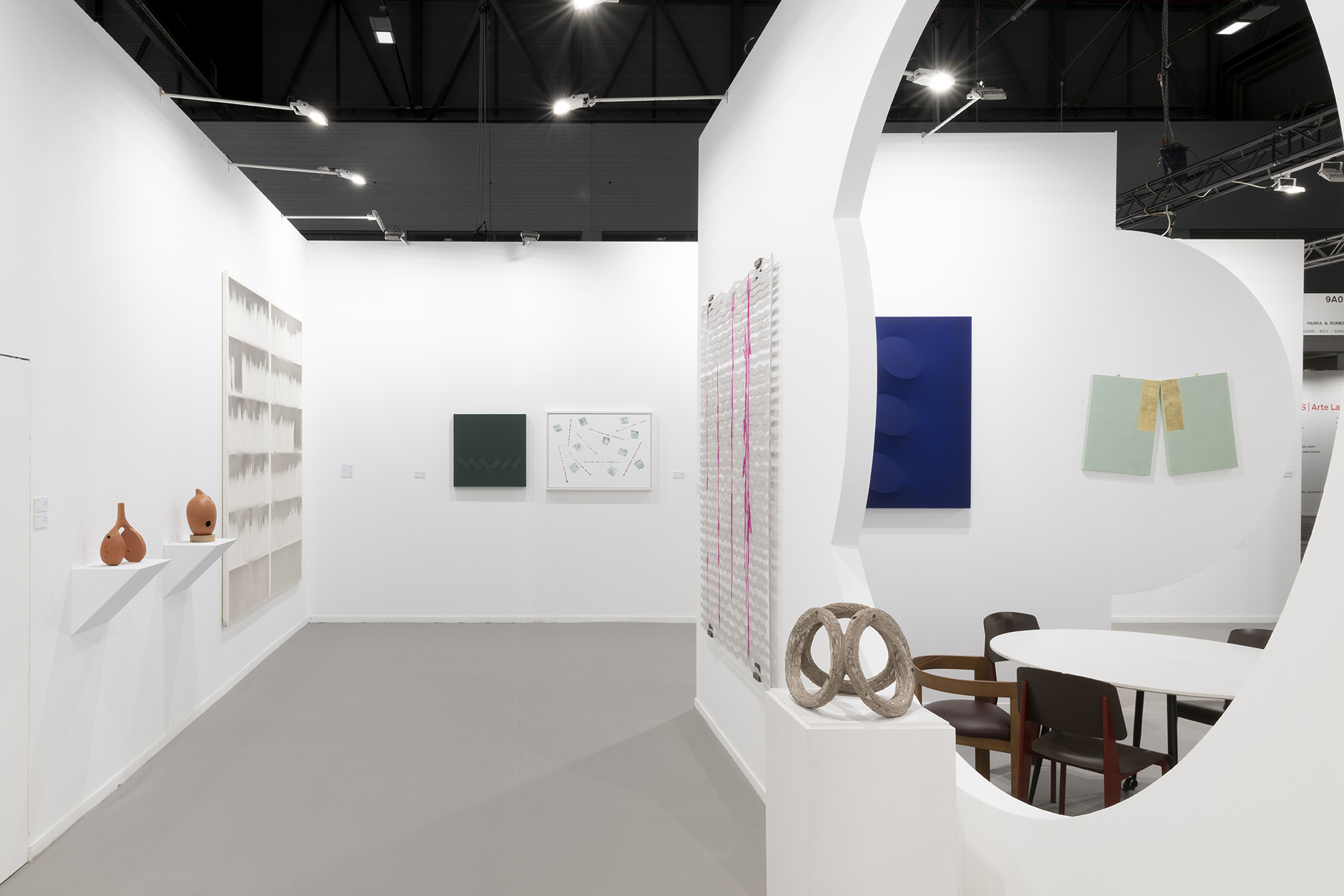
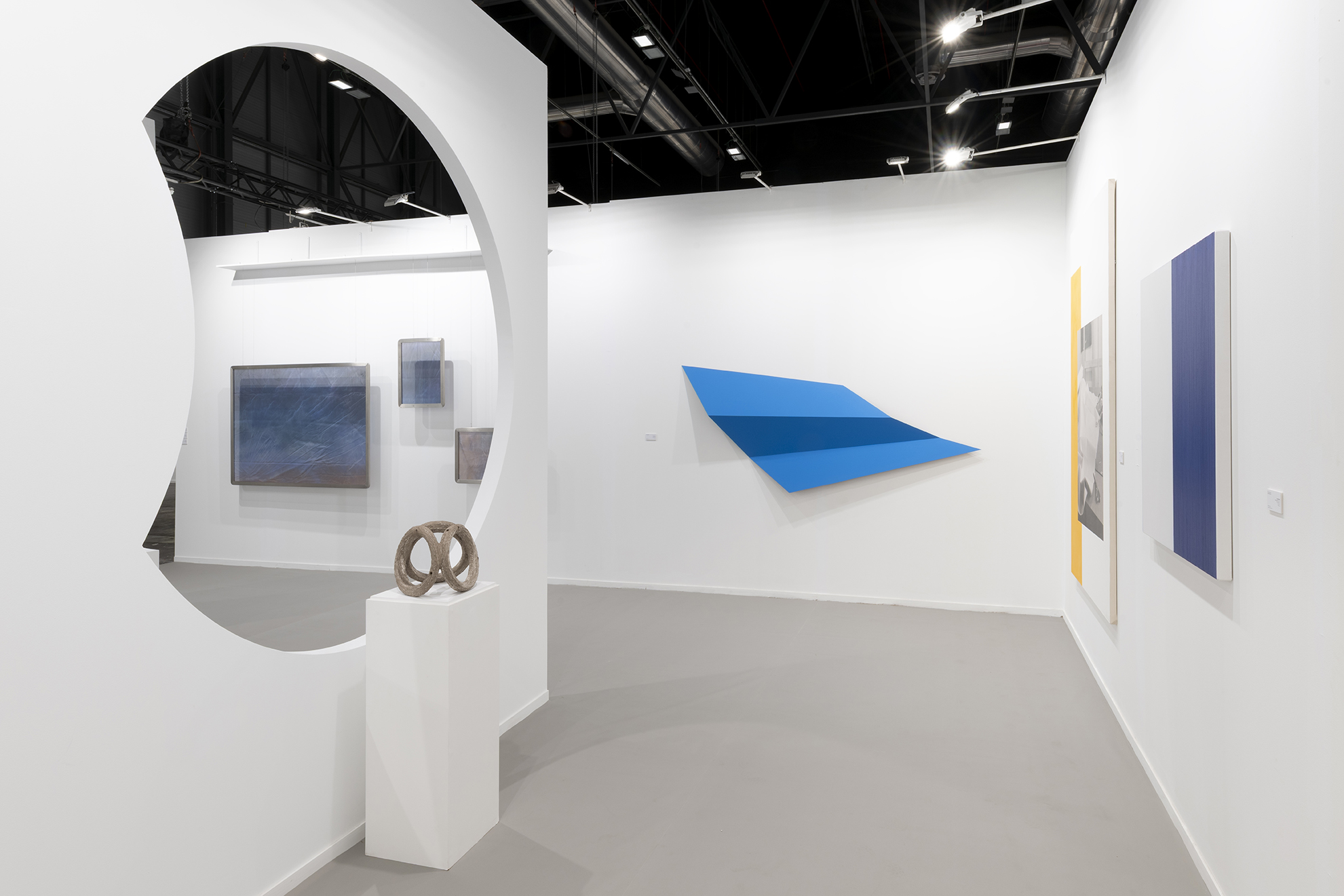
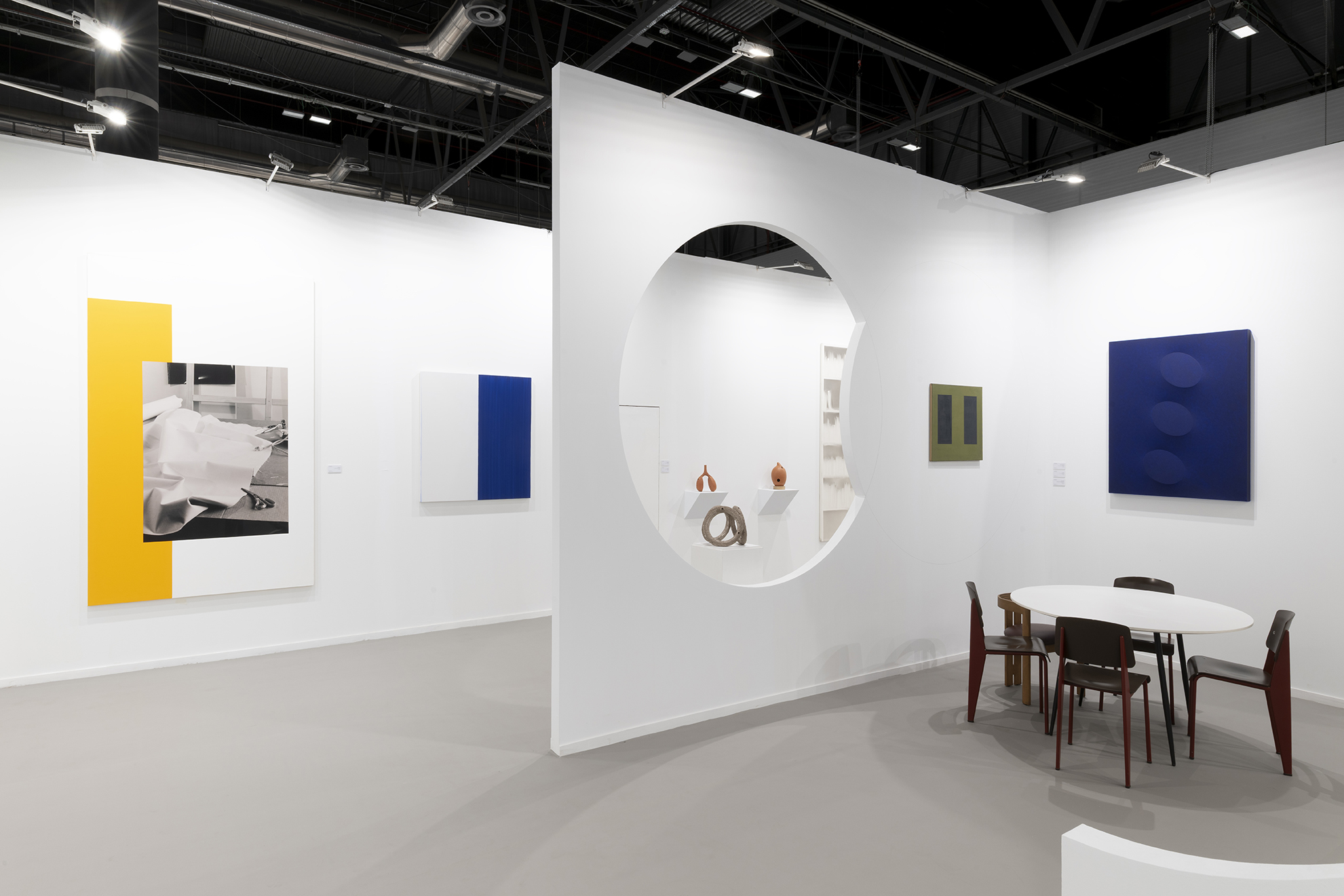
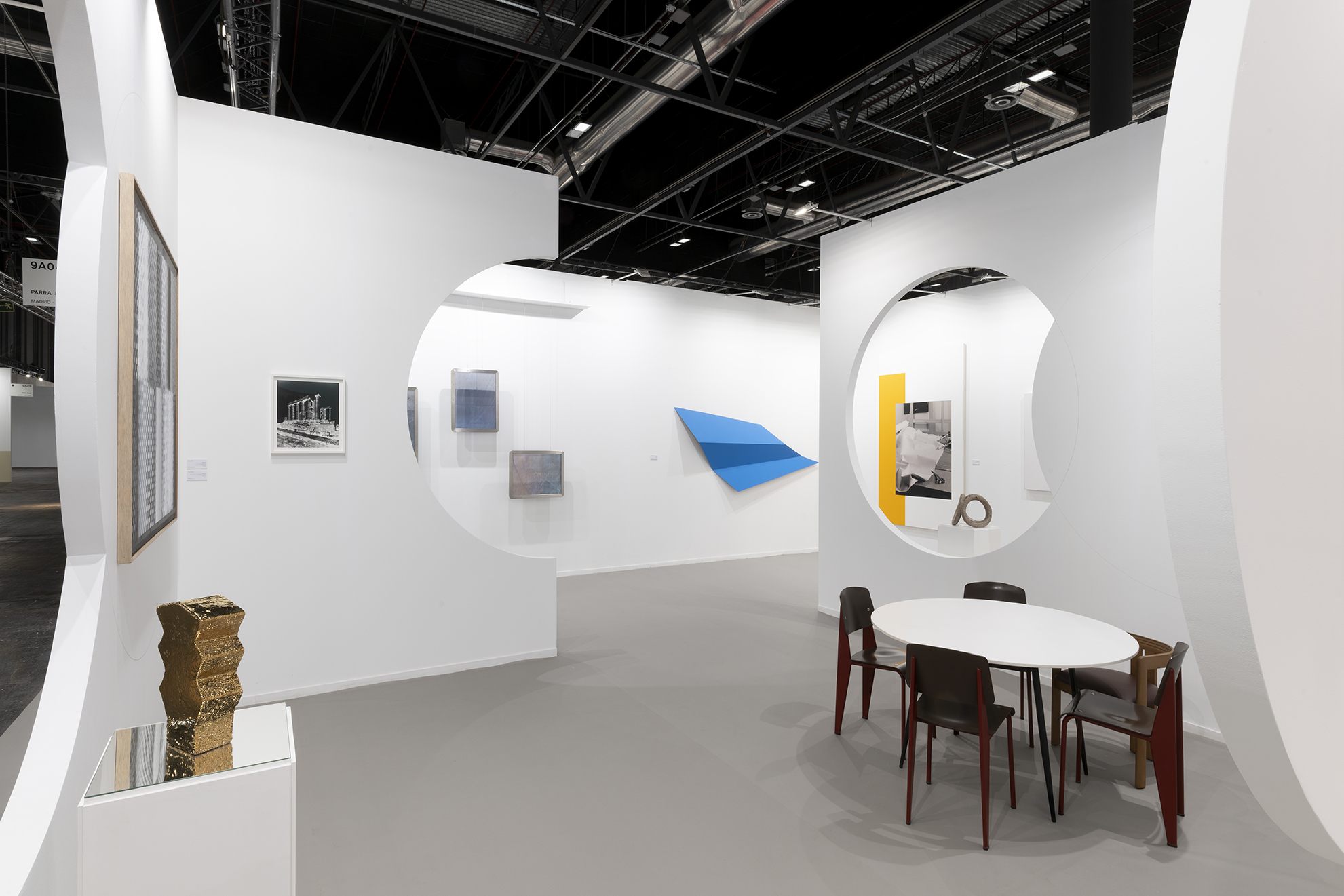
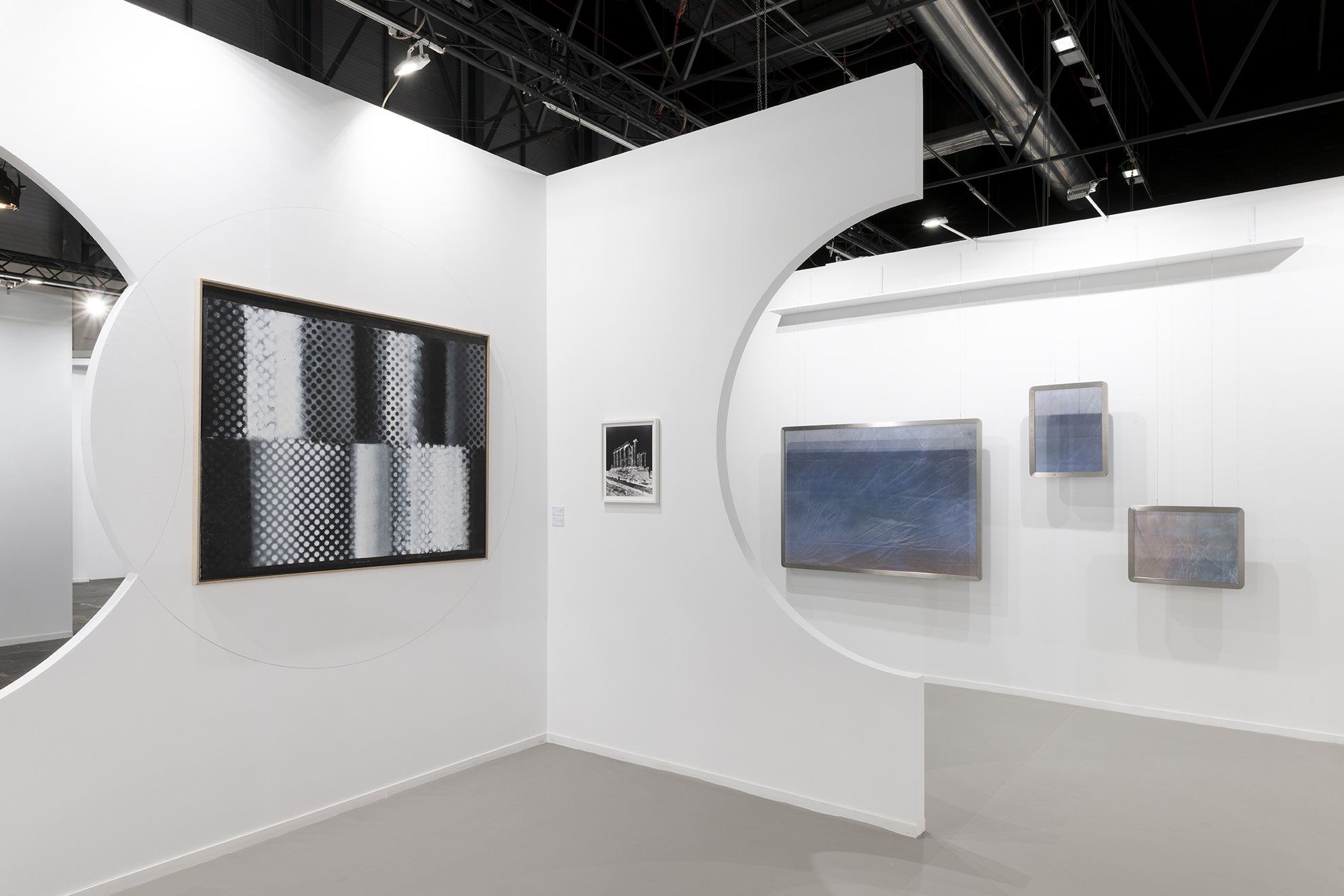
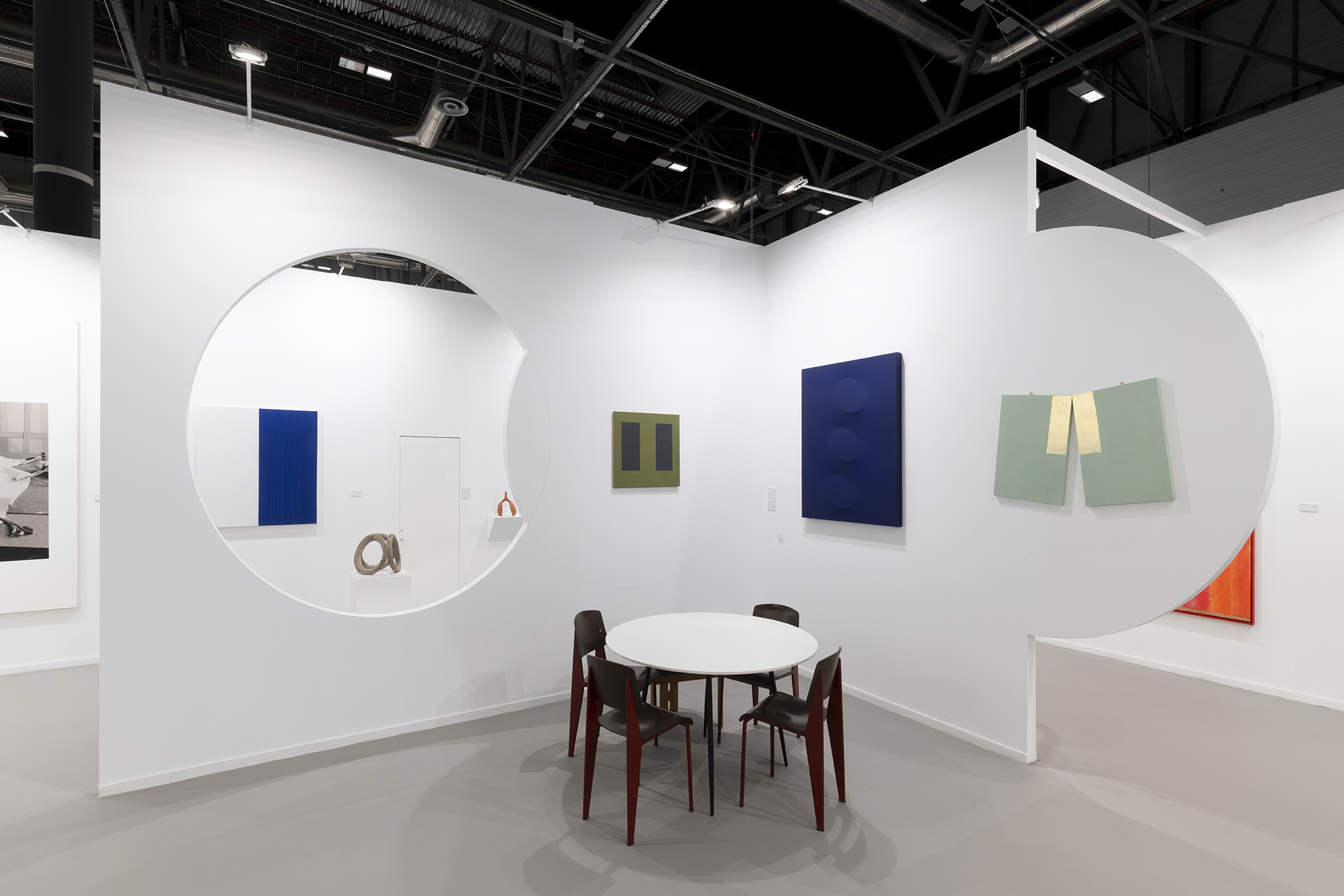
MODO. To Found, to Cut, to Stack, to Fold and Other Possible Solutions to Alter a Form
- W o l f r a m U l l r i c h
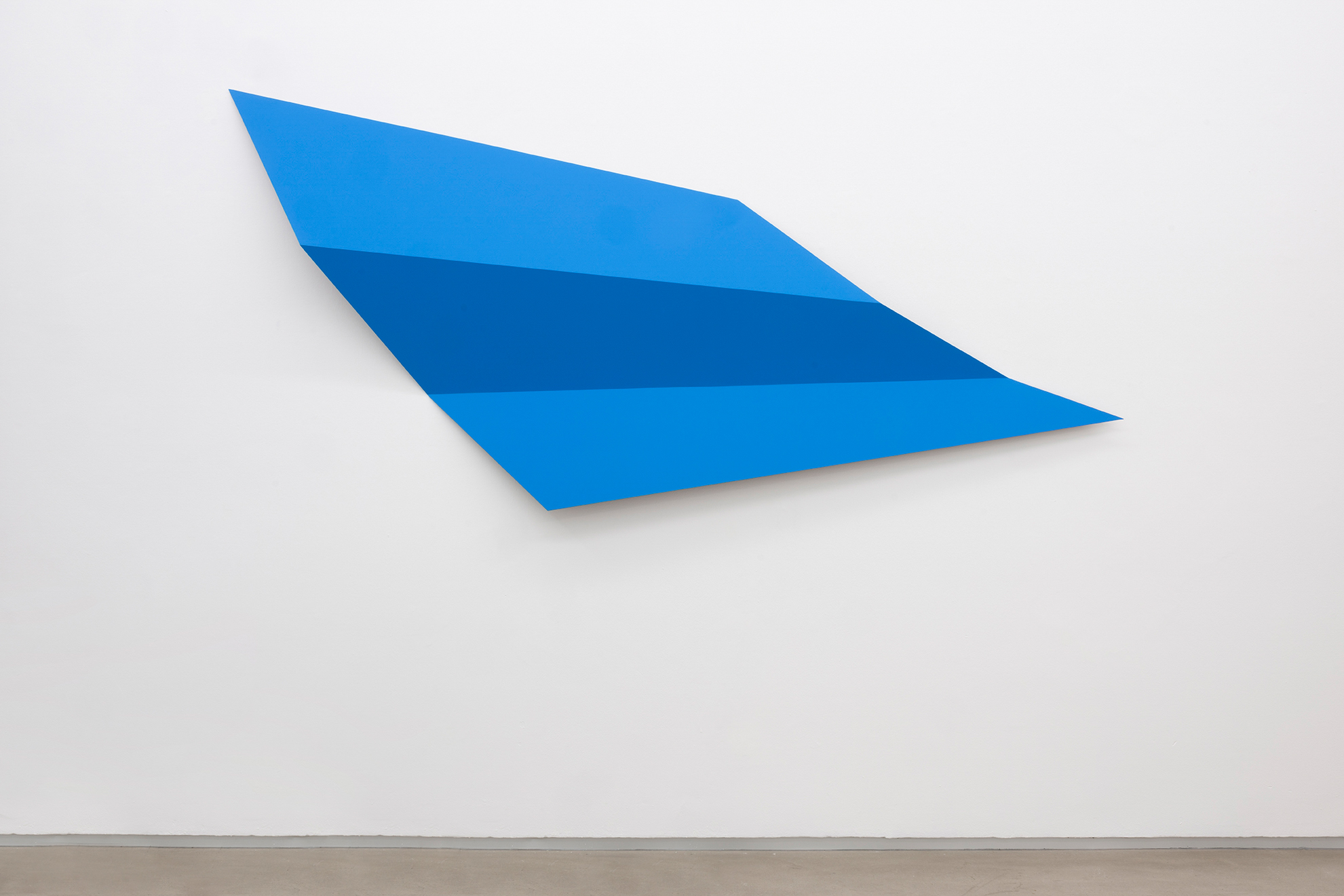
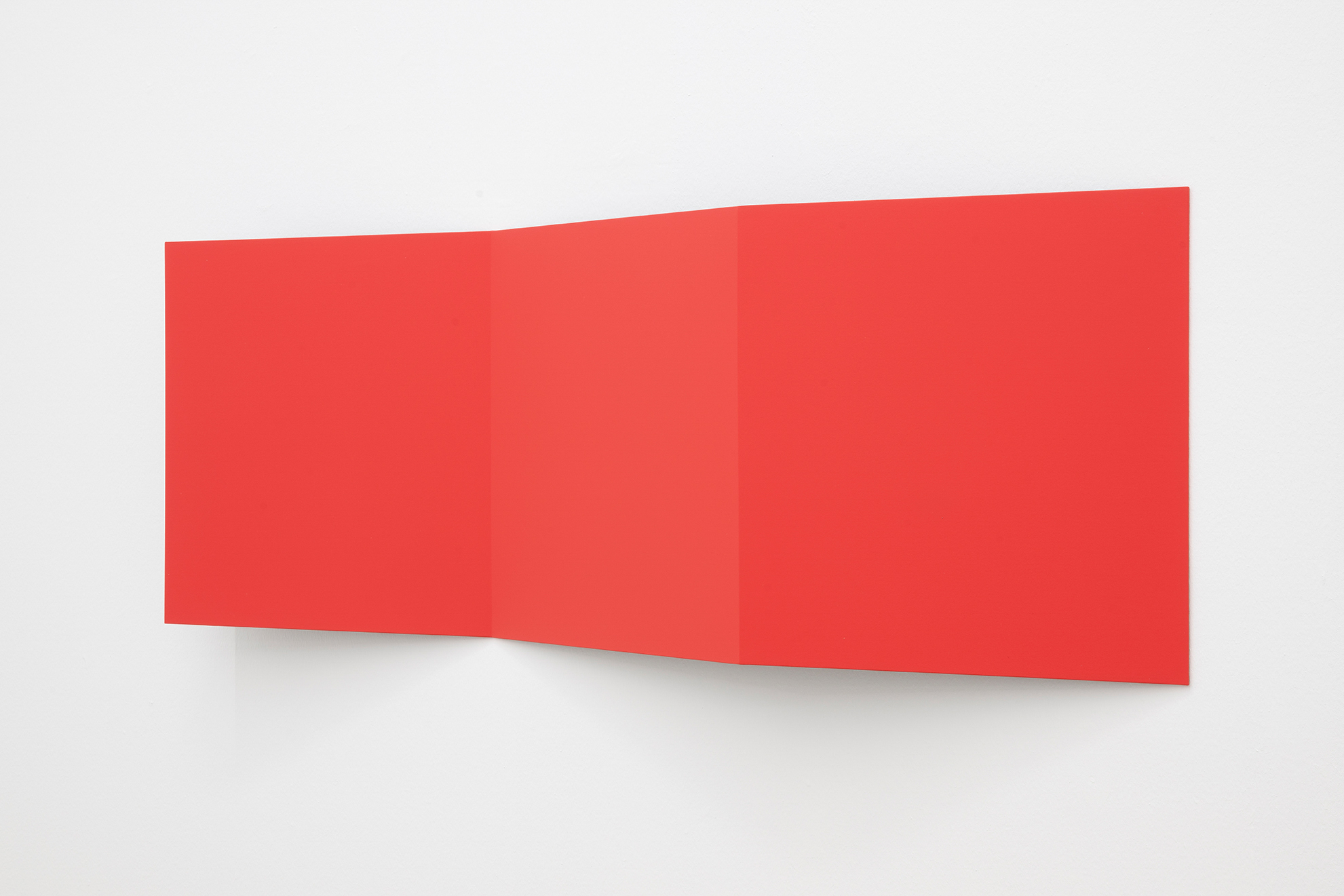
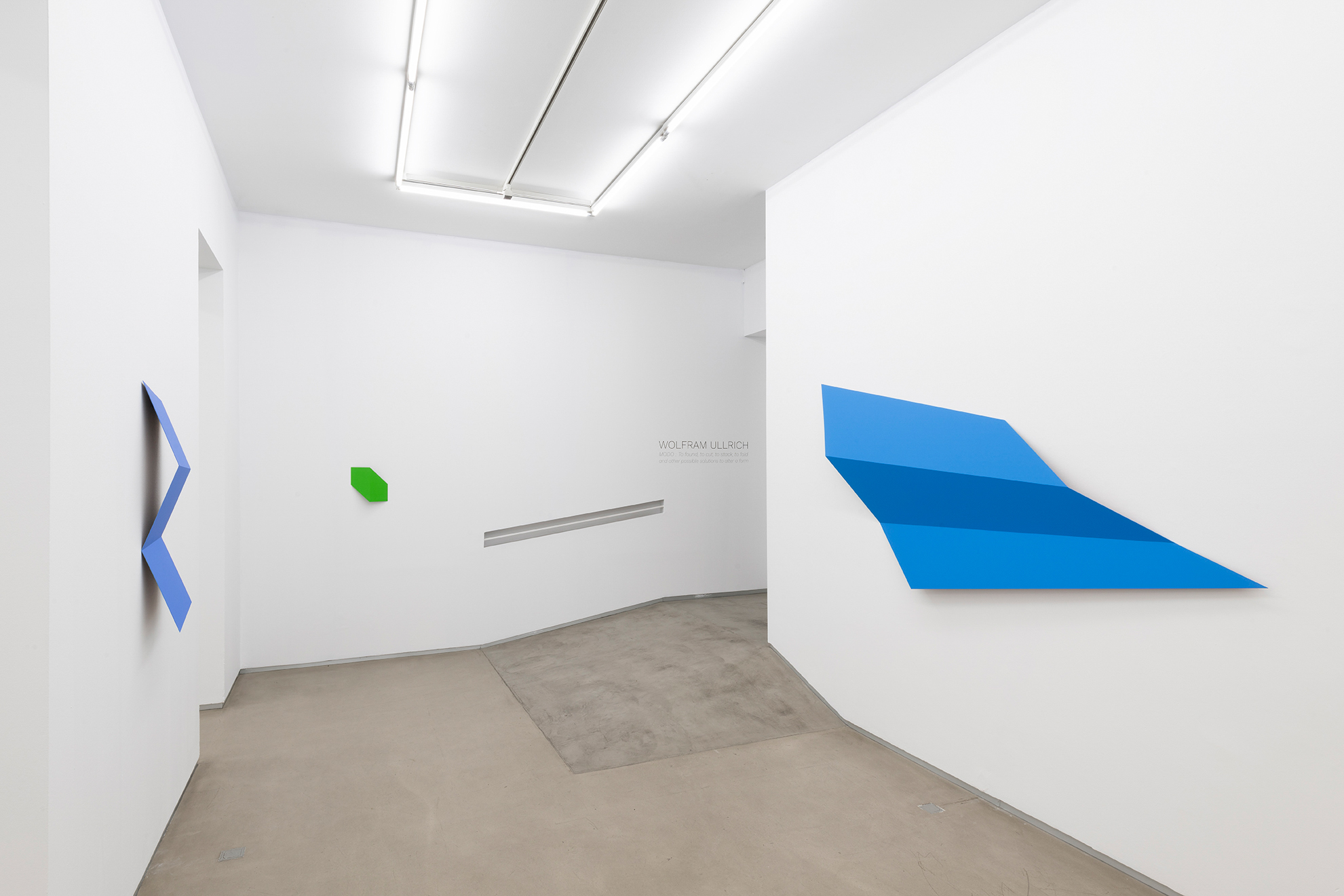


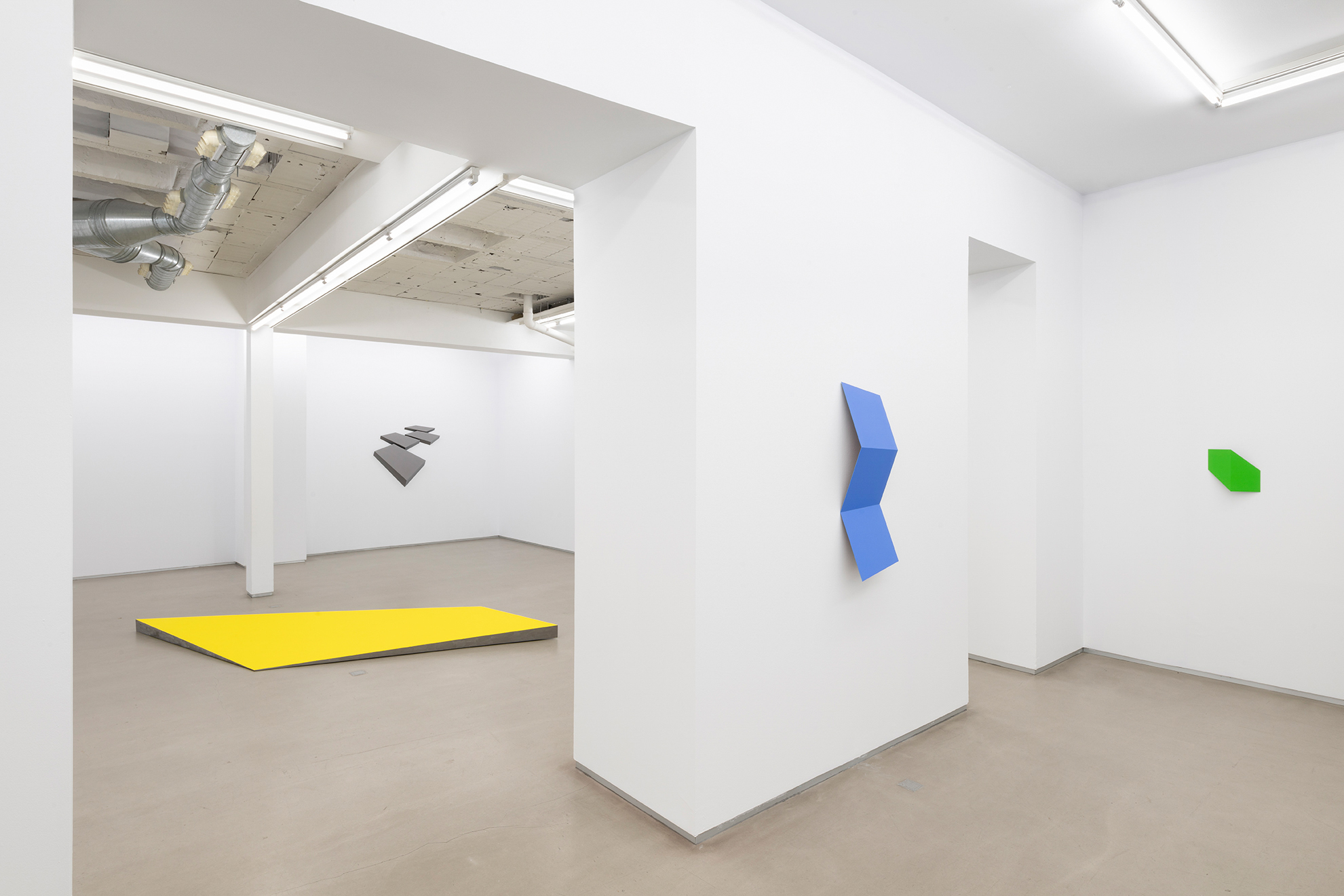








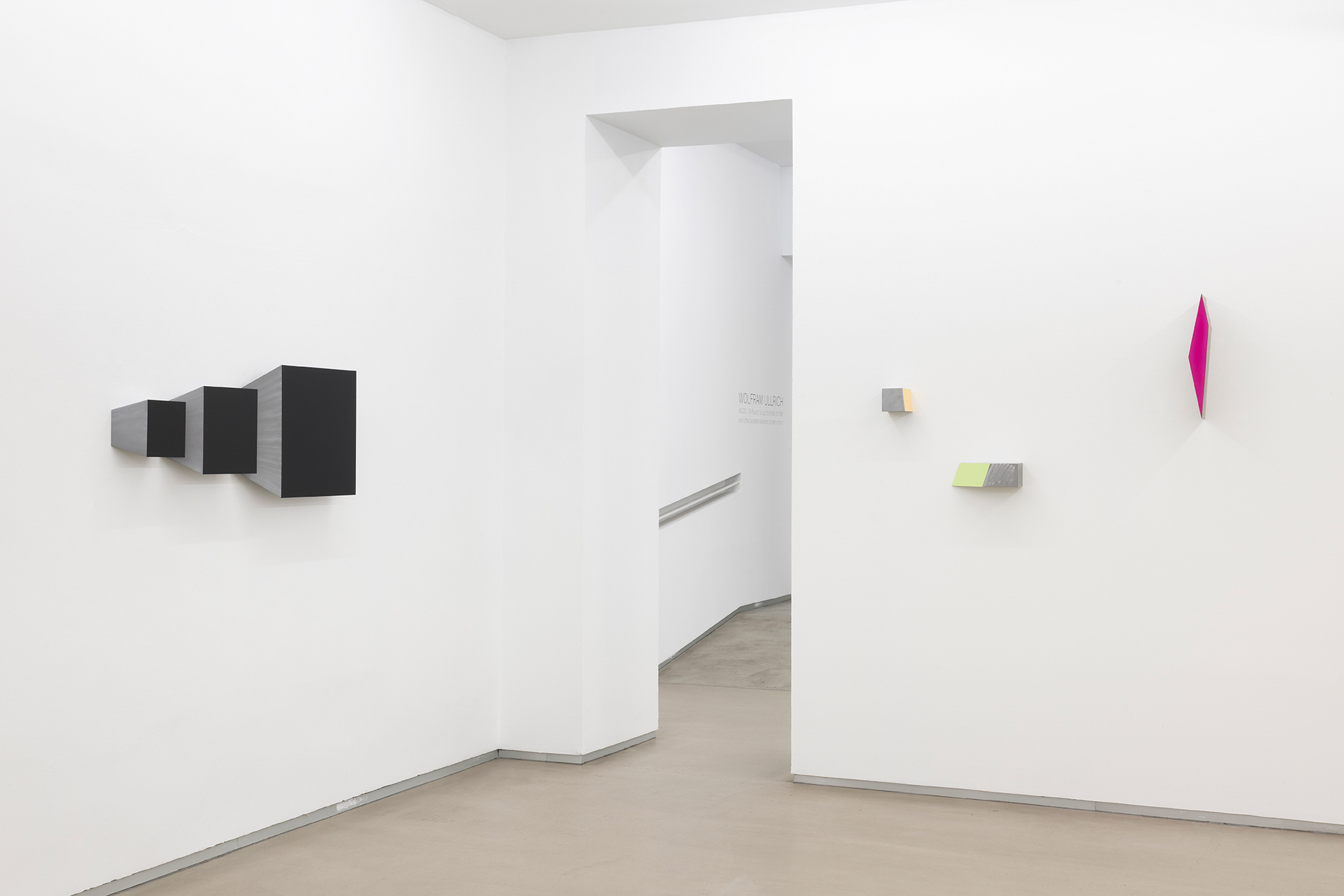

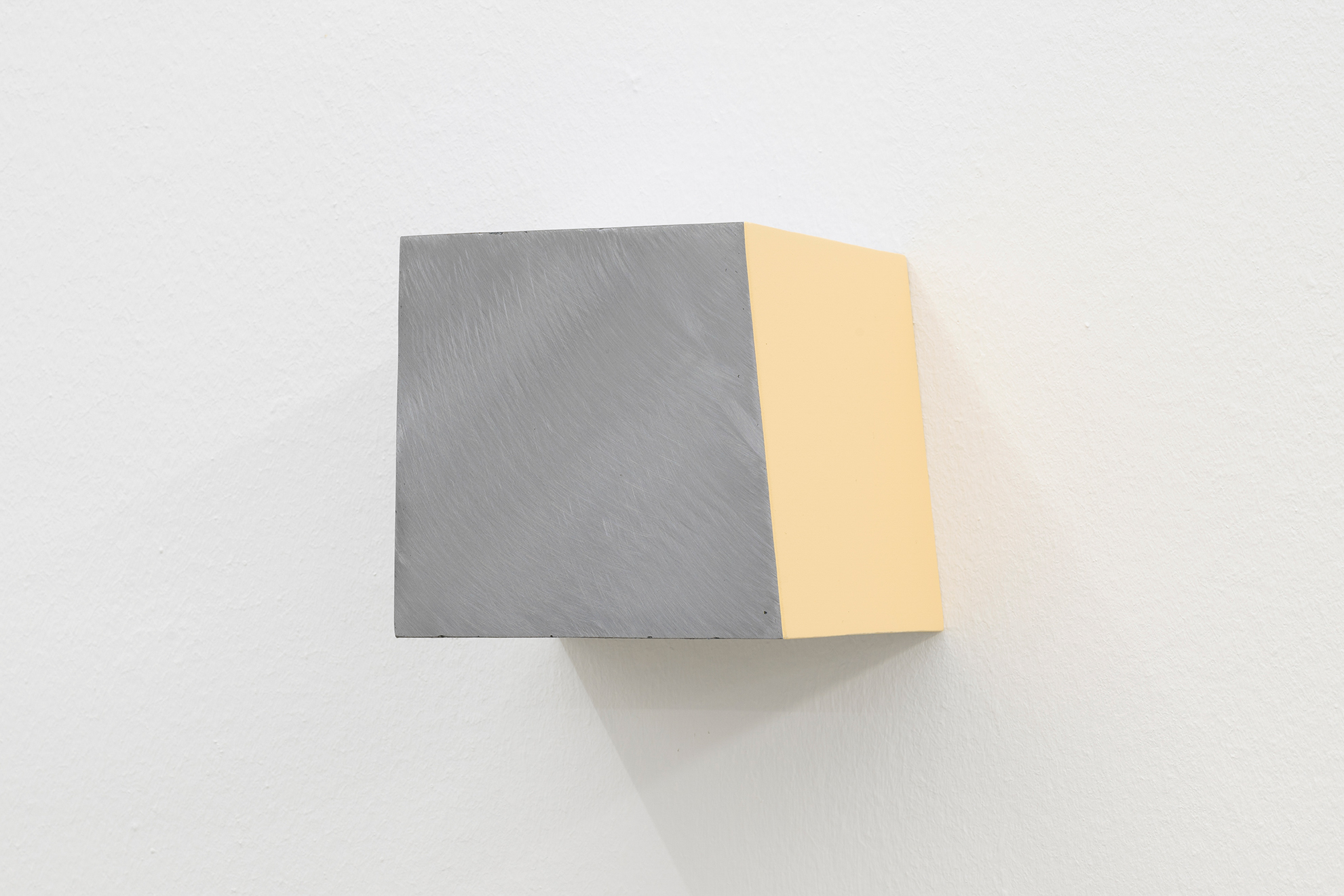
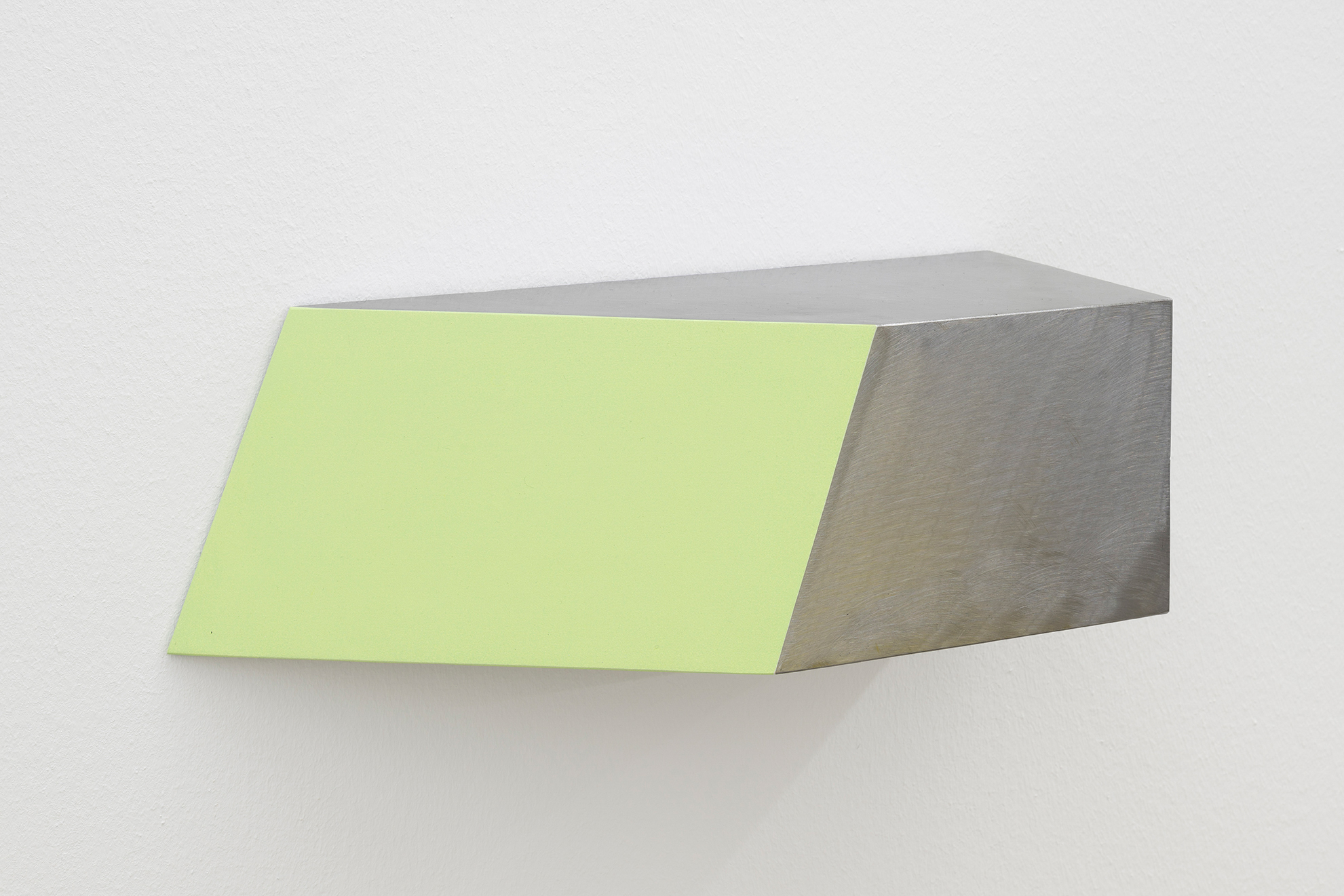
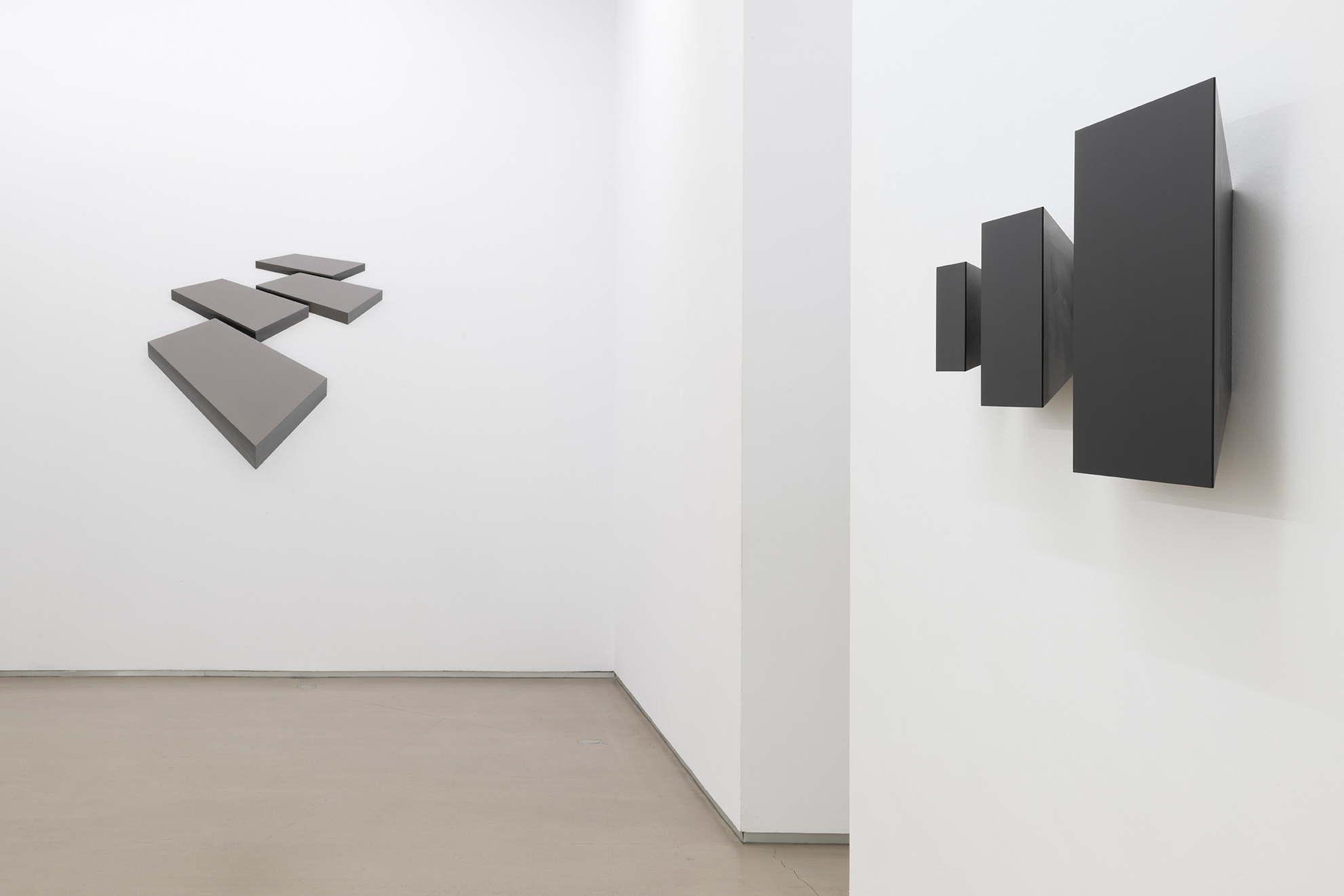

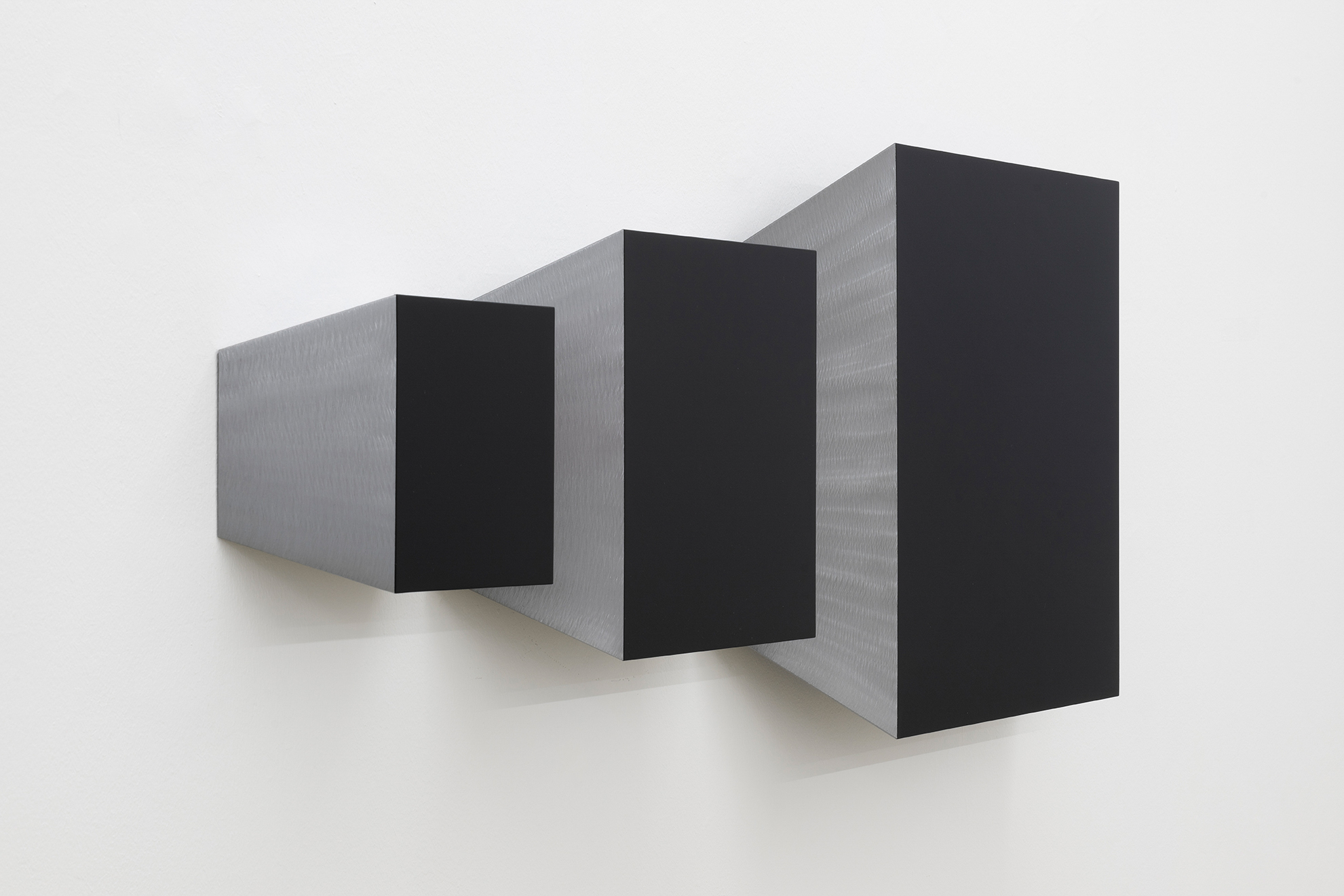
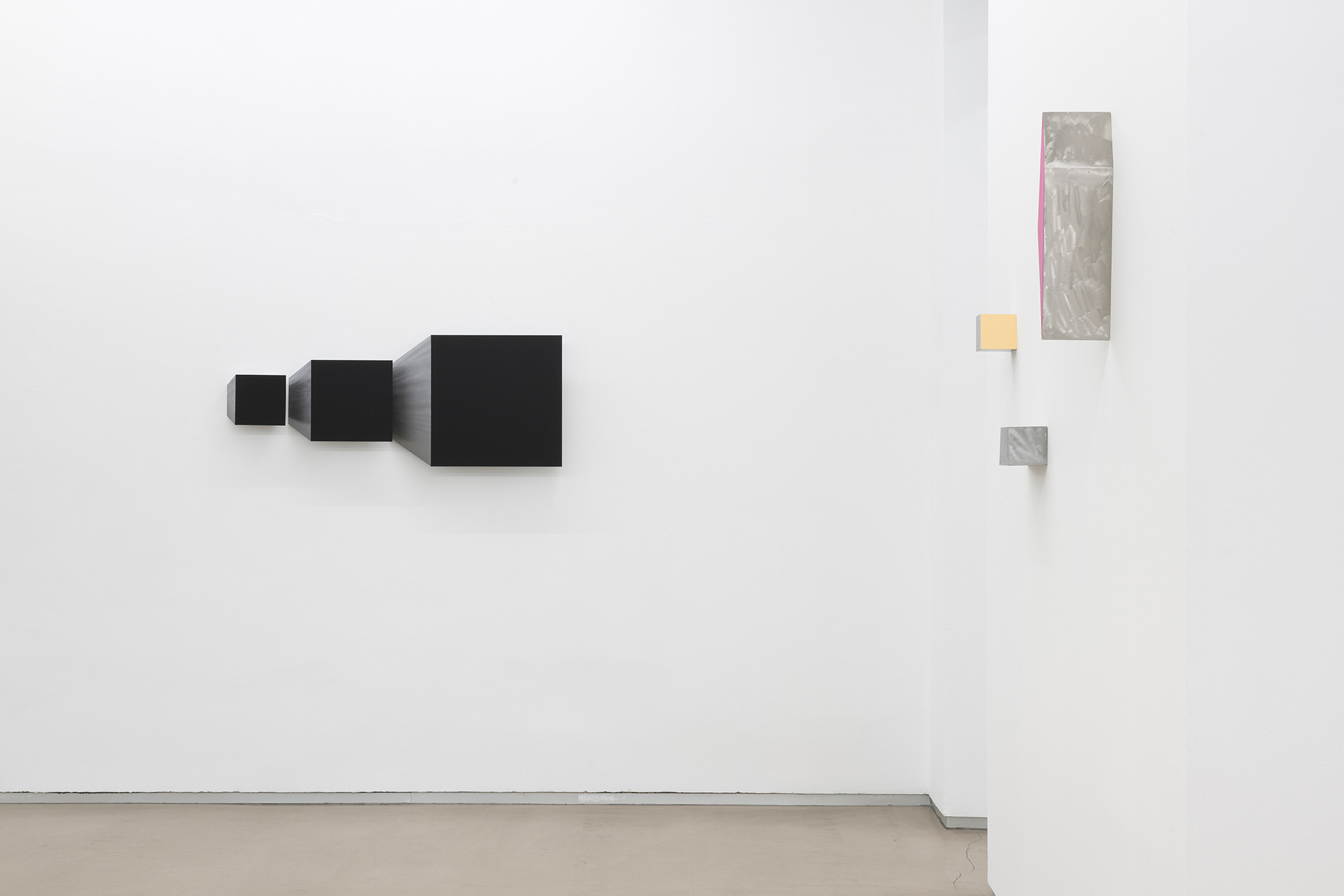

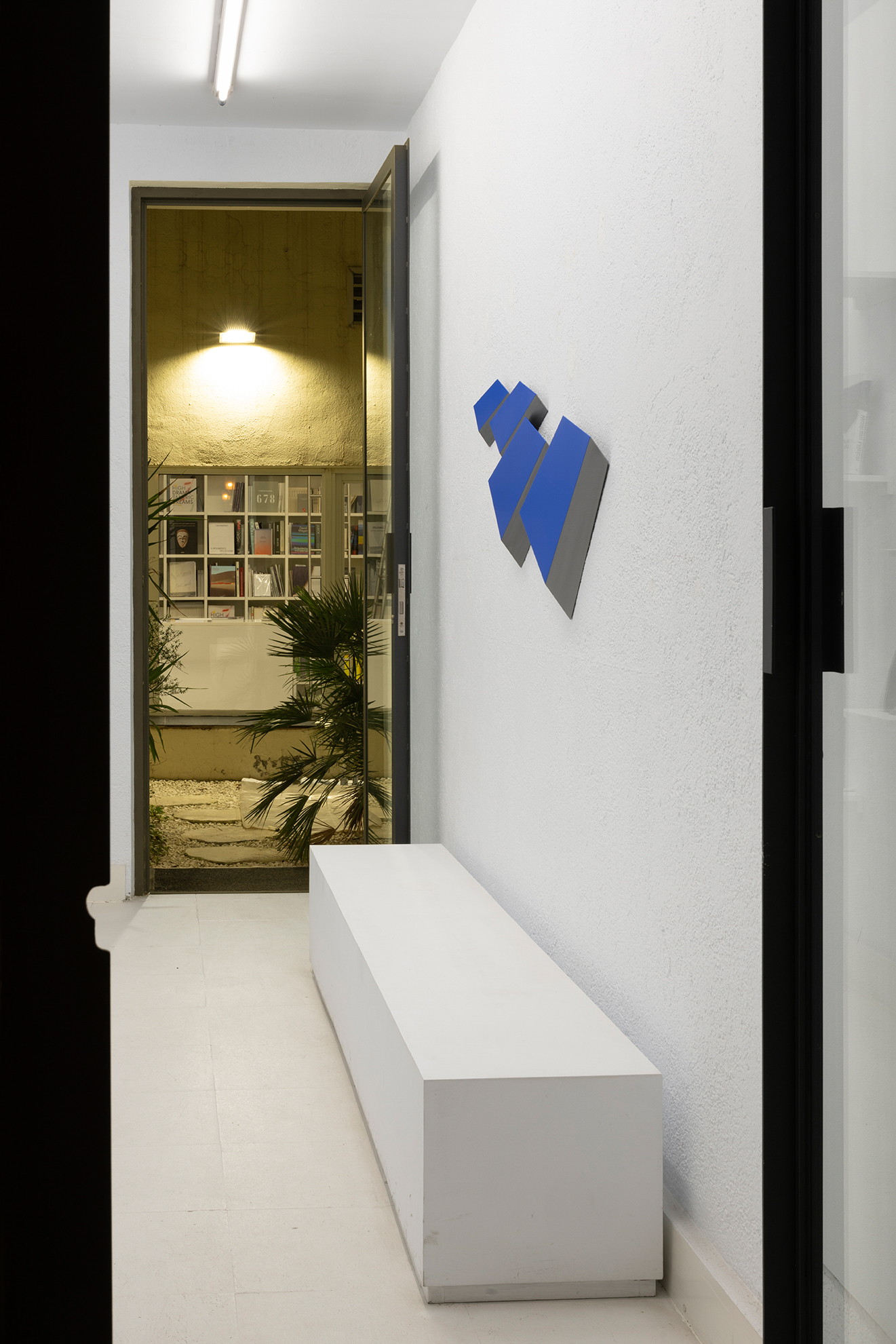
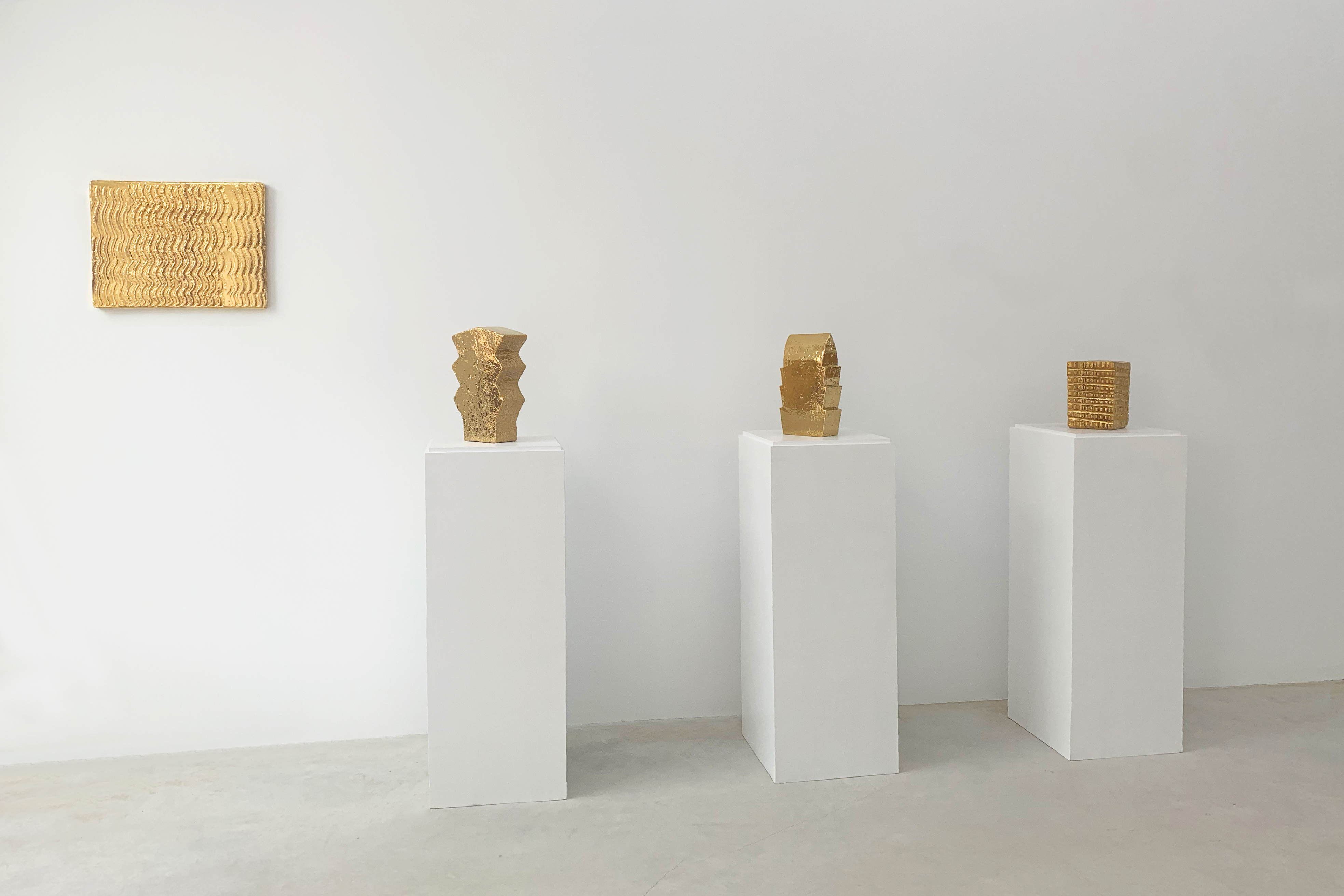
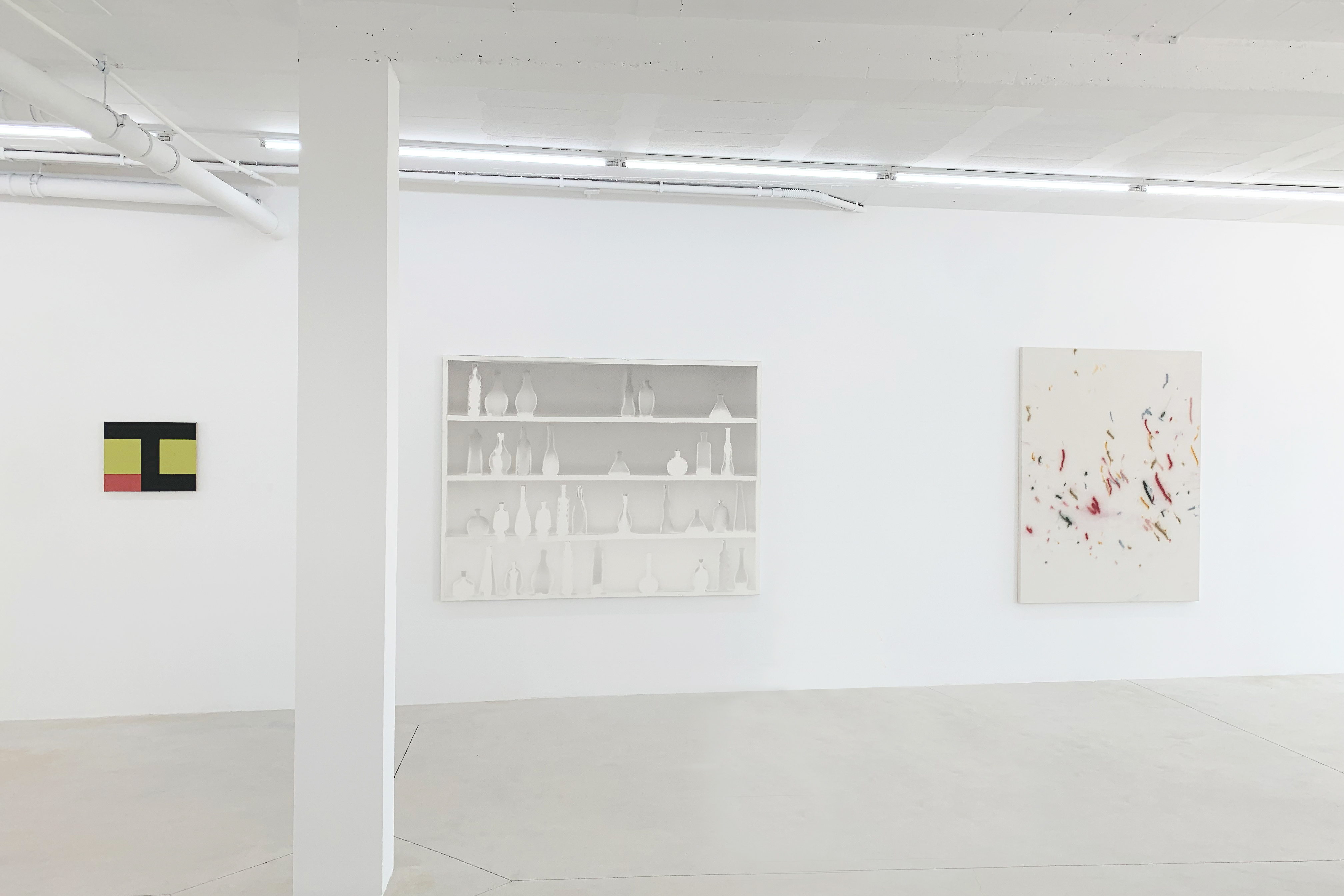
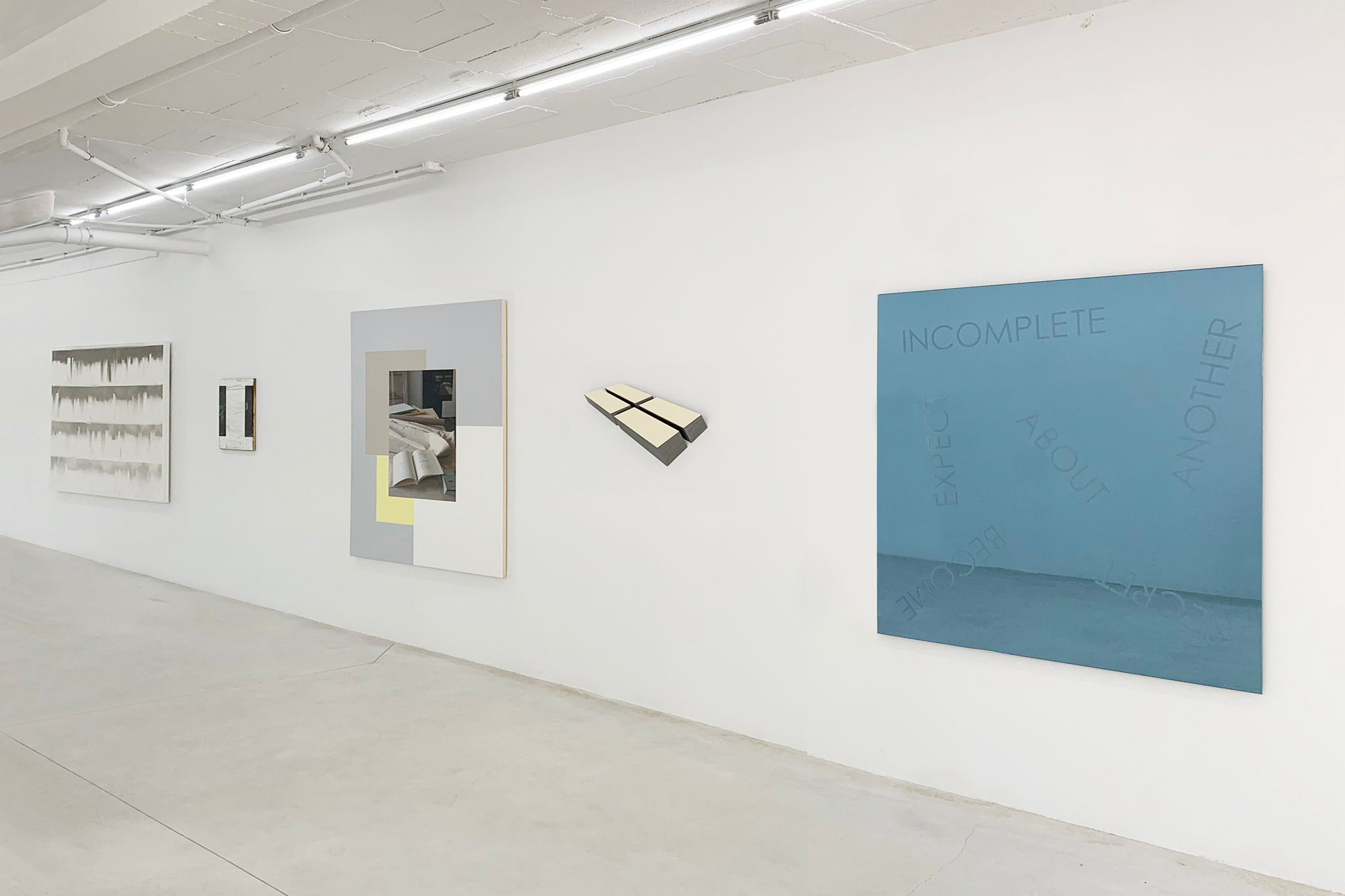
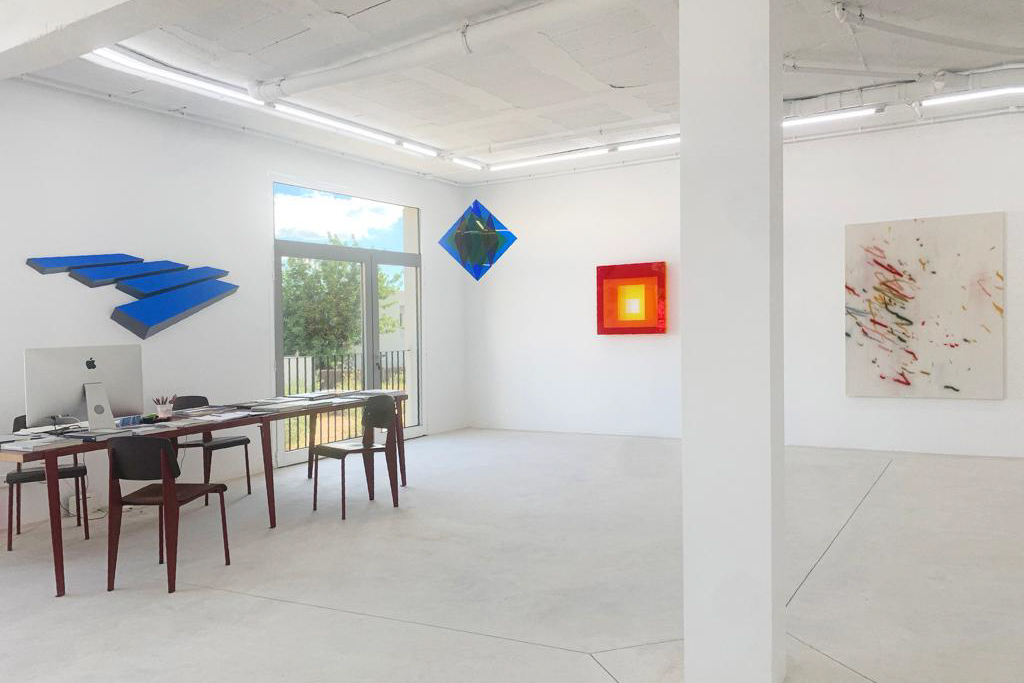
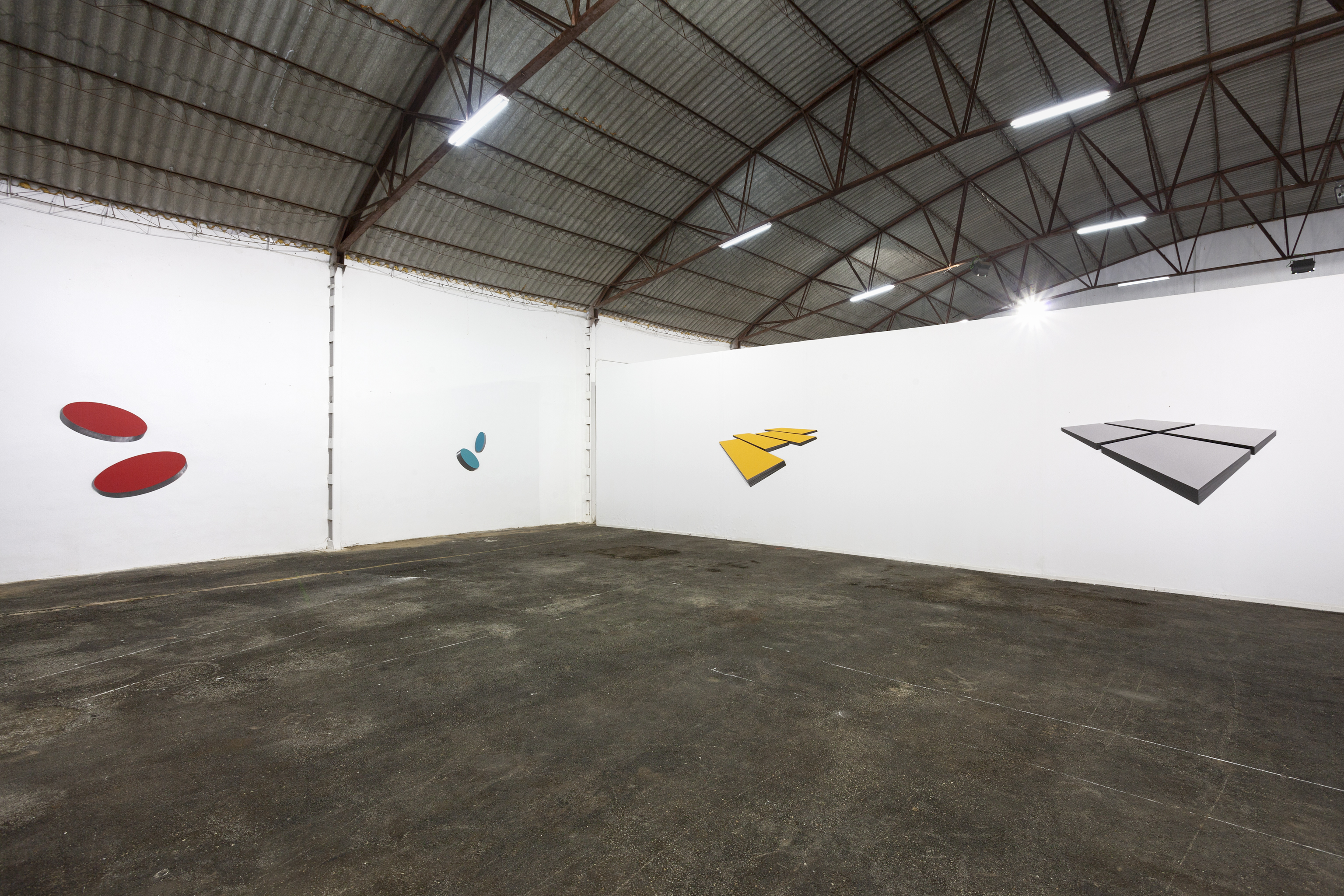
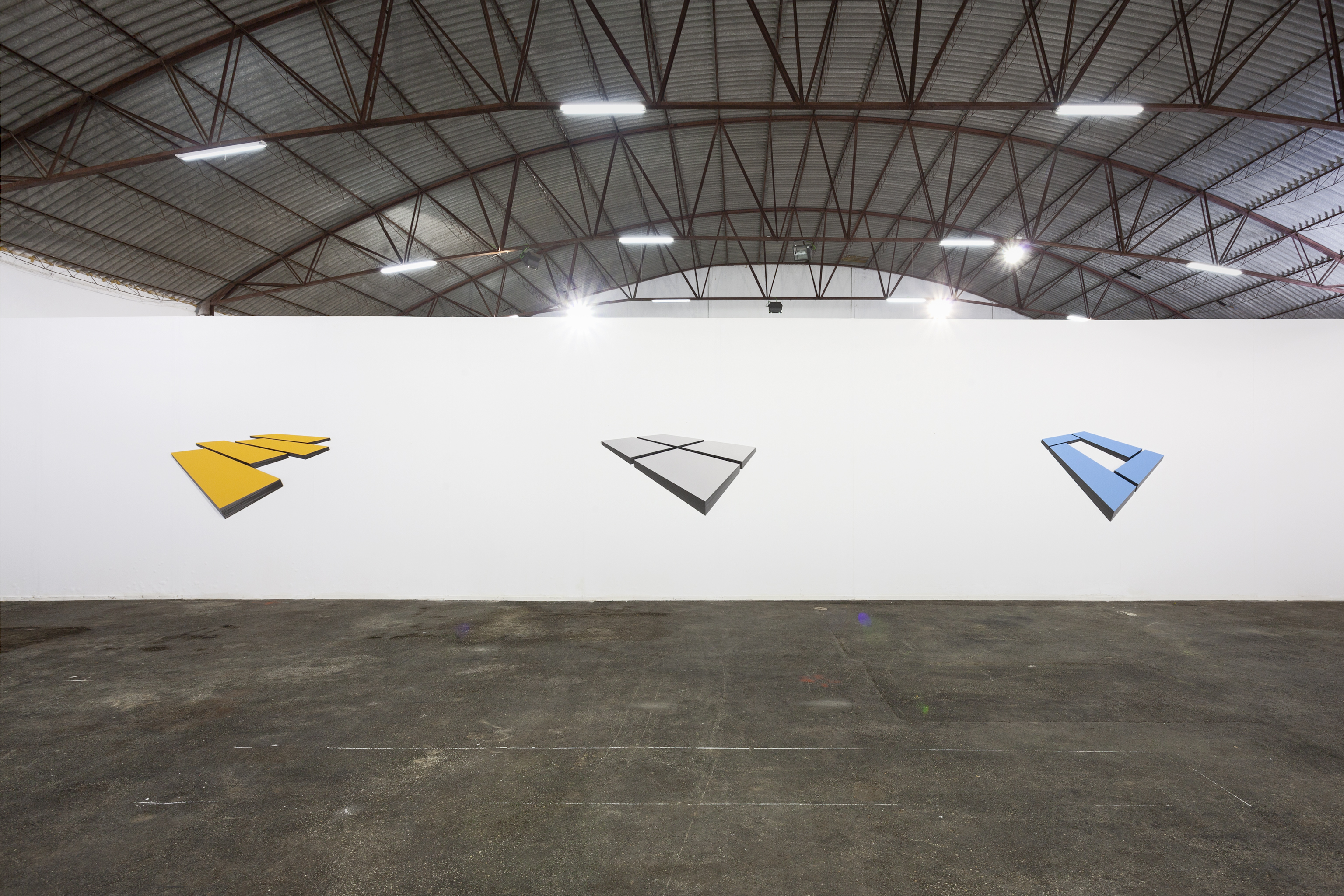
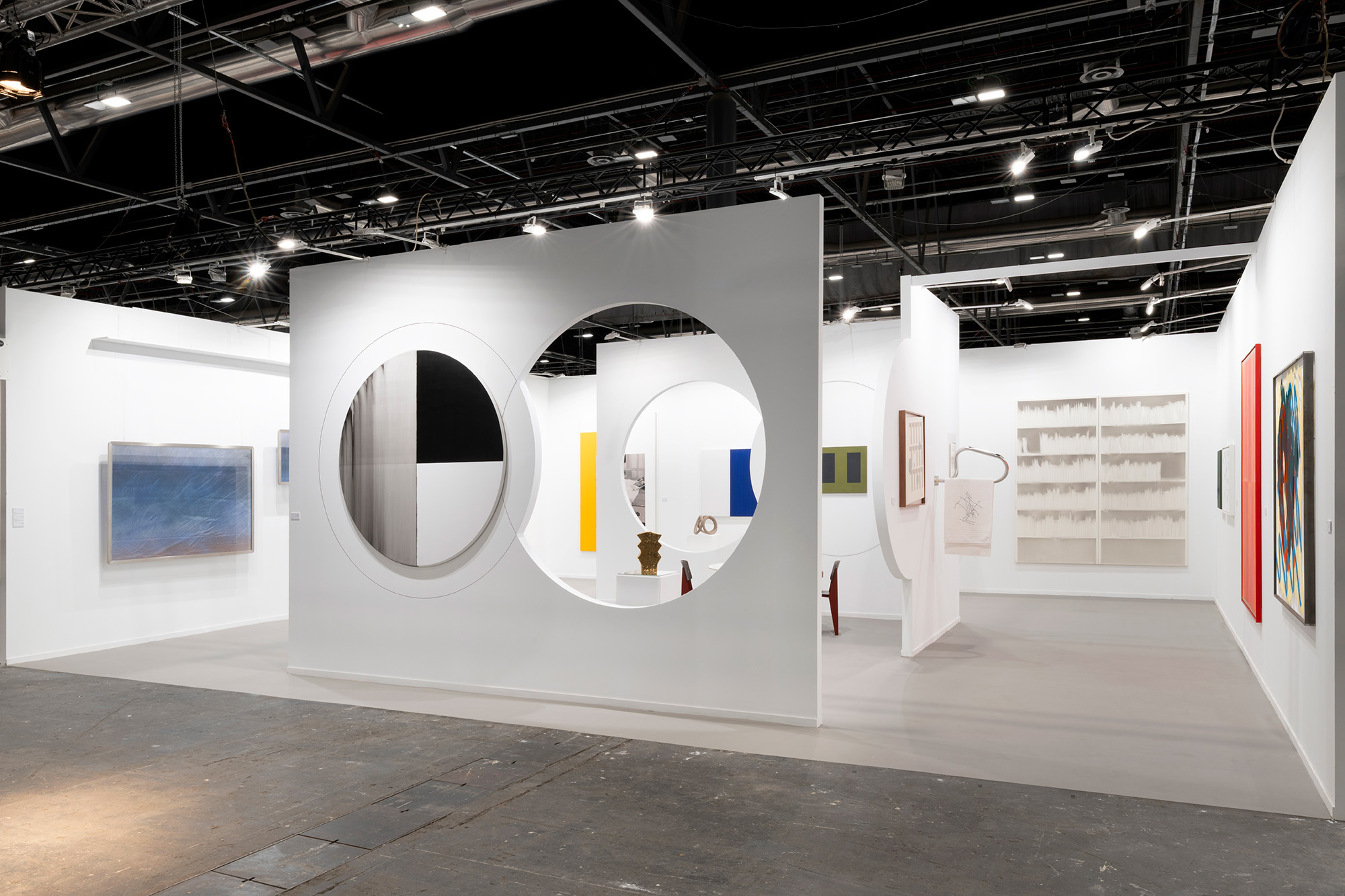
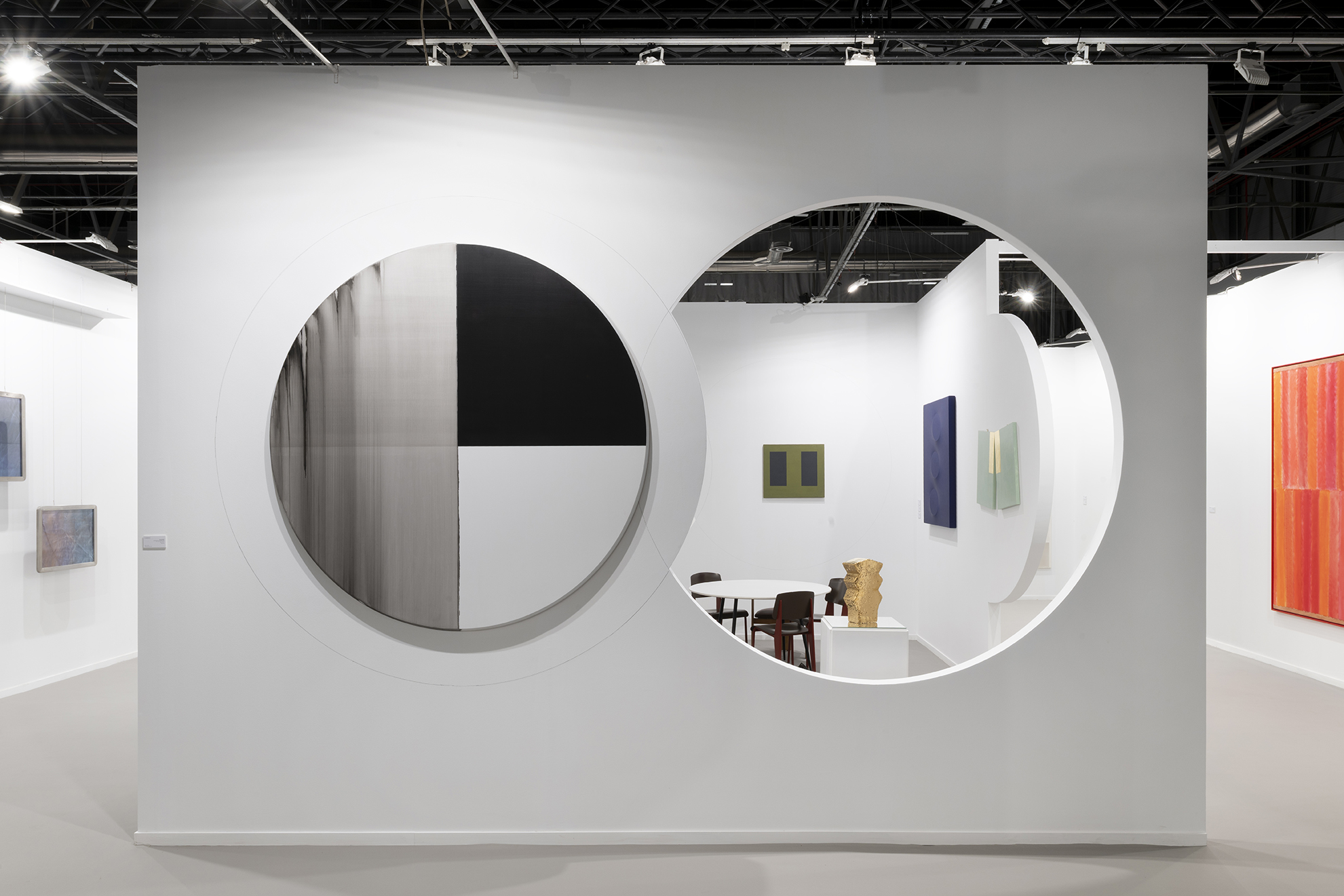
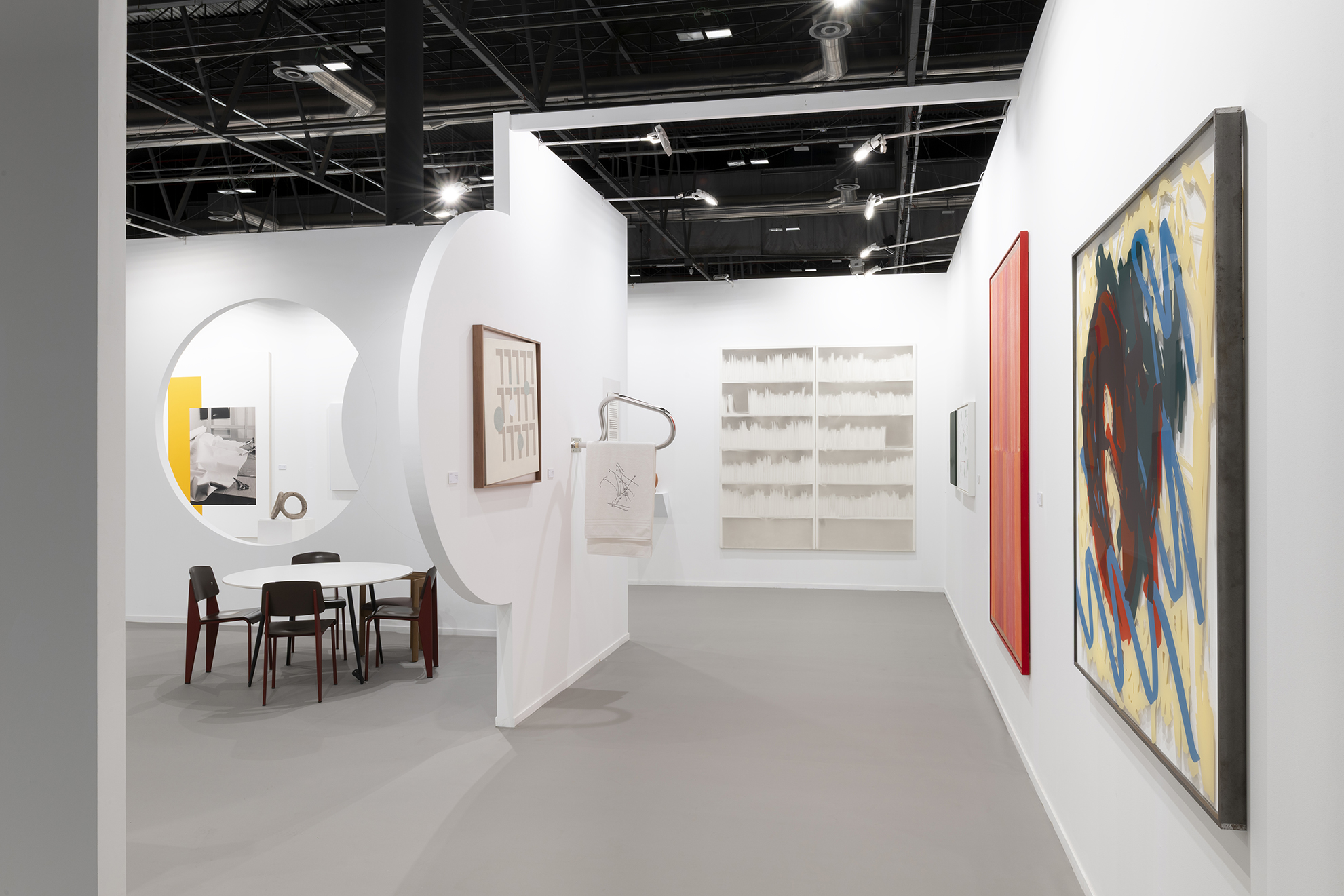
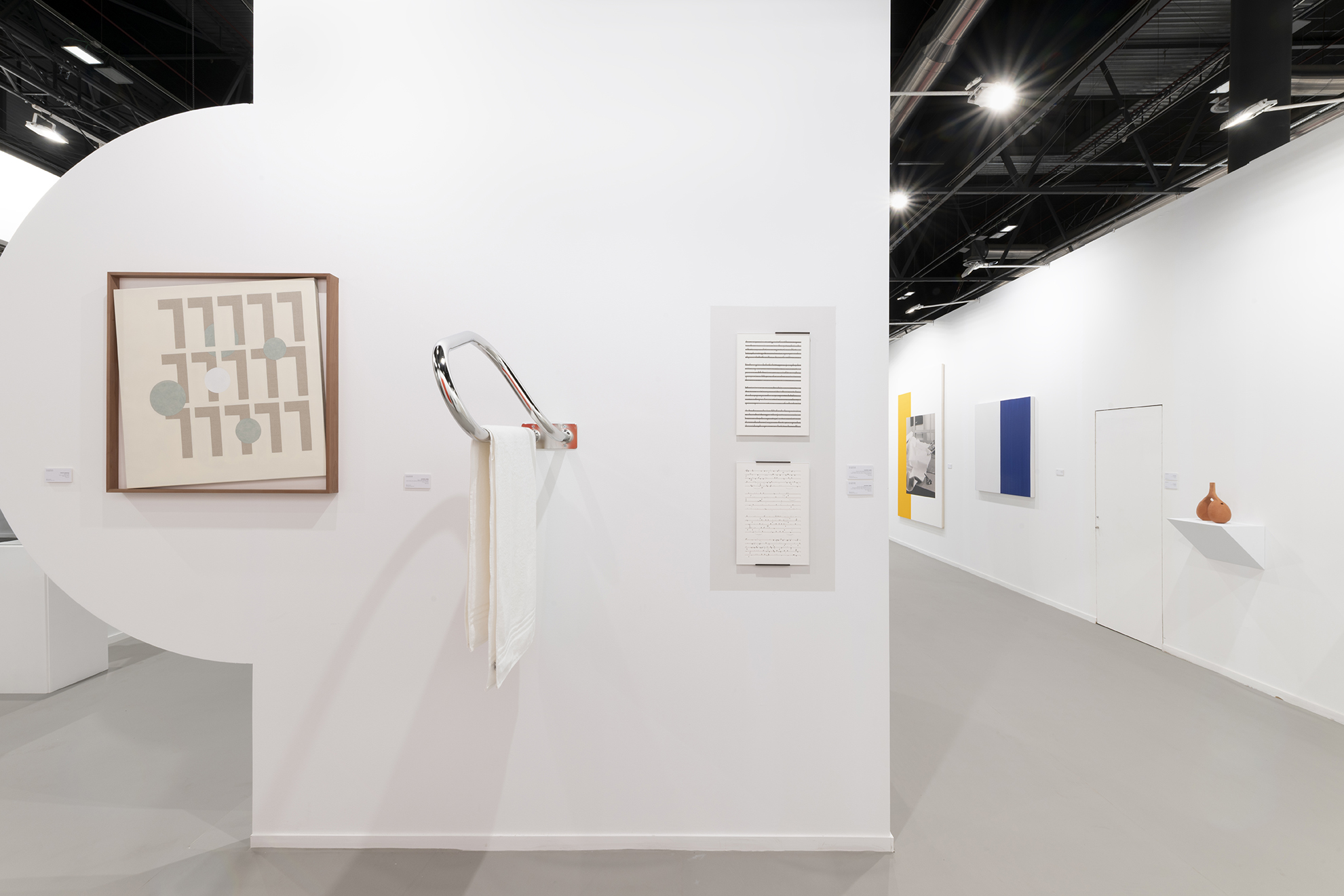
We are pleased to announce our new exhibition by Wolfram Ullrich in our space in Madrid including a selection of works from the 90s to the present.
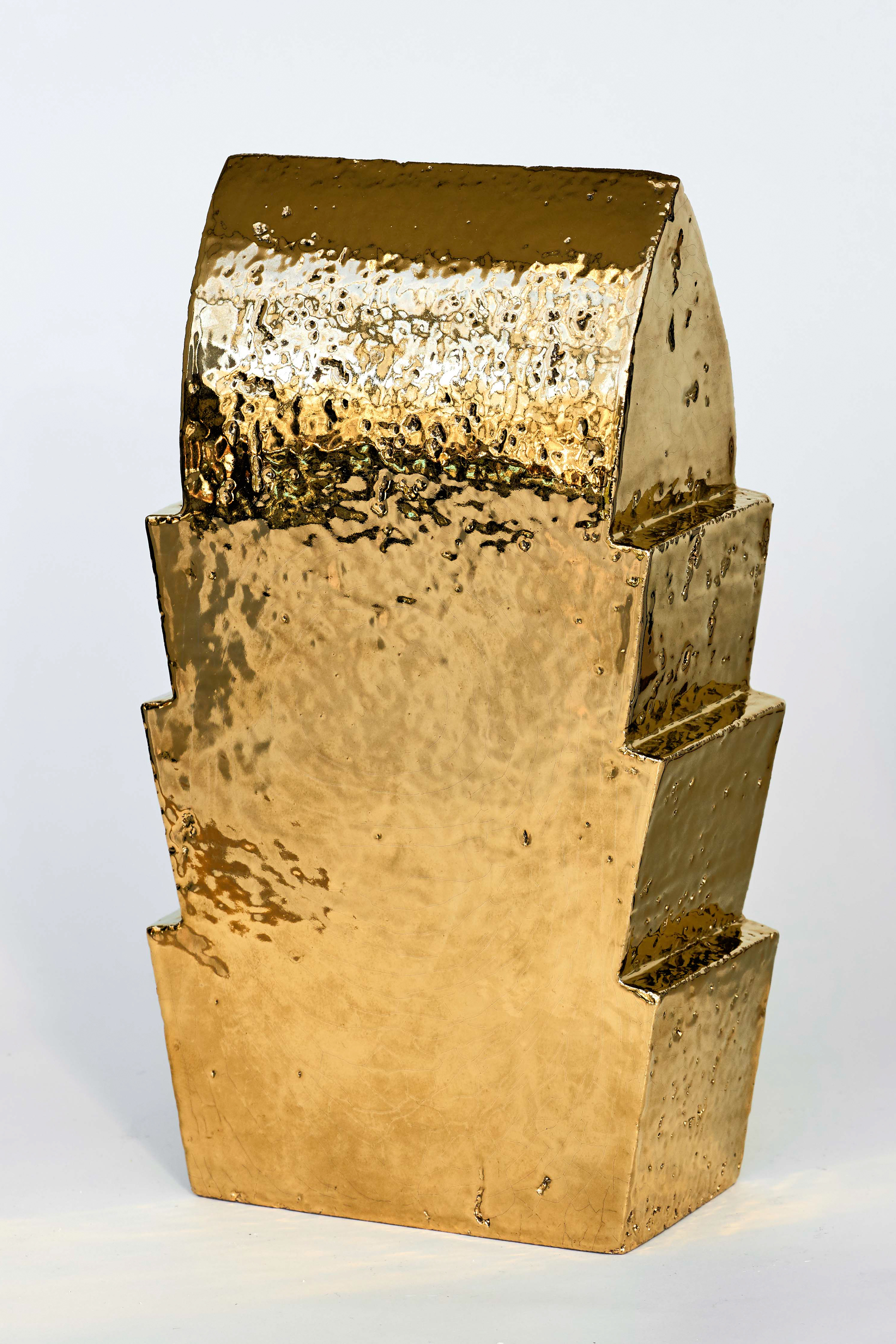
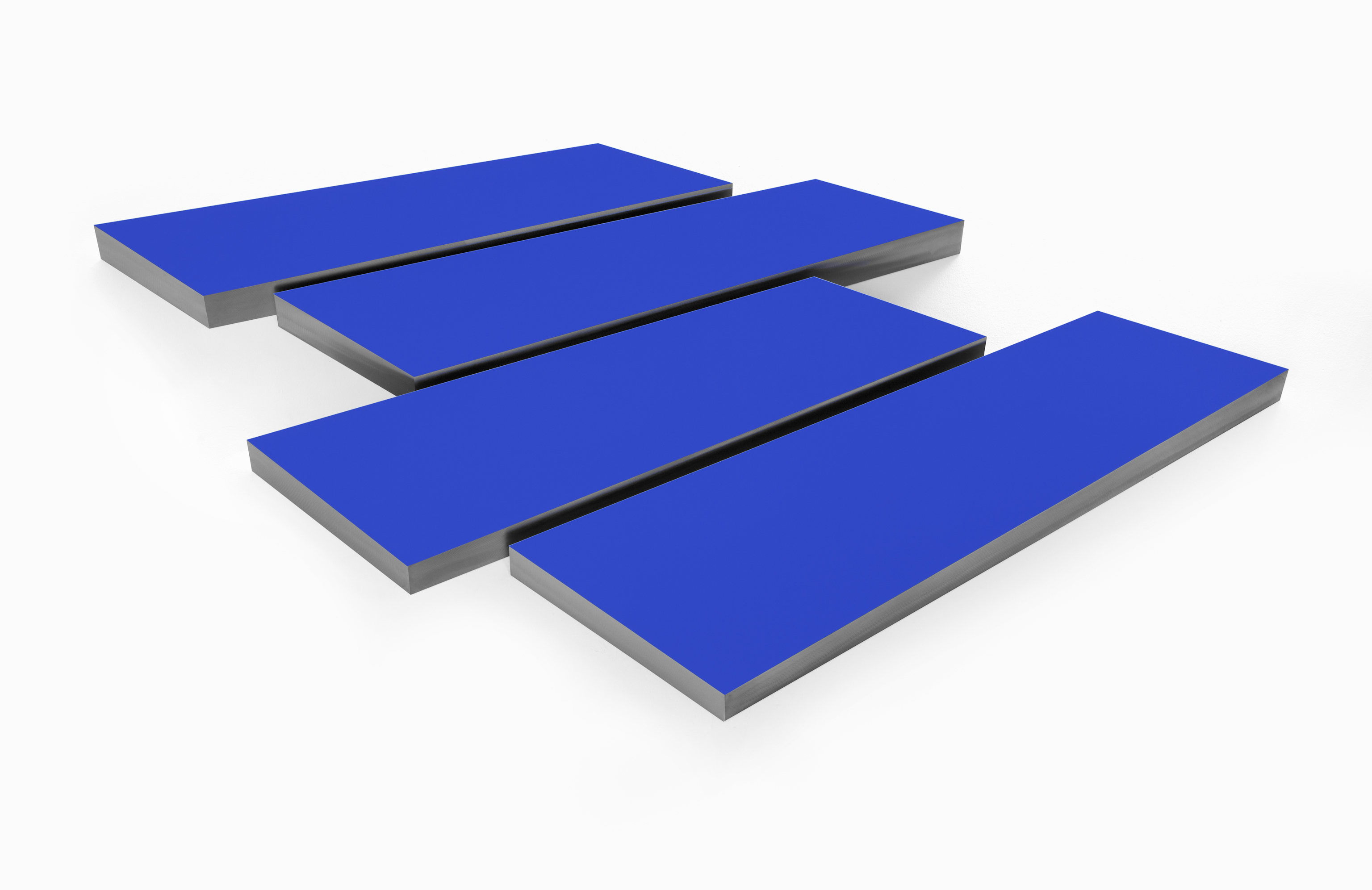
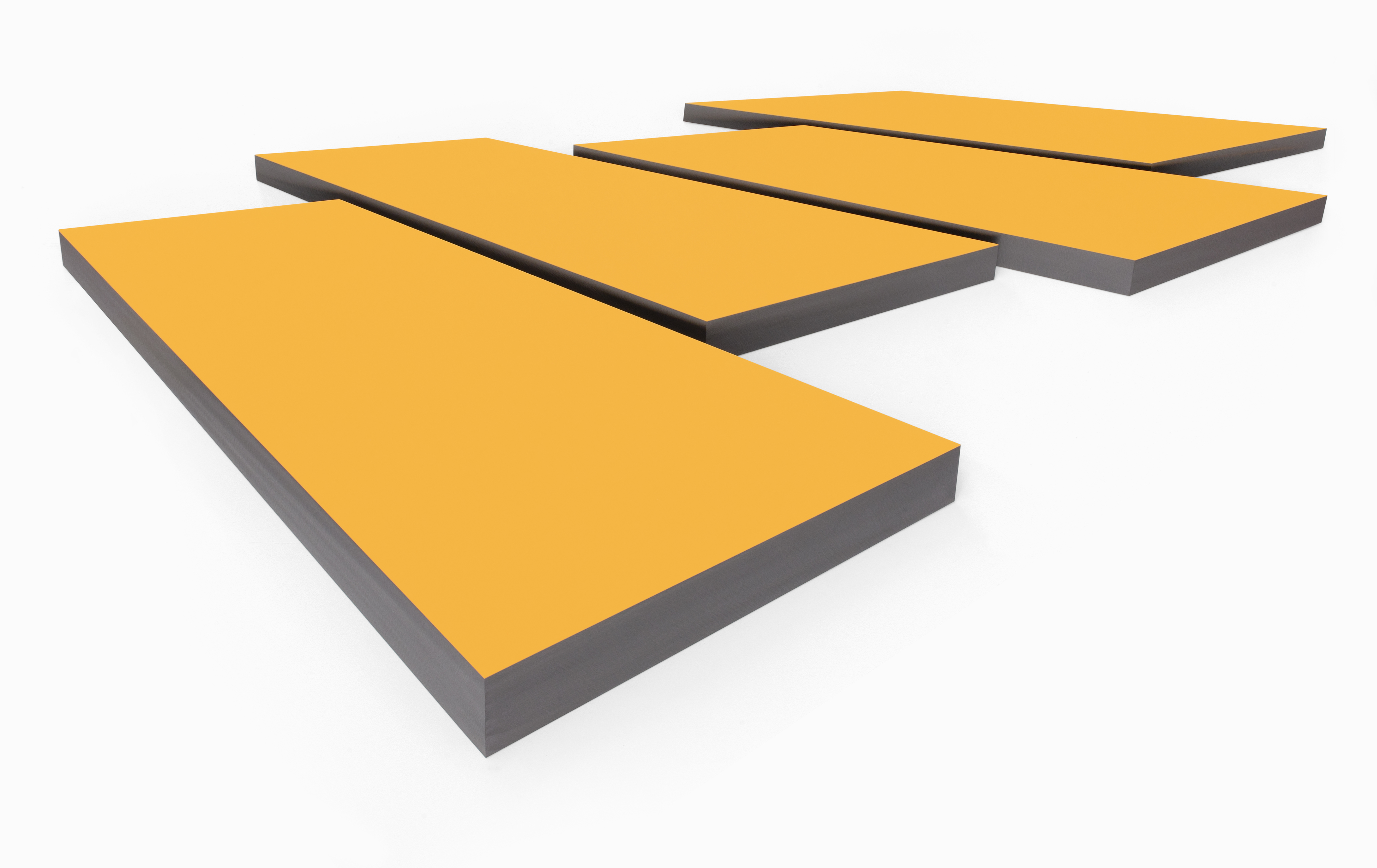
Every action originate an infinite number of permutations that also generate countless forms, spatialities and perceptions. In the work of Wolfram Ullrich (Würzburg, Germany, 1961) these gestures take on a special role: Cutting, folding, stacking, dividing are some of the solutions that have in fact given name to some of his most recognizable series.
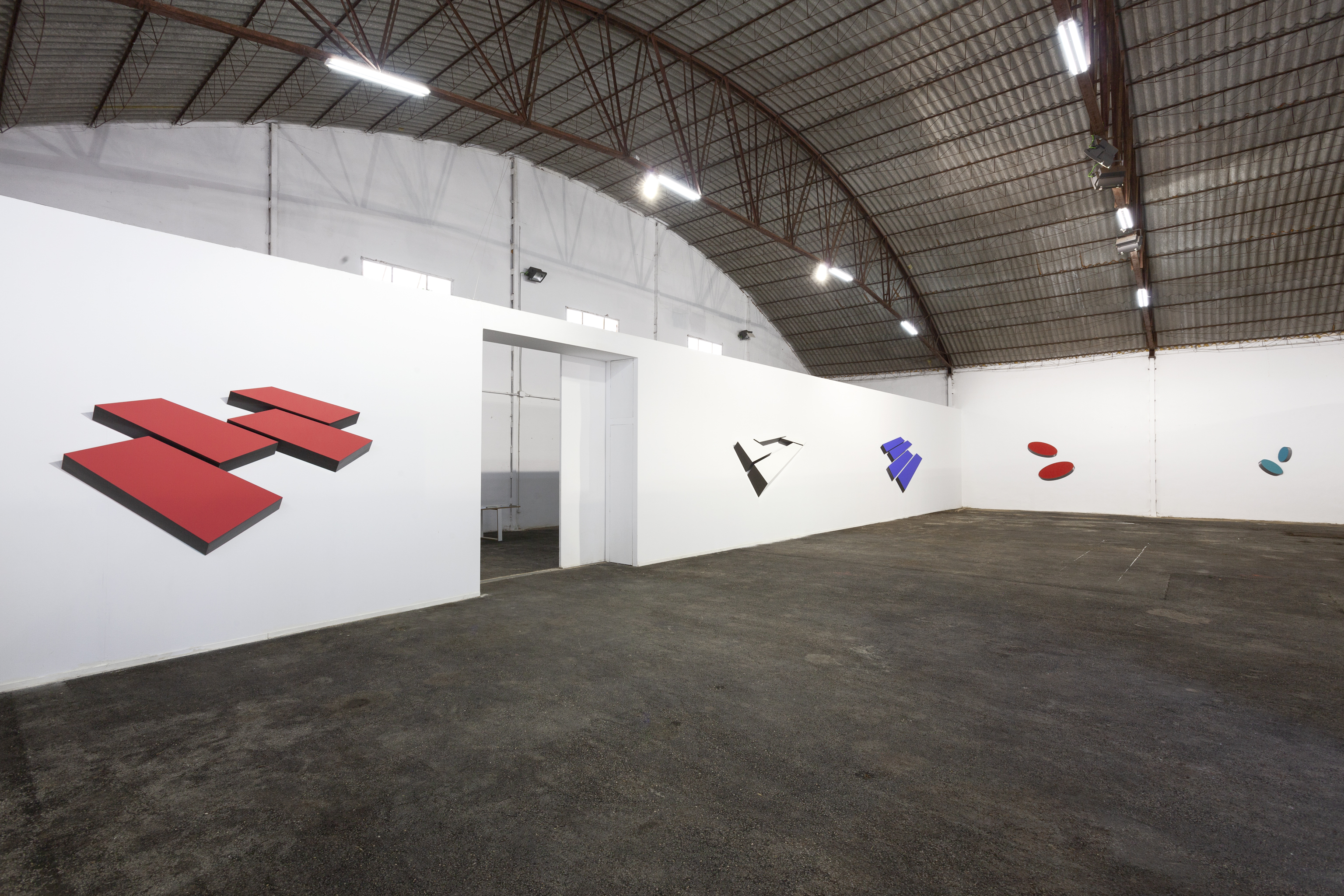
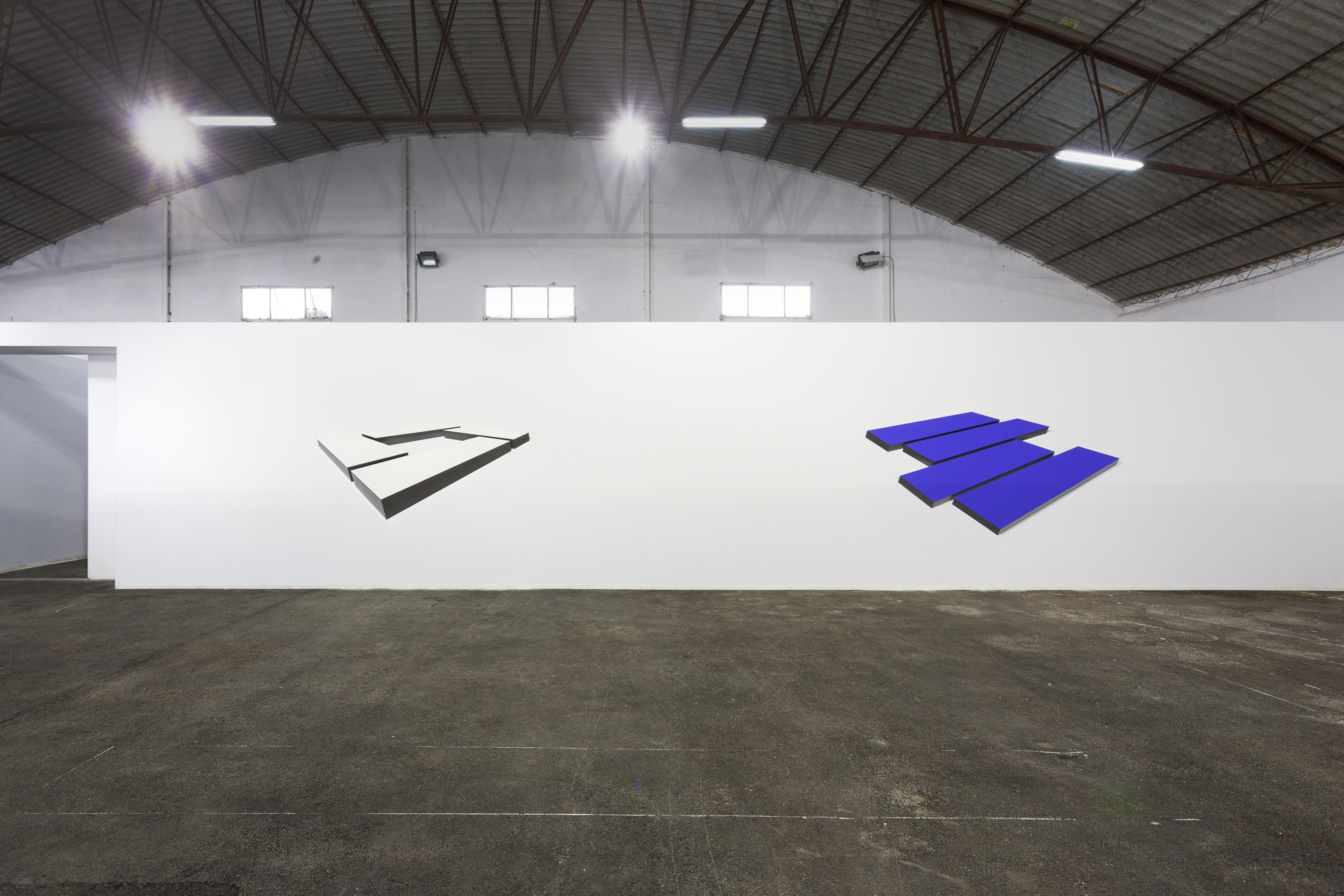
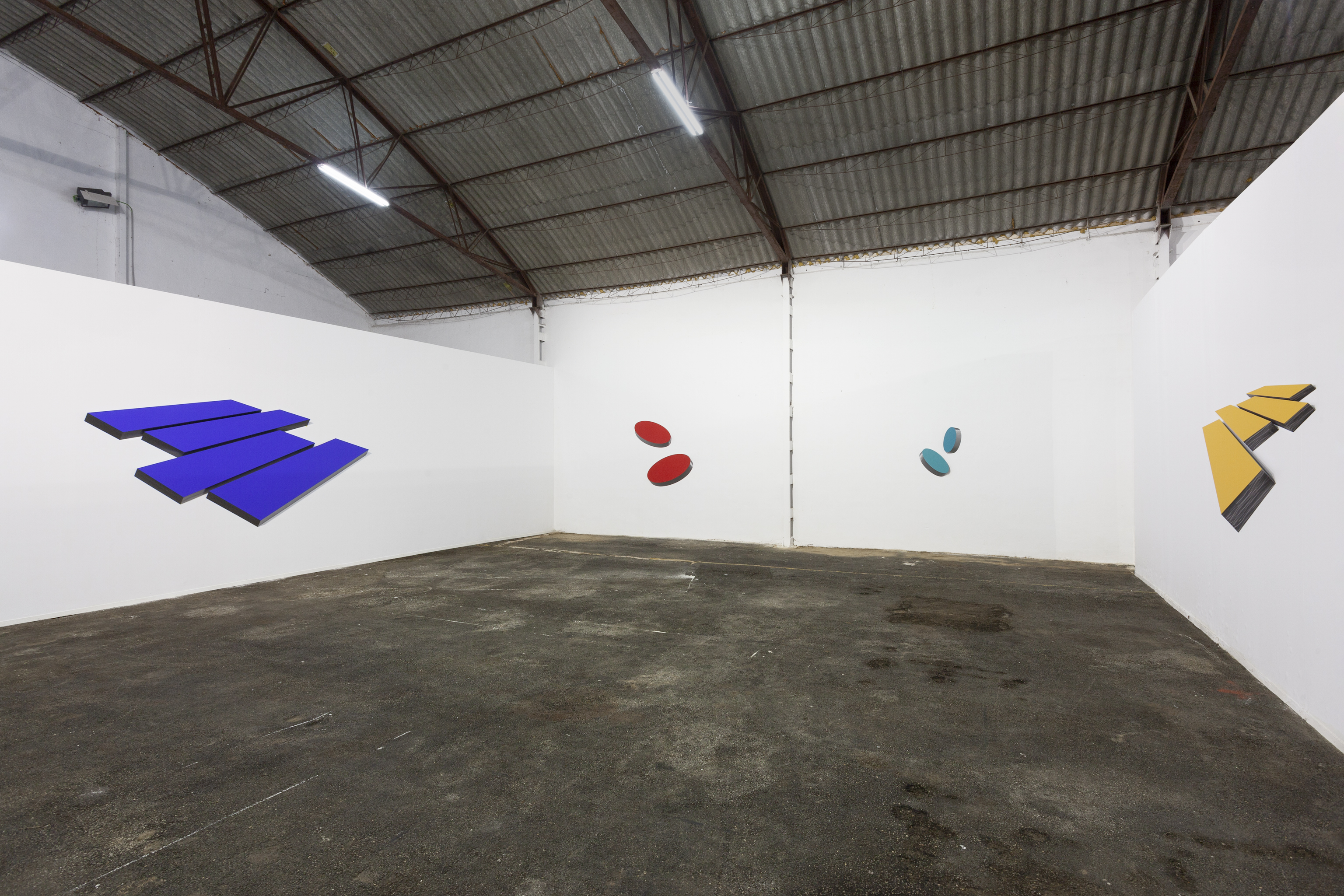
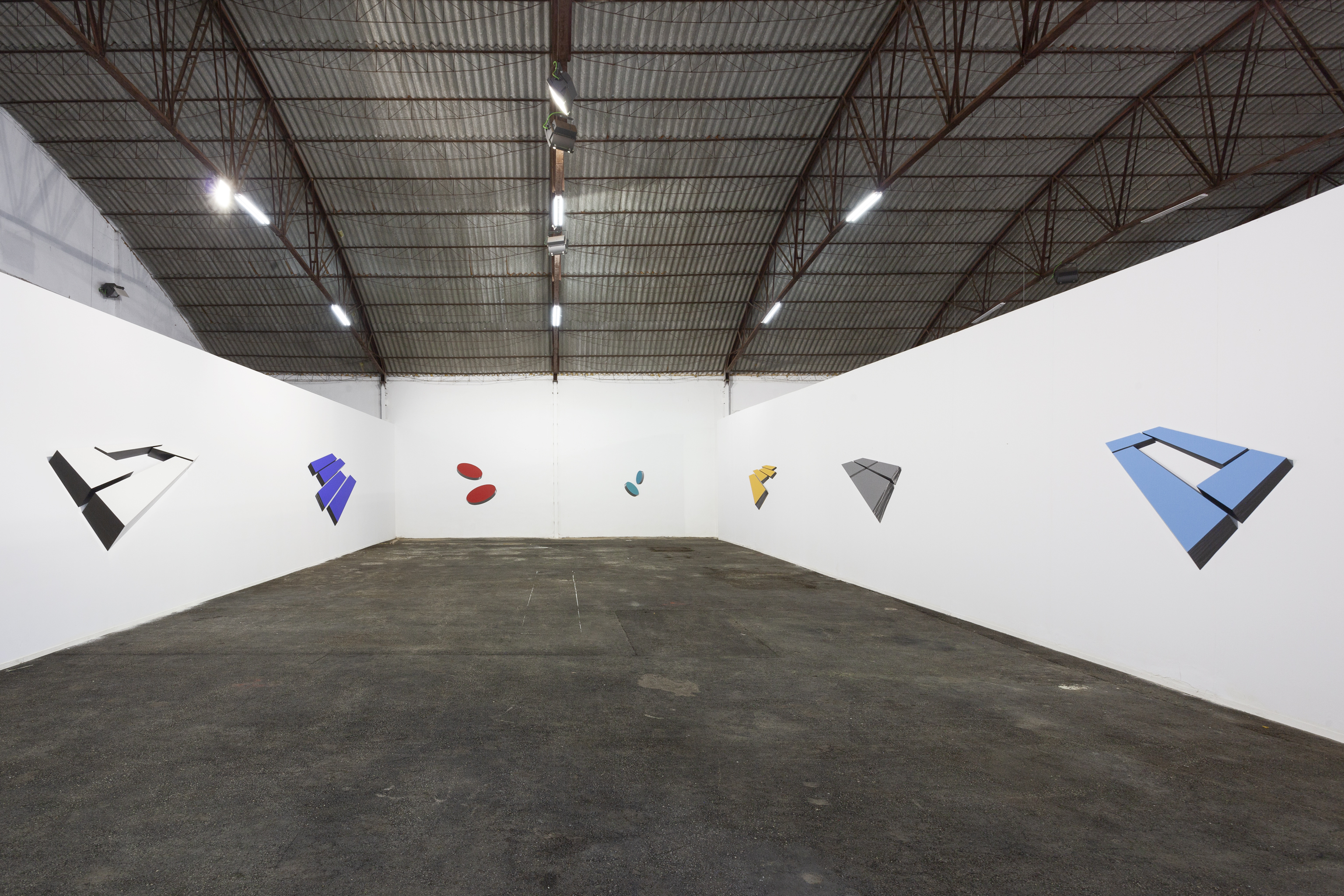
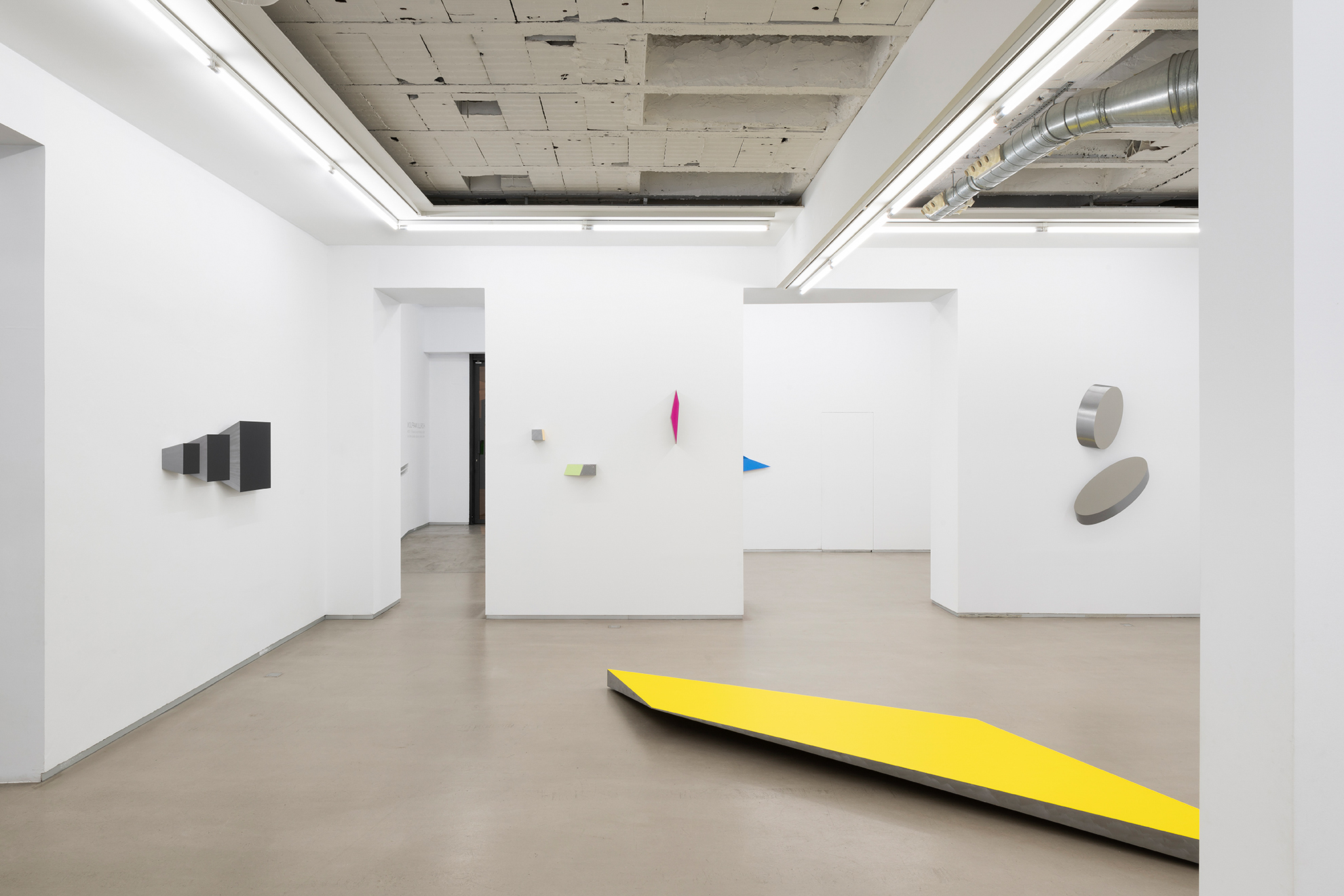
MODO: To Found, to Cut, to Stack, to Fold and Other Possible Solutions to Alter a Form aims to take a comprehensive tour of the research and evolution of some of those views on the way with which Ullrich has been operating since the 80s.
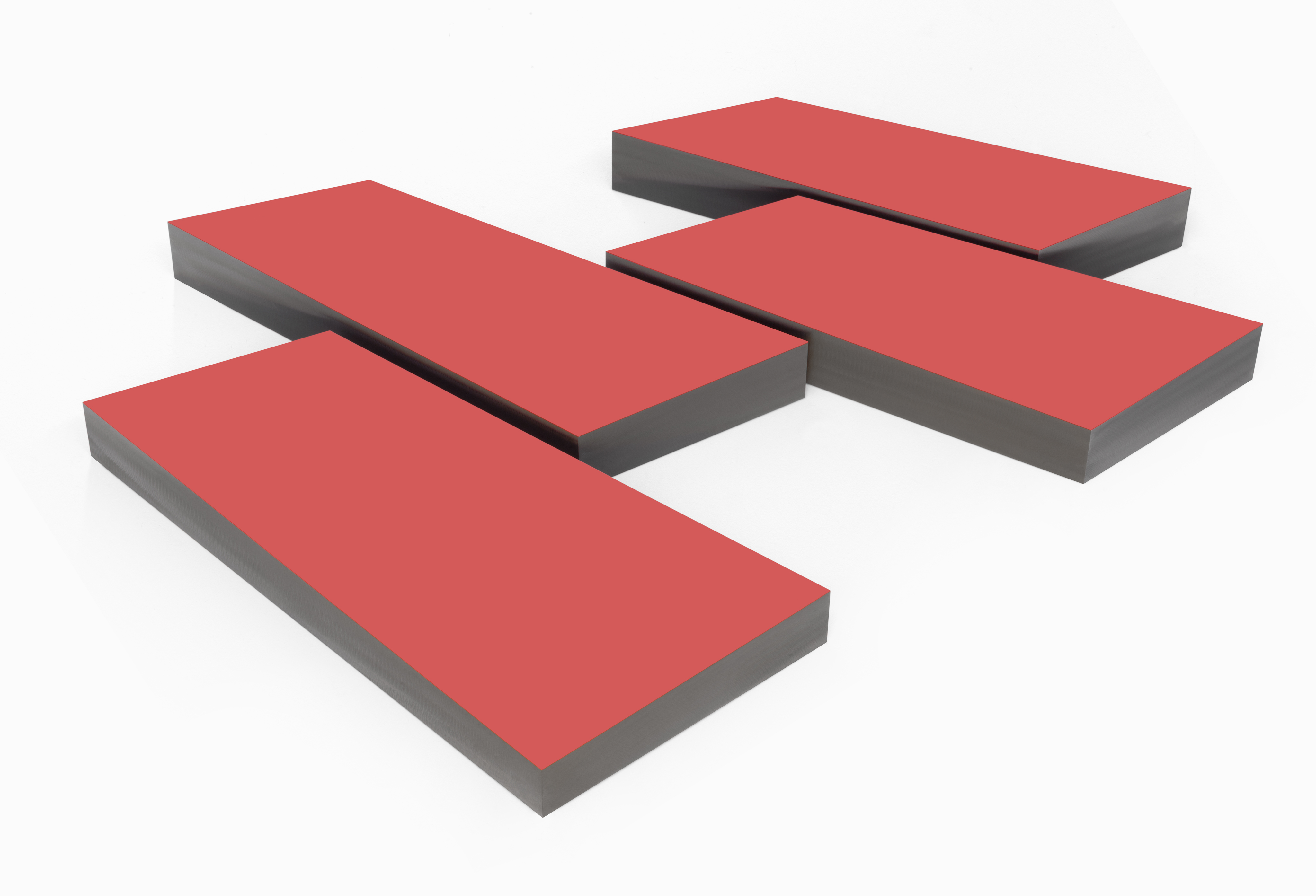
In some of his first works we can already find an interest in delving into the possibilities offered by steel, a material with which the artist would end up working to this day. Wolfram Ullrich’s work is above all an investigation into the idea of limits, many of his series starts from there. To understand the limits of matter itself, it is necessary to understand how not only how spatiality works, but alsohow time affects matter.
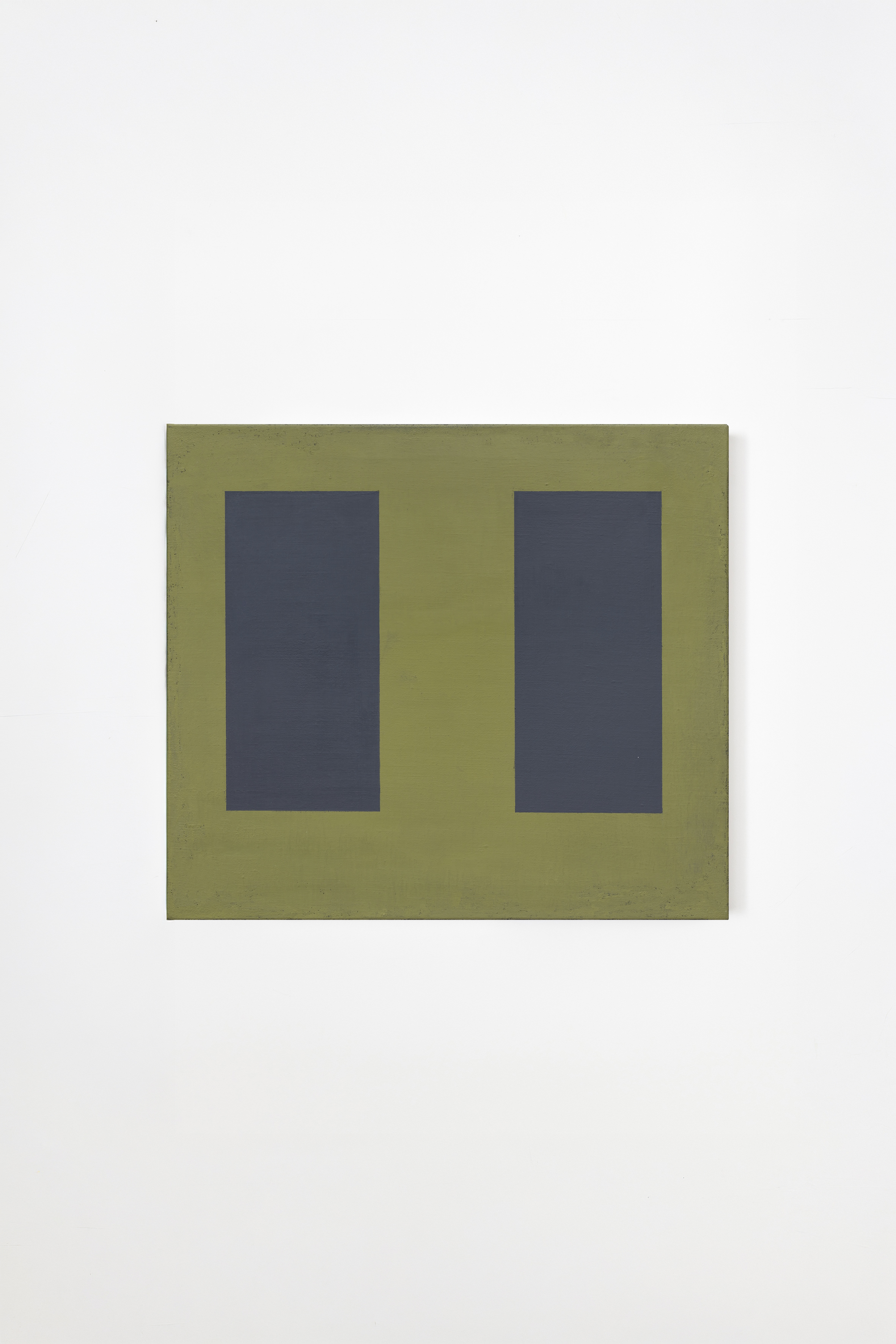
As a product of corrosion, it is an inherent component of any material, thus getting around the discussion of support versus colour, since here the colour is, as it were, a component of the support. Yet it does not have an enduringly stable character but rather something processual, since the colour of rust changes over time.We can think about these pieces as a ‘work in progress’ as they will change slightly over time.
Simultaneously, there is a connection to Wolfram Ullrich’s early found-object pieces here. There is even an anticipation of the latest works: the potential of the edges is already inherent in many of these works of and with rust from the 1980s, where they have been treated with oil. That changes the colours and produces an interplay of smooth and matt surfaces.
To understand the importance of the act of folding, let’s think about the exercise with which Josef Albers used to begin his course as a Bauhaus professor. The artist proposed to his students to design a house with just one element: a piece of paper. Within the limits of the paper potentially all past, present and future architectural projects fit. It is the virtue of the blank page; the benefit of doubt. It is also known that when all his students finally submitted their proposals (plans, elevations, isometric views, freehand, in pencil, ink) Albers showed how with a simple gesture, and with no other tool than a hand, it could be summarized and catalyzed the entire history of architecture by folding the paper in half.
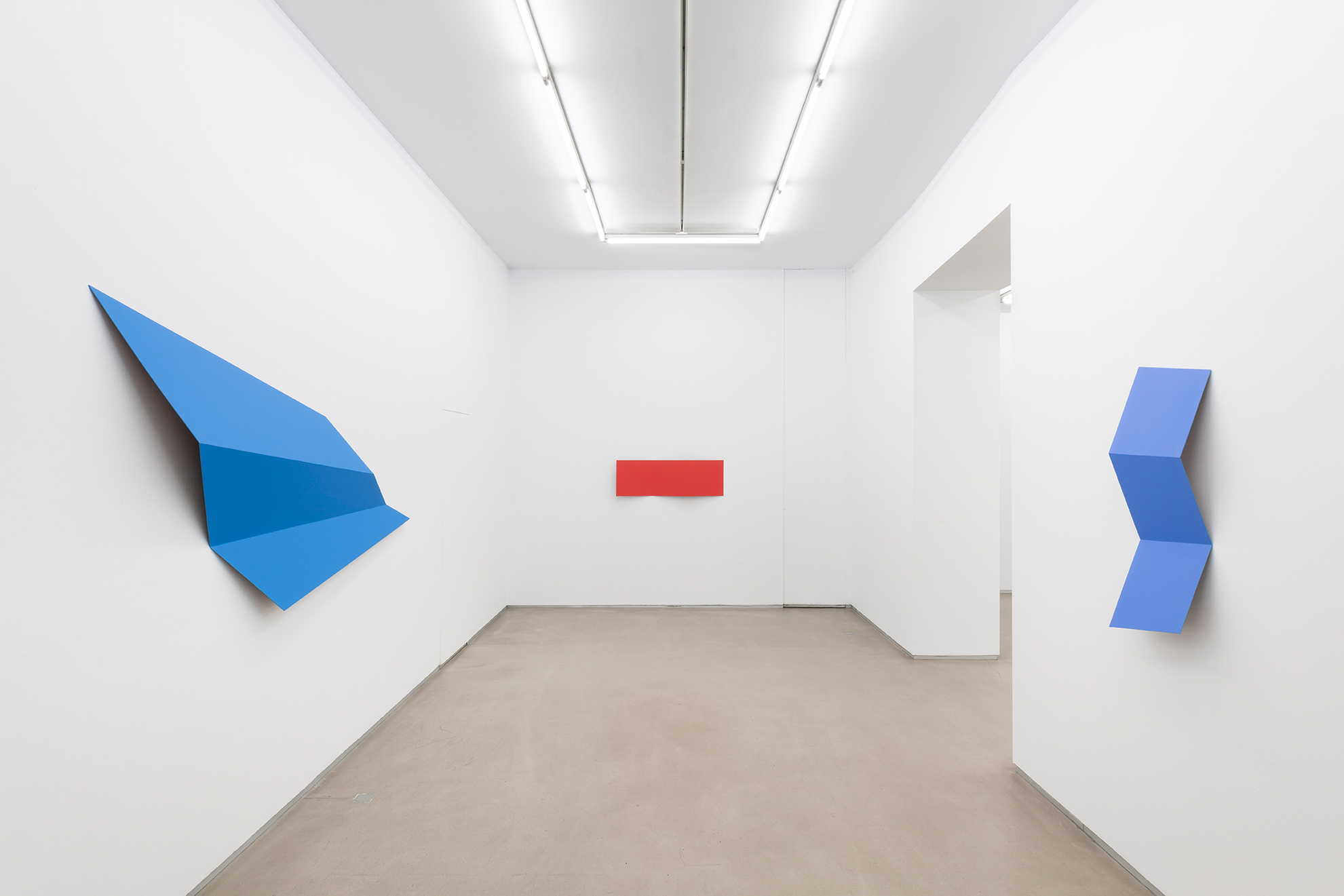
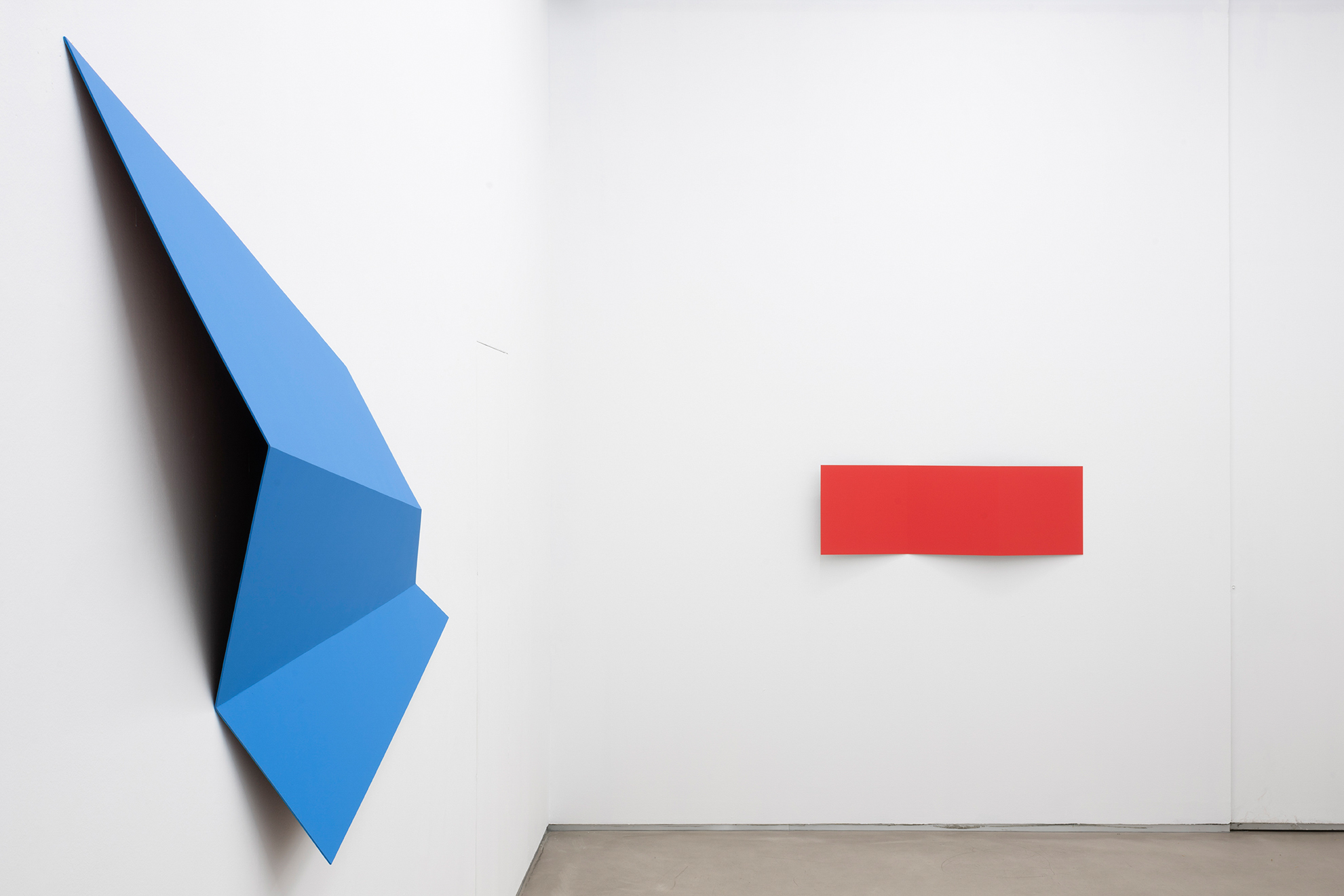
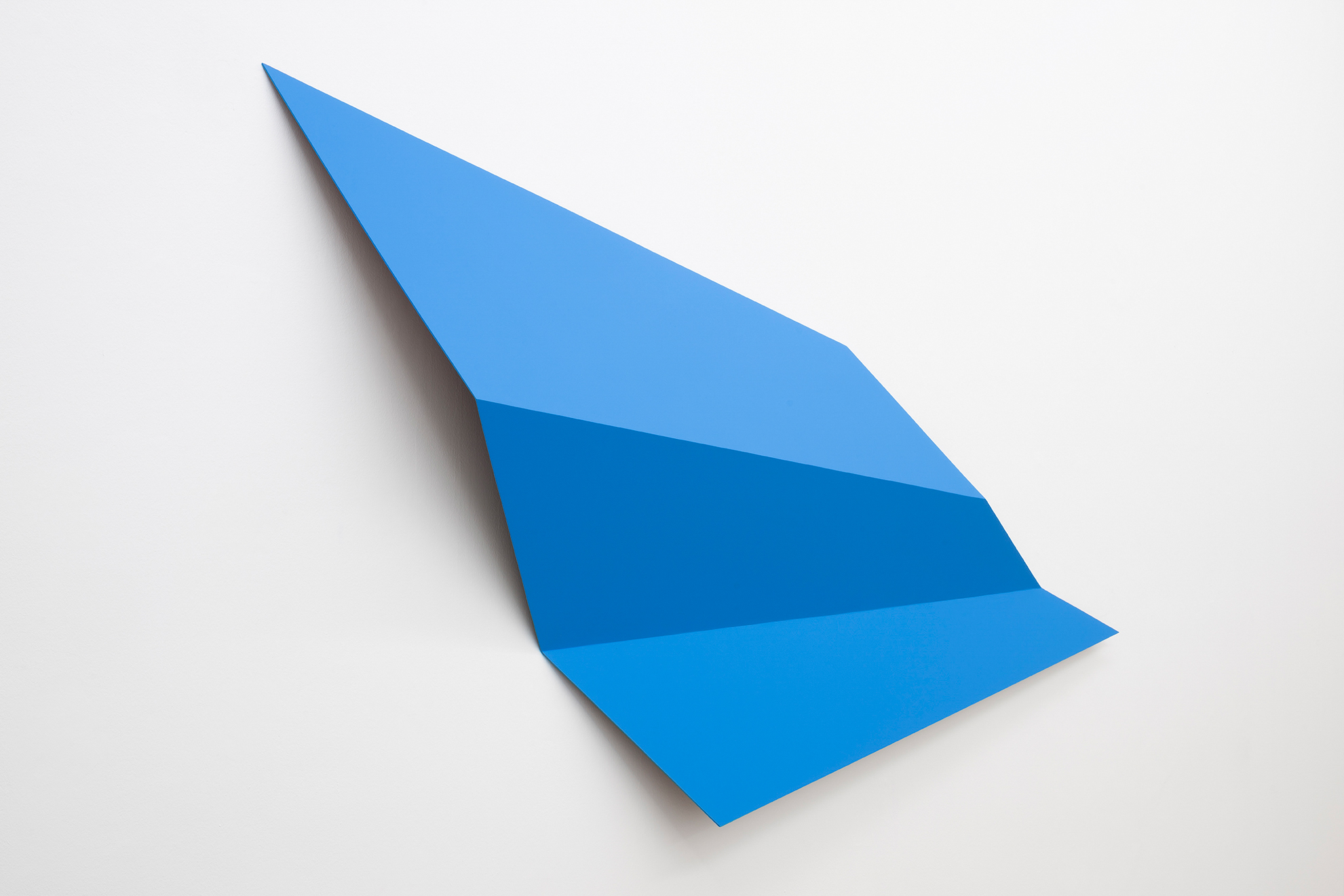
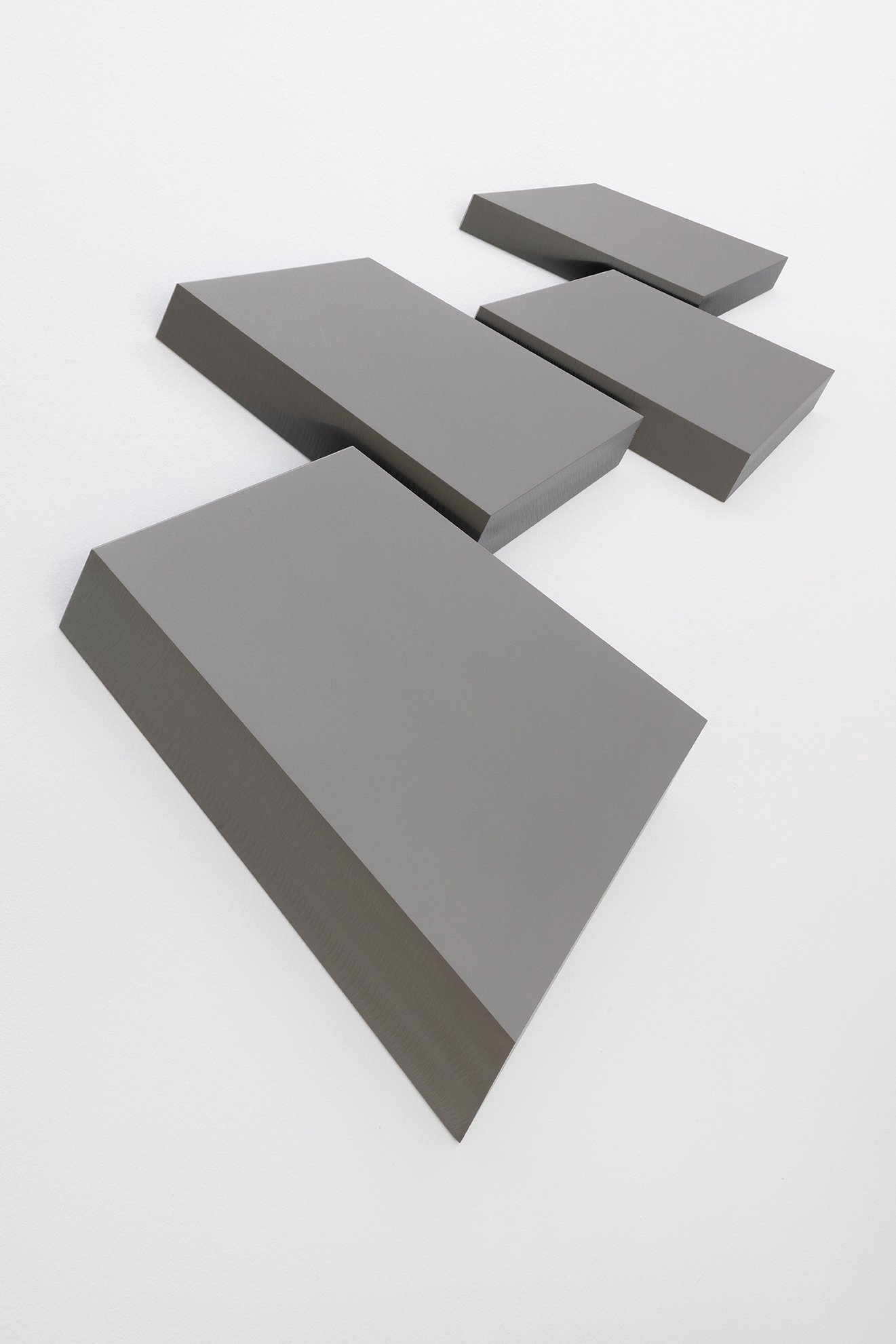
For Ullrich this idea is not extrange. Although his work necessarily refers to steel, all his works, in essence, have a close relationship with paper. Wolfram begins to define his creative process from paper, first with sketches and then with models where that particular spatiality makes its way that only allows the play of flexibility. Perhaps that’s why his works feel light and clean. In these interventions, the fold is not as important as the space generated by that gap, not so much the materiality of the piece as the definition of a place defined by the projection of a shadow generated by the light on the piece. In these works, whether completely or only partially coloured, the fold and the shifted positions of the planes relative to one another produce these zones of light and shadow, however matt the paint employed may be. This results in the paint on the spatial structures on the wall no longer seeming as monochrome as when it was applied.
Anyone who cuts into something changes its form with a relatively small intervention. The cut, however short, opens the initial material. What is behind shines through. A cut thus changes the form not only inwardly, but also its relationship to its outside. The cut makes the tension between inside and outside visible. The outside has an inward effect for the first time: the two dovetail to form a coherent system. By means of the cut, the initially calm form at the outset is set in motion for the first time, which has an influence on both the form and the surrounding space.
Wolfram Ullrich does not cut paper; he cuts steel. This affinity to metal, which was already evident in the 1980s, is based on a fascination with the durability and resistance of this hard material. Both things distinguish it clearly from paper. Steel has its own precision, its own immediacy. The first works where this cutting gesture played a leading role were made in the 1980s. Decades later, in pieces such as those corresponding to the BASIS series, these cuts can be more similar to terrain tastings, a way of investigating, proposing or reflecting on what matter is made of.
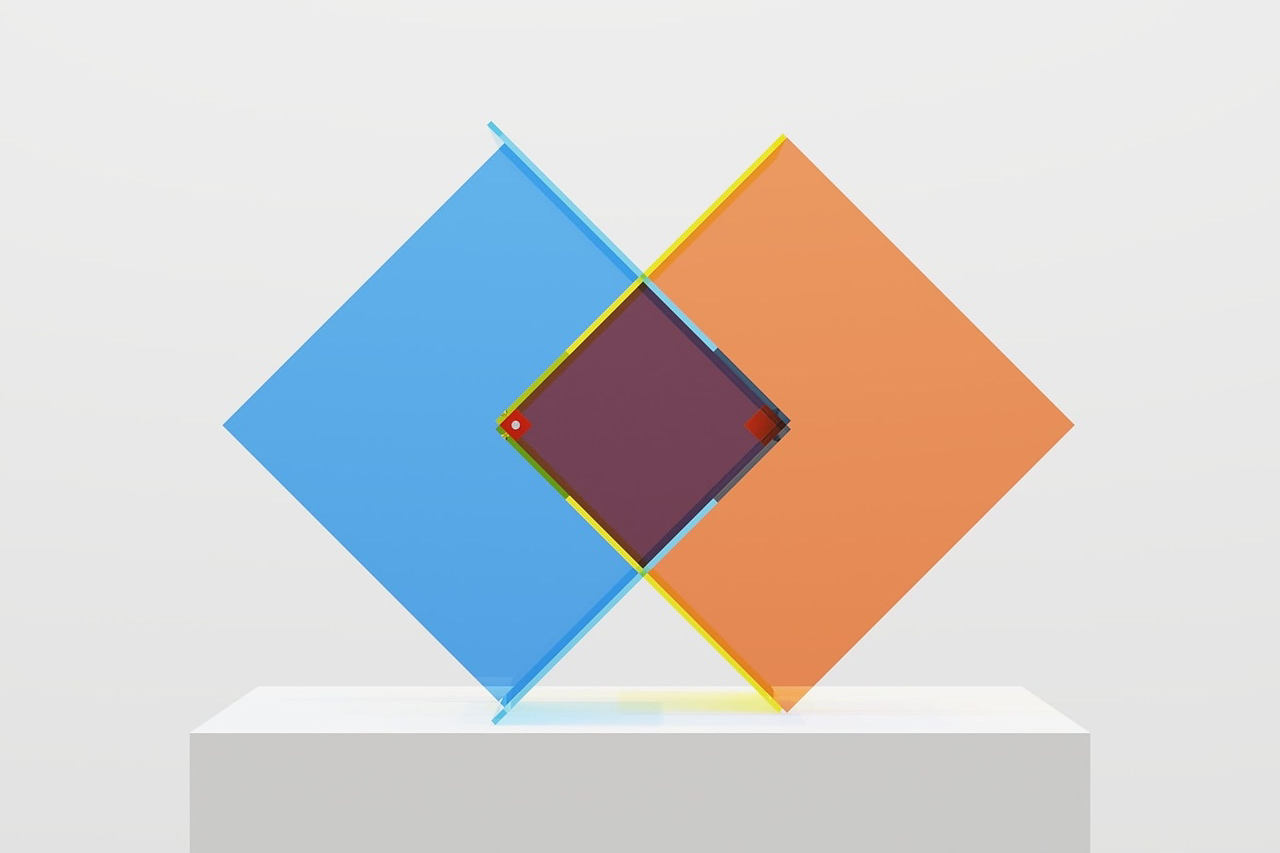
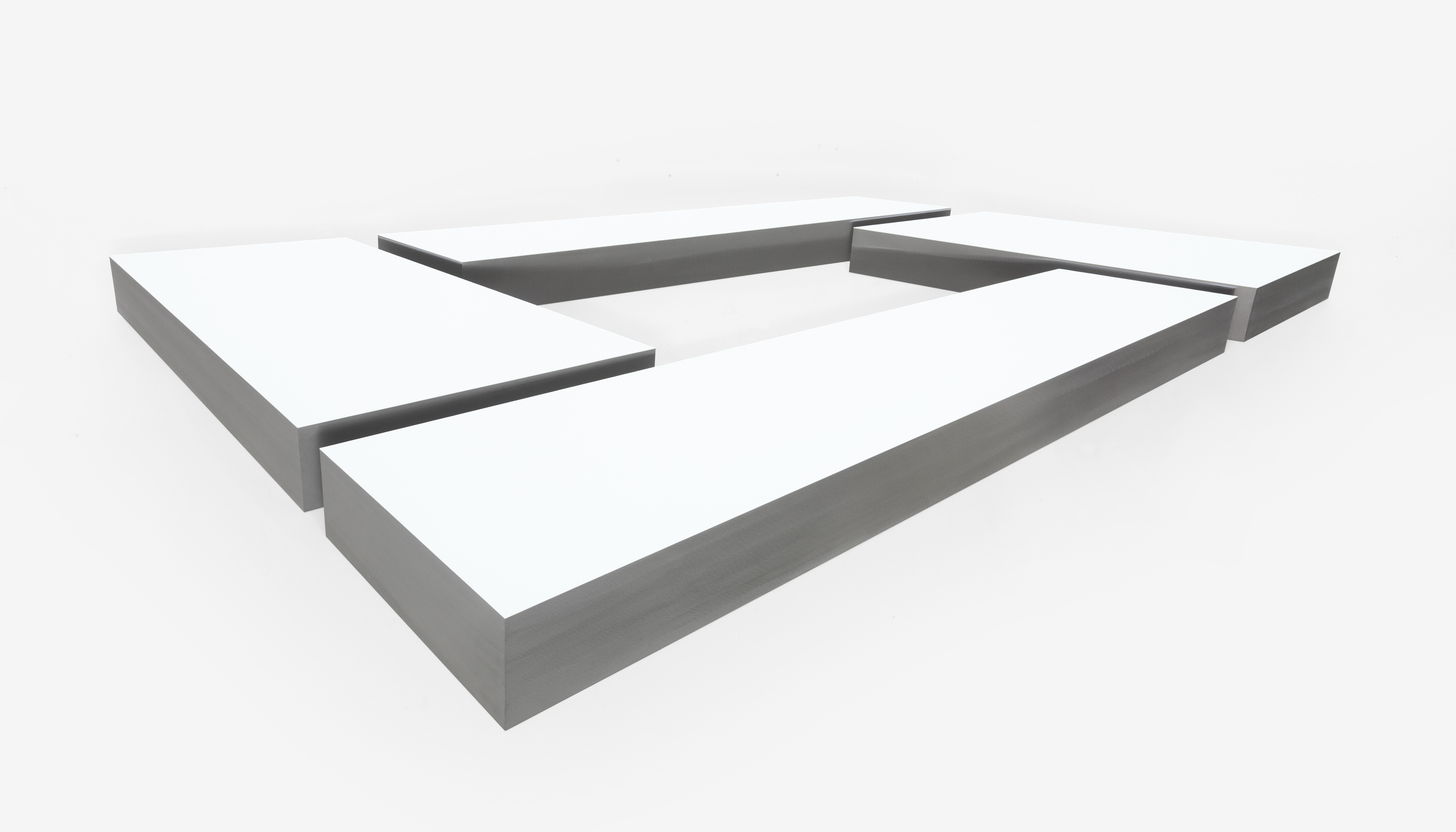
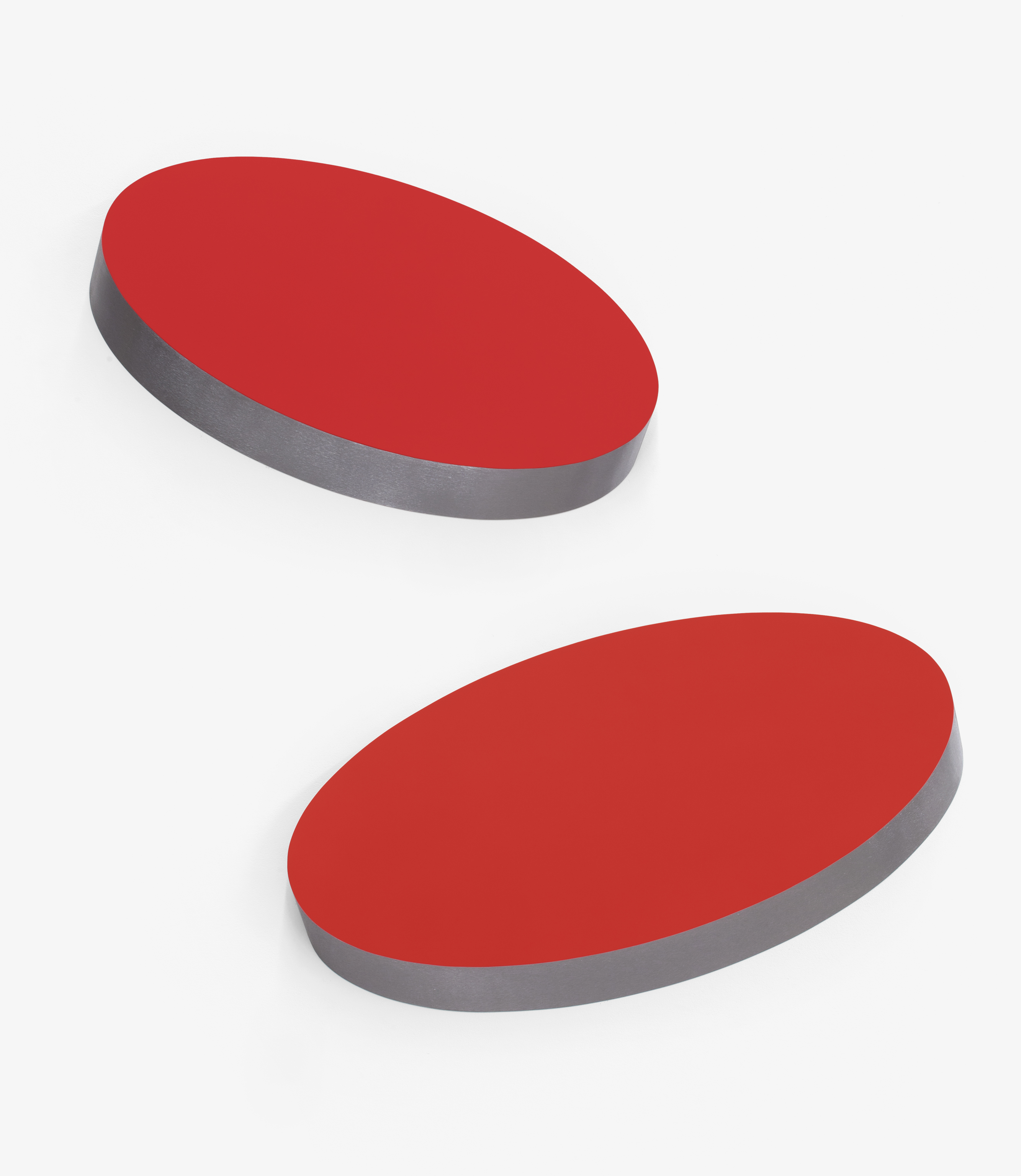
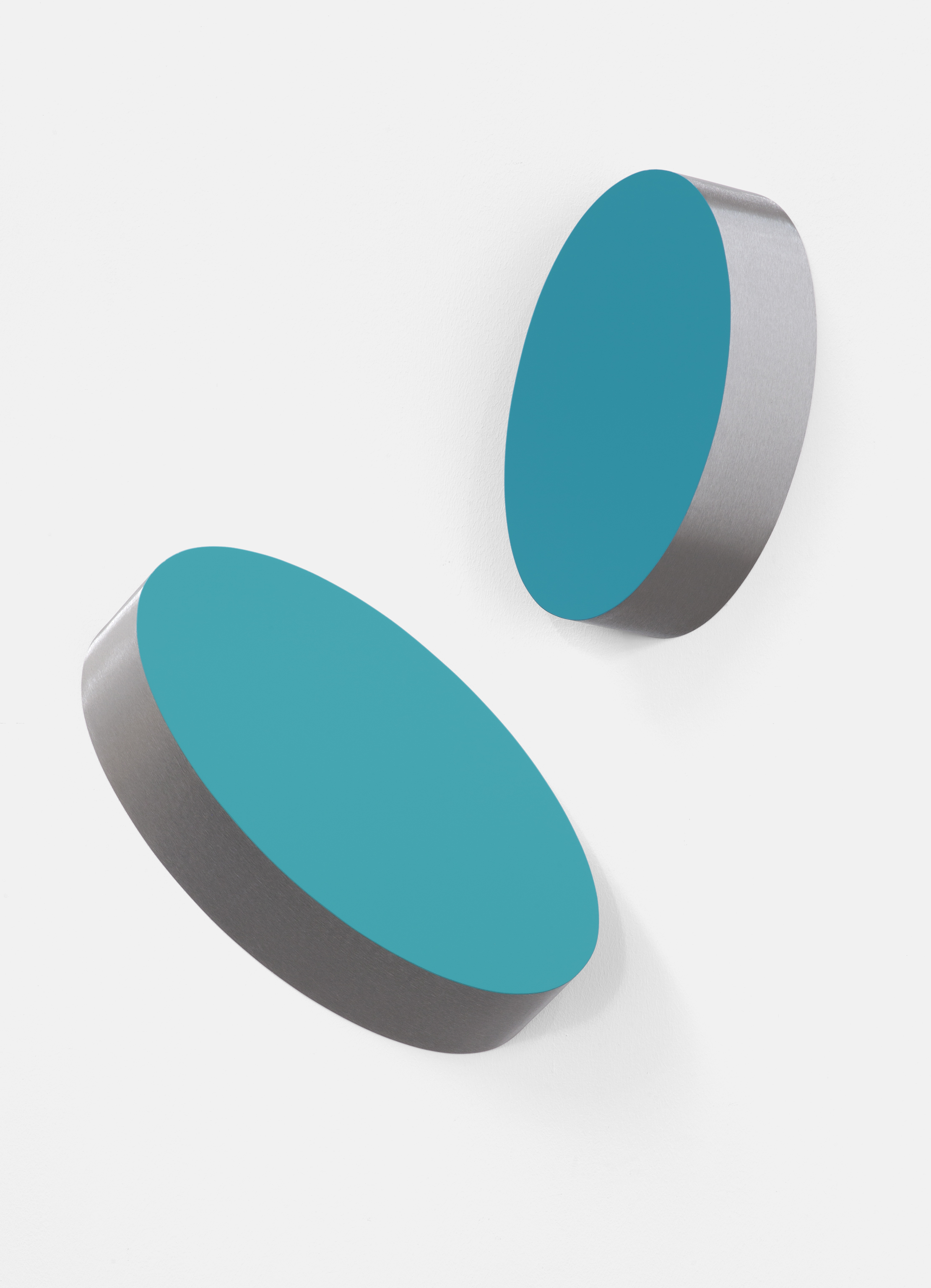
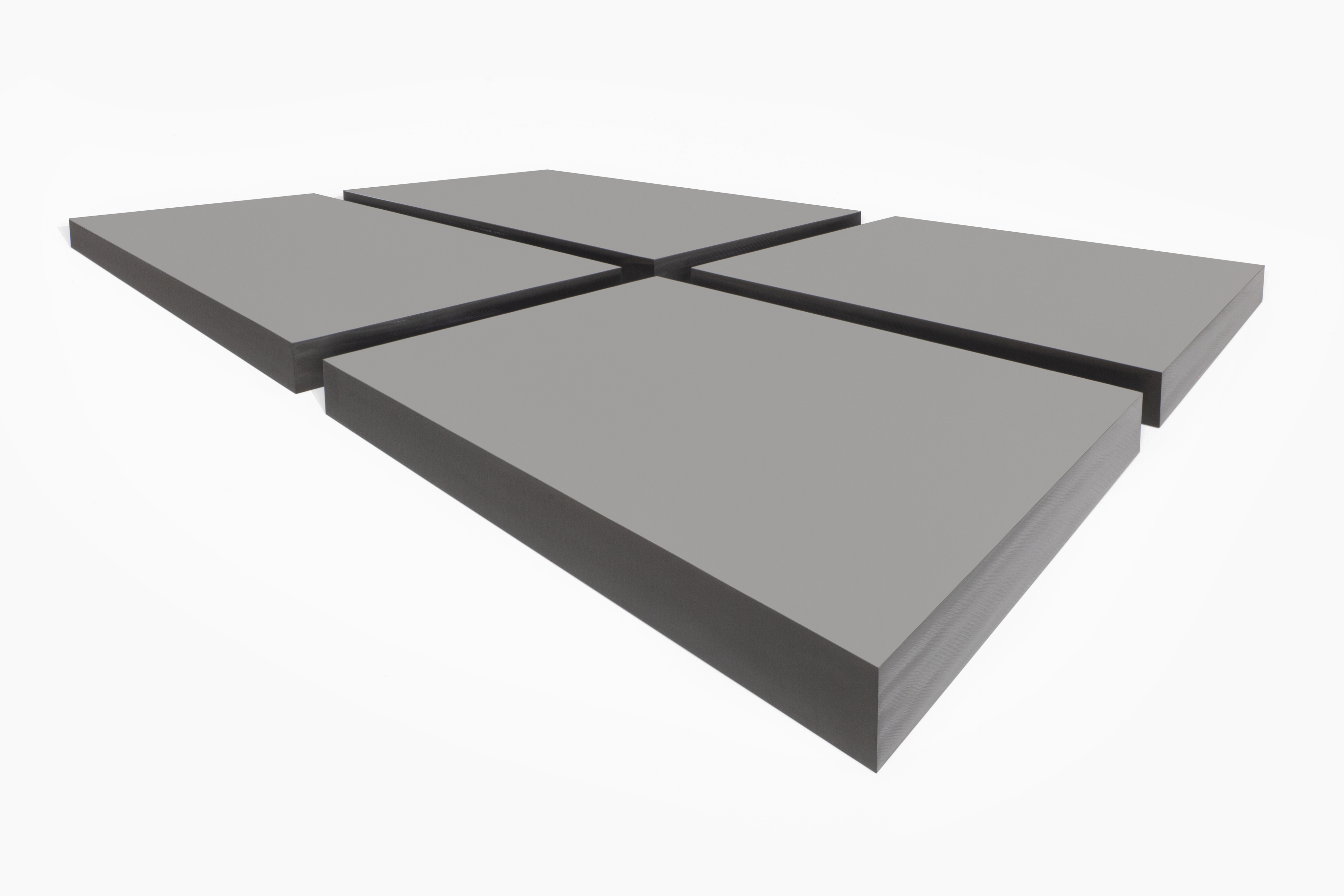
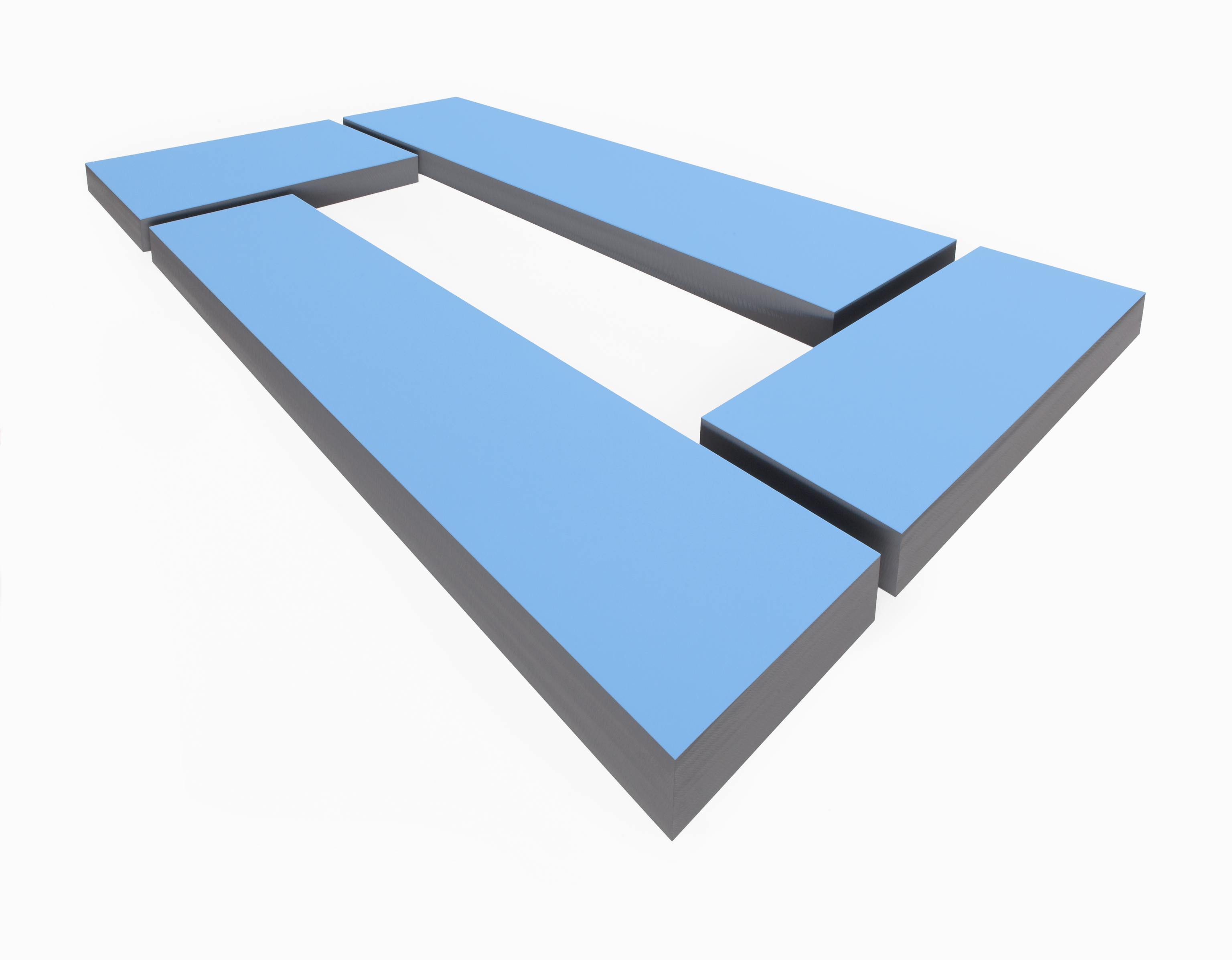
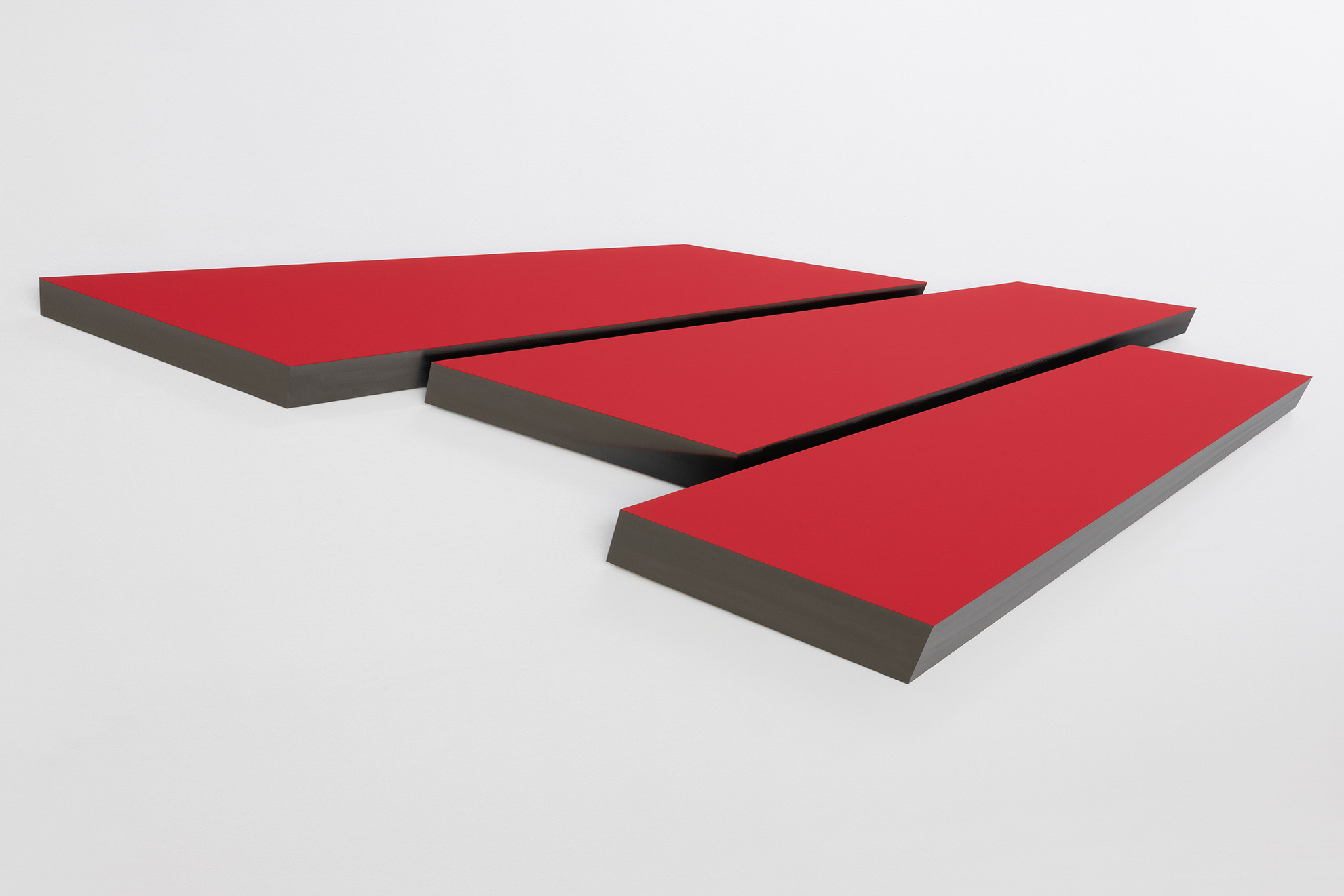
Another fundamental concern of Wolfram Ullrich’s artistic practice in recent years has been to find the different typologies and possible processes between two or more bodies. At the beginning of the 80’s he began this proposal where he investigated the possibilities of division or excision of the form. The consequence of this act of splitting or division that Wolfram began to investigate in the 80s is this idea about the interaction of two forms that repel and at the same time attract each other through his Split series. This idea has been organically transforming, focusing more on dialogue, on the relationship between forms, giving rise to interventions where interstitial spaces gain prominence, where that dichotomous force exerted by an orbit becomes more visible.
First split, stack after that, separate and lastly orbit the forms. In all these processes a sequence is intuited, a body that separates into two, three or more parts, almost like the evolution of a meiotic process. This almost cellular investigation gives all these series an almost living, animated meaning. Studiying all the possible relationships between these bodies, Wolfram has been generating his entire recent corpus.
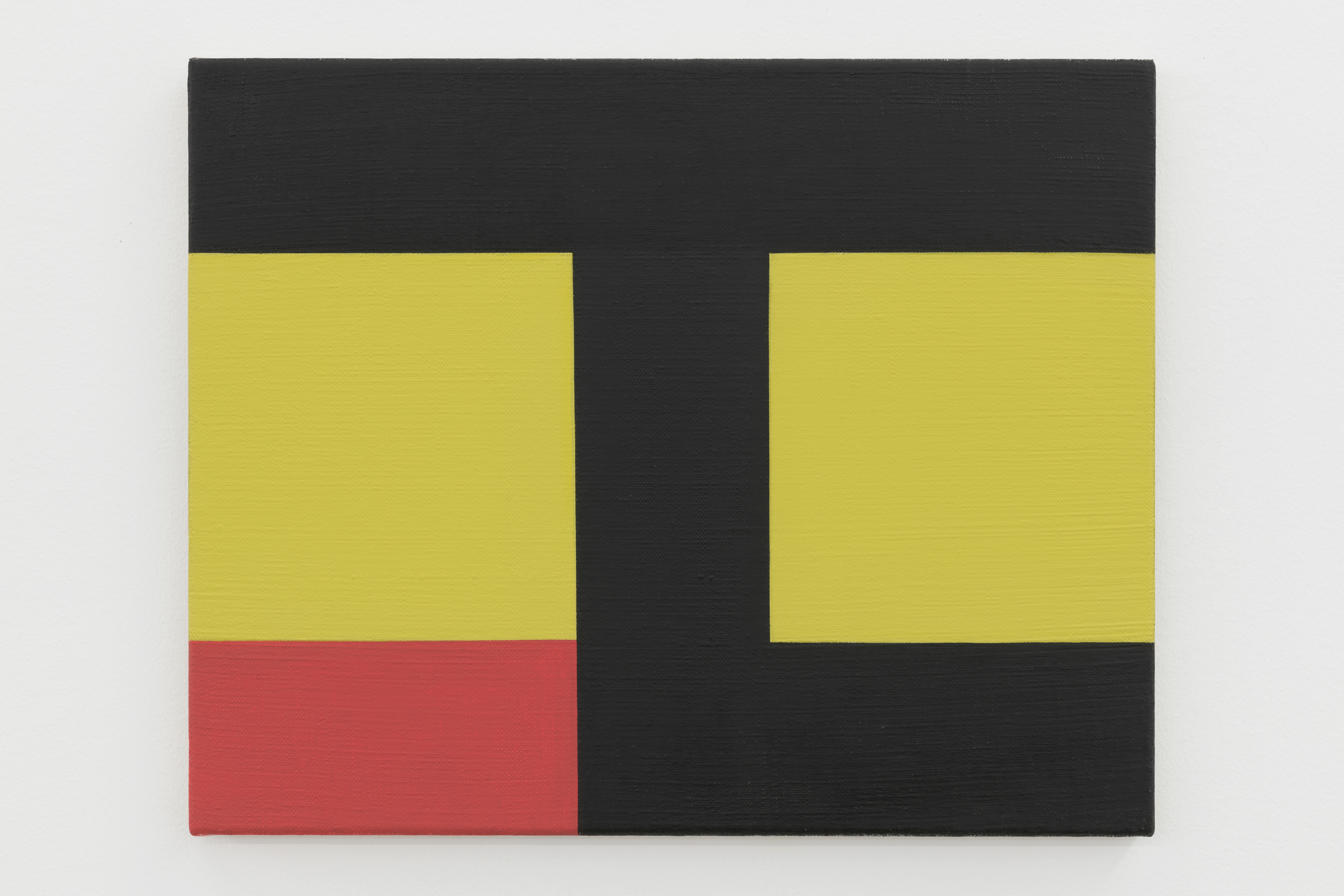
In departing from the strict boundaries of Concrete Art, he ultimately arrived at his own unmistakable formal language, which requires the edge, as it were. It functions as a hinge that transfers his works, both in actual and perspectival terms, into the third dimension, even if the relationship between forms only take place in a two dimensional space. The edge is the witness that something else exists outside the plane. That third dimension that the artist intentionally did not want to break.
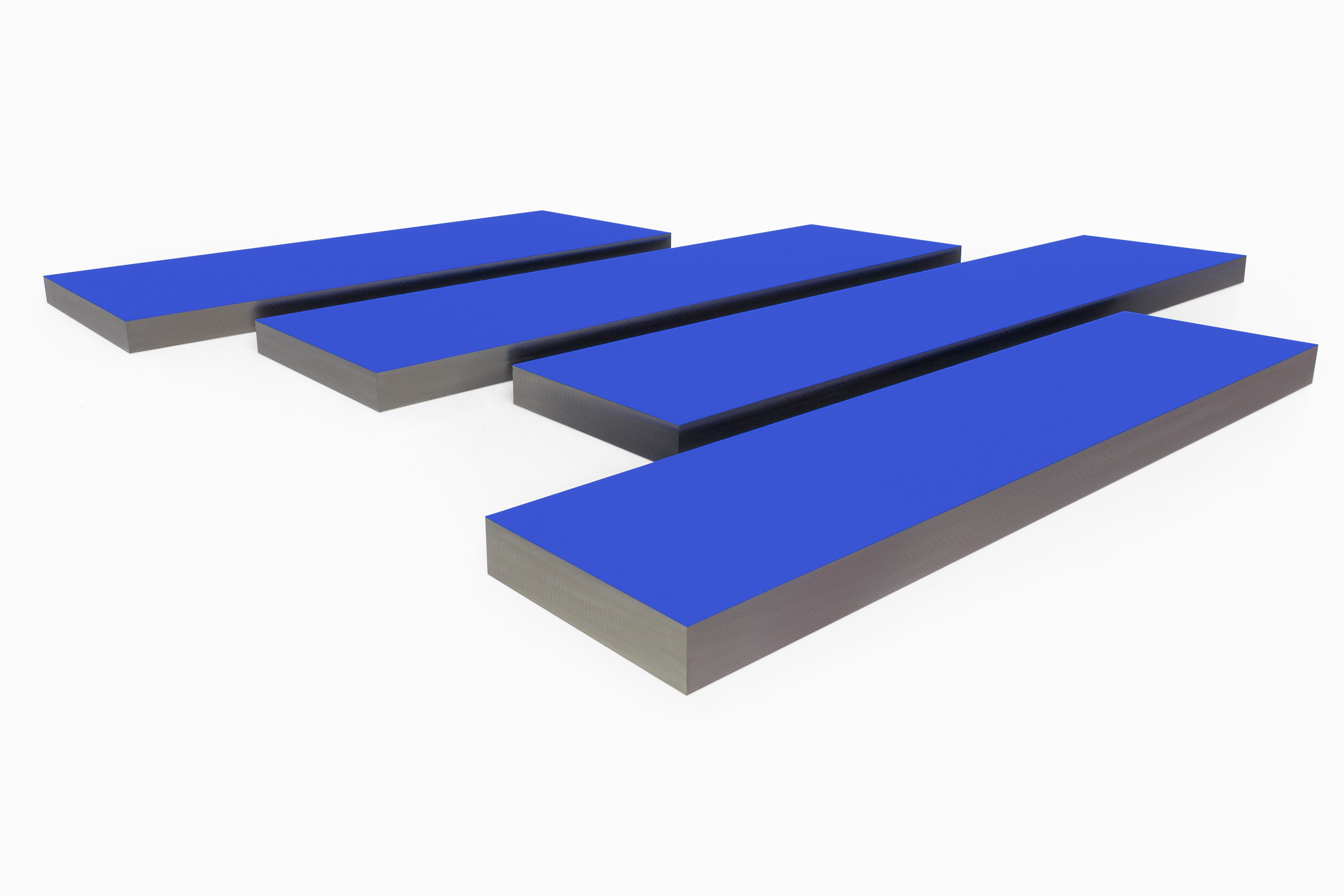
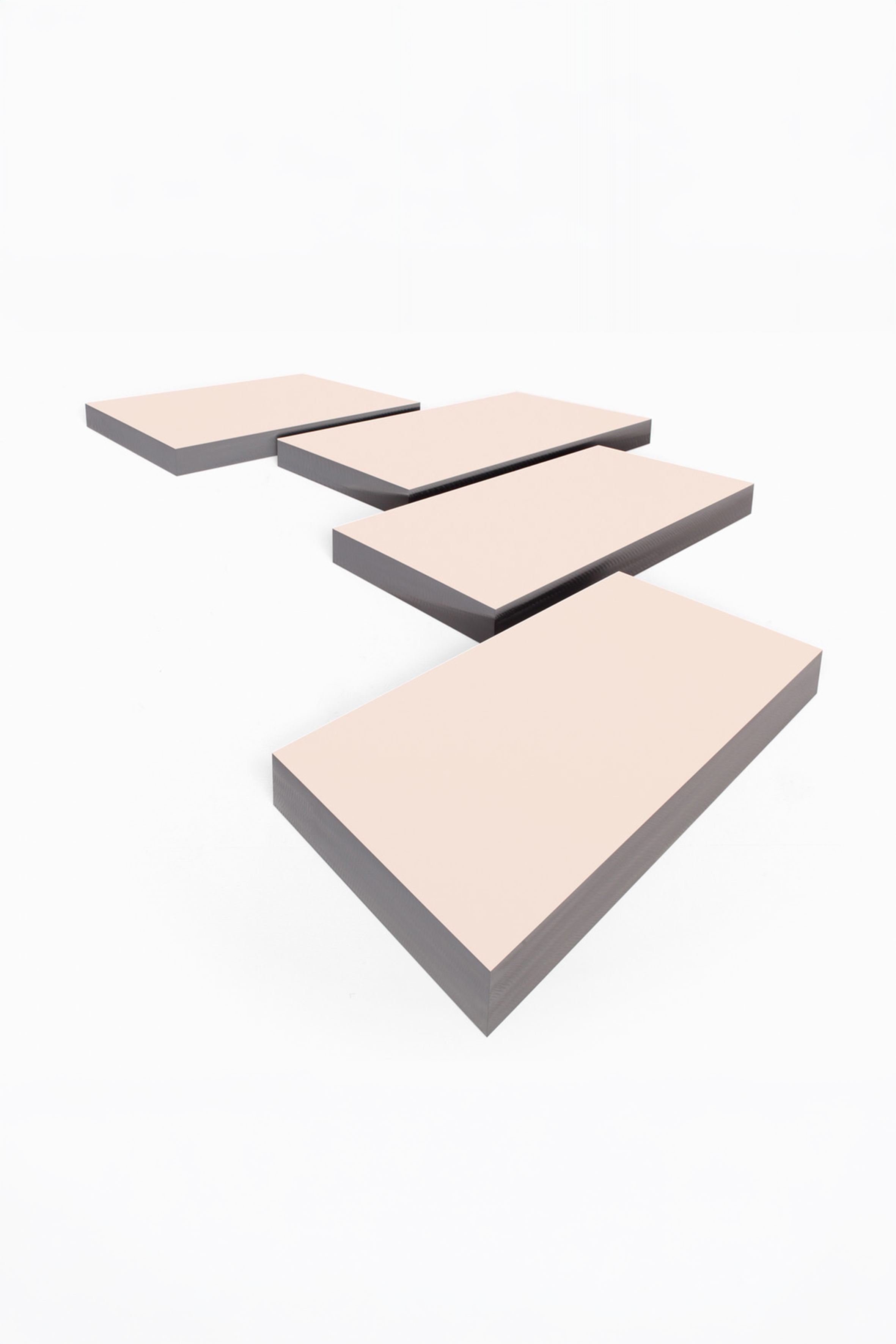
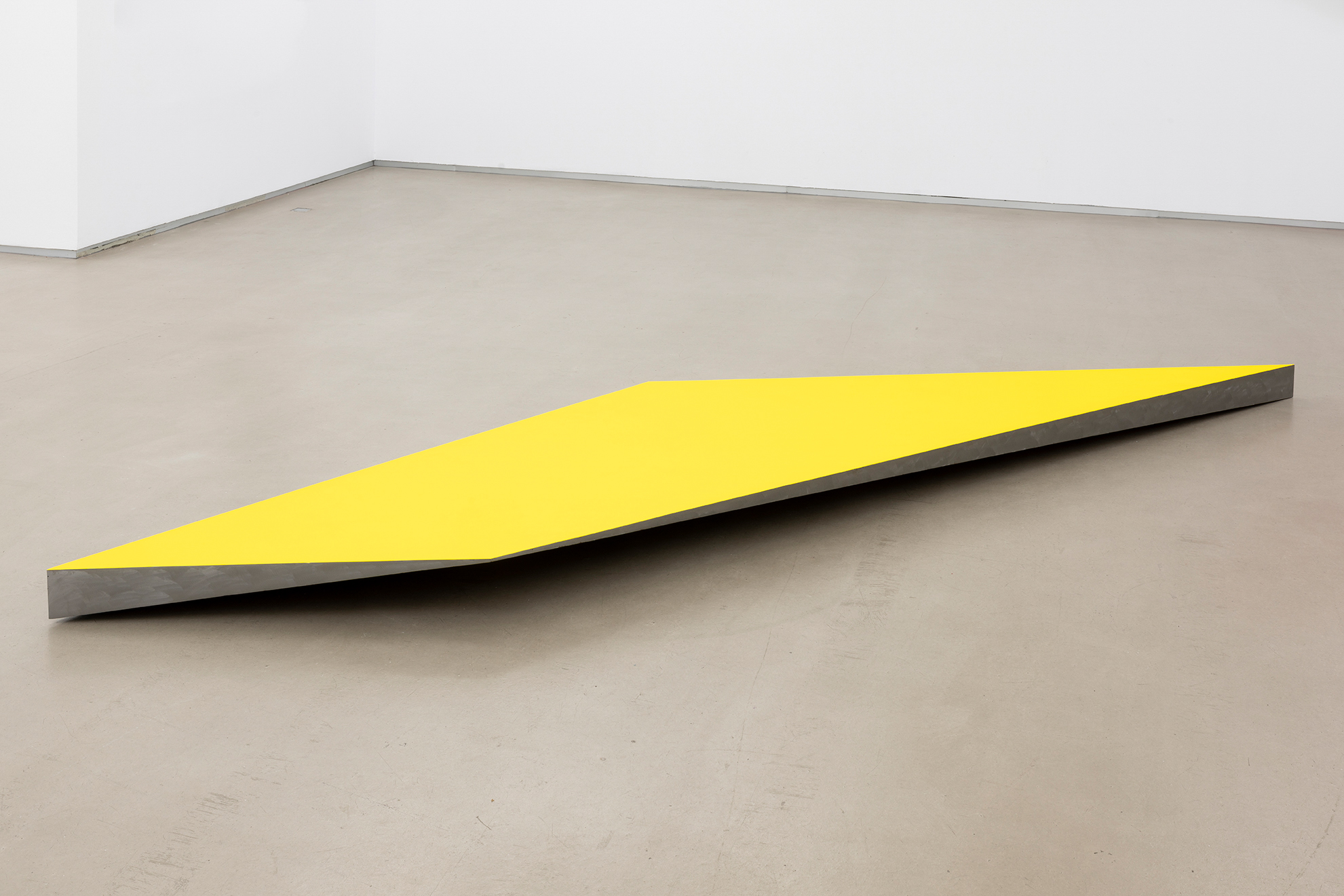
Since the relationship between the work and the space is so important in Wolfram Ullrich’s oeuvre, one of his series where the form expands more and occupies the space more decisively are the so-called Islands. These islands limit the movement of any other body that enters the same room/ecosystem where they doze. It is, perhaps, the series where Wolfram’s work acquires a greater minimalist essence.
Thus, The island becomes a metaphor for that perfect geographical place, a non-transgressible natural limit, which has the capacity to order and define, with its mere presence, space.
The work by Wolfram Ullrich (Wurzburg, 1961) has been exhibited worldwide including important institutions such as Kunsthalle Weishaupt, Ulm, Germany (2024); Museum Konstruktiv-Konkrete Kunst, Ulm, Germany (2022); Museum für Konkrete Kunst, Ingolstadt, Germany (2019); Museo d’arte Contemporanea, Lissone, Italy (2019); Museo Marca, Catanzaro, Italy (2018); Museum im Kulturspeicher, Wurzburg, Germany (2007); Musée d’art et histoire, Neuchâtel, Switzerland (2009); Museum für Konkrete Kunst, Ingoldstadt, Germany (2016); Museo delle Arti, cantazaro, Italy (2019); Kunsthalle Messmer, Riegel, Germany (2020) among others.